
Views: 0 Author: Site Editor Publish Time: 2026-08-20 Origin: Site


Visual and auditory marketing channels saturate modern commercial spaces. Screens flash promotions while background music loops endlessly, causing consumers to naturally filter out these overwhelming stimuli. Establishing lasting brand recall in retail, hospitality, and corporate environments requires engaging the senses that consumers cannot simply turn off. Increasing customer dwell time and elevating perceived brand value are constant challenges. Traditional media often feels intrusive, disrupting rather than enhancing the environment. Creating a cohesive multi-sensory atmosphere demands subtlety and a method that integrates directly into the physical space without causing friction. Strategic deployment of an aroma impressions machine offers a scientifically backed solution. This equipment bypasses cognitive filters entirely, linking brand identity directly to memory and emotion. Olfactory engagement transforms ordinary locations into memorable destinations, allowing you to measure the impact through increased foot traffic and enhanced customer satisfaction.
Human biology dictates how we process sensory information. Visual and auditory signals travel through the thalamus, which acts as a cognitive switchboard. The brain filters and analyzes these inputs before generating a response. Olfactory receptors operate differently. They bypass the thalamus entirely. Scent signals route directly to the olfactory bulb, which connects straight to the amygdala and hippocampus. These brain regions govern emotion and memory formation.
This direct pathway explains why scent memory retention rates are exceptionally high. Visual memory decays rapidly within days. Auditory memory fades even faster. Scent memories can last for months or even years. A specific aroma can instantly transport a person back to a precise moment in time. This biological mechanism gives olfactory marketing a distinct advantage over traditional advertising.
Triggering specific emotional memories fosters a distinctive brand identity. Crowded markets demand differentiation. When a customer associates a pleasant aroma with your environment, they form a subconscious bond. This bond influences future behavior. They are more likely to return. They are more likely to recommend your location. The emotional connection built through scent outlasts any visual promotion.
Translating brand personas into olfactory notes requires precision. You must match the scent profile to the desired customer emotional state. Energizing citrus notes work well in high-volume retail. They promote alertness and quick decision-making. Grounding sandalwood or rich leather suits luxury hospitality. These notes evoke sophistication and relaxation. The fragrance must resonate authentically with your target audience.
Consider the demographic profile of your visitors. Younger audiences often prefer fresh, aquatic, or subtly sweet profiles. Mature demographics might gravitate toward complex, woody, or floral arrangements. The chosen aroma must feel native to the space. A disconnect between the visual branding and the olfactory experience creates cognitive dissonance. Customers will notice the incongruity, breaking the immersive illusion.
Mapping brand values to scent families simplifies this process. If your brand emphasizes cleanliness and clinical precision, utilize crisp ozone or light mint notes. If your brand focuses on organic sustainability, deploy earthy vetiver or botanical greens. Every note must serve a strategic purpose. The atmosphere you create directly influences how customers perceive your products or services.
A successful deployment enhances the ambient environment subtly. It should never overwhelm the space. Customers should notice the pleasant atmosphere without immediately identifying the source. Foreground scenting, where the fragrance dominates the room, often backfires. It causes discomfort and drives visitors away. Subtle ambient enhancement encourages lingering and exploration.
You must establish clear key performance indicators to measure success. Track these metrics before and after deployment:
Positive post-visit customer feedback validates your strategy. Monitor online reviews and direct survey responses. Customers rarely mention the scent directly. They will, however, describe the space as welcoming, luxurious, or calming. These subjective descriptions correlate strongly with effective olfactory engagement.
Commercial environments require robust delivery systems. Cold-air diffusion, or nebulization, represents the industry standard. This process forces pressurized air through essential and aroma oils. It breaks the liquid down into a dry micro-mist. The particles are microscopic, often smaller than a micron. They remain suspended in the air for hours. This method preserves the structural integrity of the fragrance compounds.
Traditional methods fail in commercial applications. Heat-based systems alter the chemical composition of the oils. They destroy the delicate top notes and produce a burnt odor. Water-based ultrasonic diffusers dilute the fragrance. They also introduce unwanted humidity into the environment. This can damage inventory or encourage mold growth in enclosed spaces.
Aerosol sprays provide uneven distribution. They release heavy droplets that fall quickly to the floor. This creates sticky residue on surfaces and slip hazards. A professional scent branding machine eliminates these operational flaws. Nebulization ensures consistent, residue-free coverage across large square footages. The dry mist disperses evenly, maintaining a uniform olfactory experience.
| Diffusion Method | Mechanism | Commercial Viability | Drawbacks |
|---|---|---|---|
| Cold-Air Nebulization | Pressurized air creates dry micro-mist | High | Requires professional installation |
| Heat Diffusion | Warming plate evaporates oil | Low | Alters scent profile, degrades oils |
| Ultrasonic (Water) | Vibrations create water/oil vapor | Low | Adds humidity, weak dispersion |
| Aerosol Sprays | Propellant forces liquid out | Very Low | Leaves residue, uneven coverage |
Delivering fragrance across expansive areas requires technical precision. Direct-to-duct HVAC injection offers the most uniform coverage. The machine connects directly to the supply ductwork. The building's existing ventilation system distributes the dry mist. This approach works best for large-scale lobbies, entire retail floors, or multi-zone corporate offices. It hides the equipment from public view.
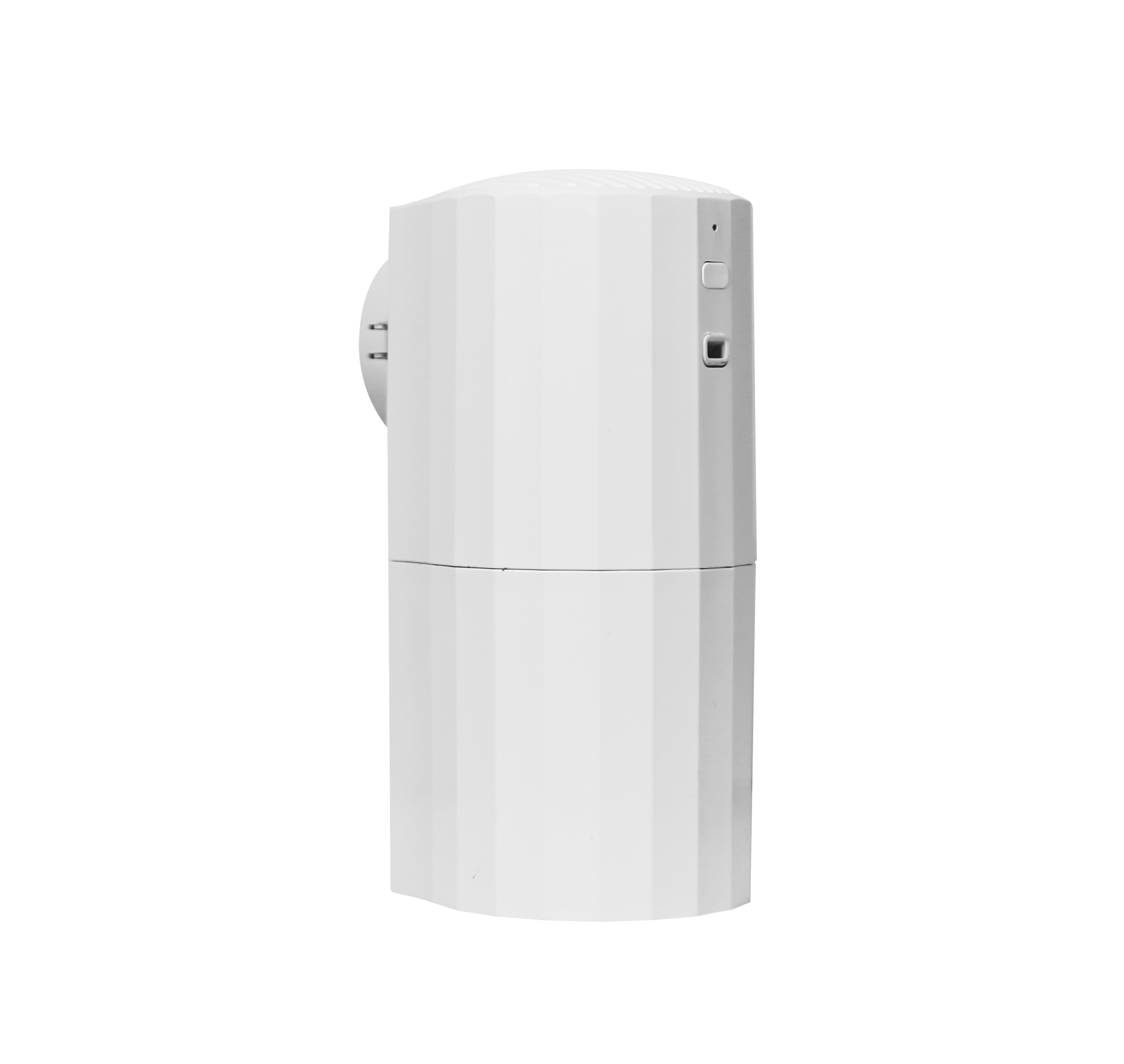
Standalone or wall-mounted units serve targeted zones. You might place a unit near an entrance to create a welcoming first impression. You can mount them in specific retail departments to highlight particular product lines. These units offer flexibility. You can relocate them as floor plans change. They require minimal installation effort compared to HVAC integration.
Advanced systems feature programmable scheduling. You can map scent intensity based on foot traffic peaks. Increase the output during busy weekend hours. Decrease it during quiet morning periods. You can also synchronize the diffusion with other multisensory elements. Aligning the aroma intensity with background music tempo and dynamic lighting creates a deeply immersive customer experience.
Matching machine capacity to your physical space requires more than measuring floor area. Square footage alone does not provide the full picture. You must calculate the total cubic footage. High ceilings require more robust diffusion. A unit designed for a standard office will fail in a high-atrium lobby. Evaluate the manufacturer's coverage claims against your specific architectural dimensions.
Existing HVAC configurations impact scent dispersion heavily. Continuous fan operation ensures even distribution. If your HVAC system cycles on and off, the fragrance will pool in certain areas and vanish in others. You must configure the air handling units to run constantly during operating hours. This maintains a steady flow of the dry micro-mist throughout the targeted zones.
Negative air pressure presents a significant challenge. If exhaust fans pull more air out than the supply fans push in, the scent will exit the building prematurely. Open-door retail layouts face similar issues. Drafts can blow the fragrance out onto the street. You must place standalone units strategically to counteract these airflow dynamics. Proper placement ensures the aroma remains inside the intended area.
Different industries leverage olfactory marketing to achieve distinct goals. In hospitality, the lobby sets the tone for the entire stay. Signature scents evoke relaxation immediately upon arrival. A blend of white tea and thyme signals luxury and cleanliness. Guests associate this aroma with premium service. It creates a welcoming threshold that separates the hotel from the chaotic outside world.
Retail environments use targeted experiential marketing scent to drive behavior. Supermarkets might diffuse the smell of fresh baked bread near the entrance. This stimulates appetite and encourages impulse purchases. High-end boutiques use subtle leather or oud notes. This encourages shoppers to linger in high-margin departments. The longer they browse, the higher the likelihood of a significant transaction.
Corporate and healthcare facilities prioritize well-being. Clean, calming fragrances reduce stress in waiting rooms. Lavender or chamomile blends soothe anxious patients. In office settings, crisp citrus or peppermint notes improve perceived cleanliness. They also enhance employee productivity by promoting alertness. The right aroma transforms sterile environments into comfortable, engaging spaces.
Deploying fragrance technology in public spaces requires strict adherence to safety standards. You must mandate vendor compliance with the International Fragrance Association (IFRA). IFRA sets rigorous guidelines for the safe use of aromatic compounds. Non-compliant oils can cause respiratory irritation or allergic reactions. Protect your customers and staff by verifying these certifications.
Volatile Organic Compound (VOC) regulations also apply. Commercial diffusers must operate within legal VOC limits to maintain indoor air quality. High-quality nebulization systems use pure oils without harmful propellants or synthetic diluents. This minimizes VOC emissions. Request safety data sheets (SDS) from your vendor for every fragrance deployed in your facility.
Address the necessity of hypoallergenic formulations. Public spaces host individuals with diverse sensitivities. Utilize pet-safe and cruelty-free compounds to mitigate liability and align with ethical consumer expectations. Transparently communicating the safety profile of your chosen scents builds trust. It reassures visitors that the ambient environment is both pleasant and entirely safe.
Brands must choose between developing a proprietary scent or selecting an existing blend. A custom signature scent offers high differentiation. It acts as an exclusive memory trigger. No competitor can replicate that exact olfactory experience. Developing a custom profile takes time. You will work with perfumers through multiple iterations. This process ensures the final result perfectly encapsulates your brand identity.
Licensing an existing premium blend from a curated library provides a faster time-to-market. Vendors offer extensive catalogs categorized by mood or industry. You can deploy a high-quality fragrance within days. This approach works well for regional businesses or single-location venues. It provides professional ambient enhancement without the extended development timeline.
Consider your long-term brand strategy. Global hospitality chains benefit immensely from custom scents. Guests recognize the aroma whether they are in Tokyo or New York. Local retailers might find a curated library perfectly adequate. Evaluate your need for exclusivity against your deployment schedule. Both paths deliver the core benefits of olfactory marketing.
Selecting the right equipment involves evaluating the relationship between the physical machine and its required consumables. Some systems utilize proprietary scent cartridges. This design simplifies the refill process, allowing staff to swap out empty containers in seconds without handling raw oils. However, proprietary systems restrict you to a single vendor's fragrance library.
Open-refill systems offer greater flexibility. These machines feature bulk reservoirs that you fill manually with any compatible fragrance oil. This approach allows you to source oils from multiple suppliers or switch blends without replacing the hardware. The trade-off involves a slightly more labor-intensive refill process and the potential for minor spills if staff lack proper training.
Evaluate the capacity of the internal reservoirs. A 130ml capacity machine suits smaller zones and requires more frequent monitoring. Larger industrial units hold 500ml or more, extending the time between refills. Match the reservoir size to your facility's maintenance schedule to prevent the machines from running dry during peak operating hours.
Consistent performance relies on a strict maintenance schedule. Neglected equipment fails. Nebulizer nozzles clog with oil residue over time. This reduces output and alters the scent profile. You must clean these nozzles periodically using approved solvents like isopropyl alcohol. Routine physical checks ensure the diffusion remains invisible and effective.
Replacing internal tubing is another necessary task. Essential oils degrade plastic components slowly. Swapping out the delivery tubes prevents leaks and maintains air pressure integrity. Monitoring fragrance levels prevents dry running. A machine operating without oil damages the internal pump. Establish a clear protocol for checking fluid levels weekly.
Assign these tasks to specific personnel. Create a checklist for routine inspections. Ensure the equipment remains accessible but secure from tampering. Reliable operation guarantees the olfactory experience remains consistent day after day. Proper upkeep maximizes the lifespan of the hardware and protects your investment in the ambient environment.
Olfactory fatigue, commonly known as nose-blindness, poses a significant operational risk. Staff members exposed to a constant aroma quickly lose the ability to perceive it. Their olfactory receptors adapt to the baseline environment. Believing the machine has stopped working, untrained employees often manually increase the output intensity. This leads directly to over-scenting.
Over-scenting creates customer discomfort. It triggers headaches and drives people out of the space. This phenomenon is often referred to as the "Abercrombie effect," where overwhelming fragrance becomes a deterrent rather than an attraction. You must prevent staff from altering the baseline settings. The scent level must remain optimized for the transient customer, not the permanent employee.
Mitigation requires strict hardware controls. Utilize lockable digital interfaces or password-protected mobile applications. Establish firm intensity protocols during the initial installation. Implement automated duty cycling. The machine should run for a set period, then pause. This pulsing technique maintains a consistent ambient level without oversaturating the air. It prevents olfactory fatigue while ensuring a pleasant experience for new arrivals.
Scent sensitivities and allergies are realities in public spaces. You cannot ignore the potential for adverse reactions. Strong, heavy fragrances provoke complaints. Floral or heavily spiced notes often trigger individuals with asthma or migraines. Acknowledging these sensitivities is crucial for maintaining a welcoming environment for all demographics.
Mitigate this risk by utilizing subtle ambient scenting. This is known as threshold scenting. The aroma should hover just at the edge of perception. It should register subconsciously rather than aggressively demanding attention. If a customer can instantly identify specific notes upon entering, the intensity is too high. Dial it back until the scent merely enhances the background atmosphere.
Maintain transparent communication regarding your technology. If questioned, be prepared to explain the safety standards. Confirm that the oils are IFRA-compliant and free from harmful aerosols. Educate your frontline staff on how to address customer inquiries confidently. Transparency alleviates concerns and demonstrates your commitment to a safe, comfortable environment.
A: Commercial machines use cold-air nebulization to convert oils into a dry micro-mist. This preserves the scent profile and leaves no residue. They offer HVAC integration and cover thousands of square feet. Consumer diffusers typically use water or heat, dilute the fragrance, add humidity, and only cover small, single rooms.
A: Coverage depends heavily on the specific model and ceiling height. Standalone or wall-mounted units typically cover between 500 and 2,000 square feet. Industrial units integrated directly into an HVAC system can effectively scent spaces exceeding 10,000 square feet, provided the air handling system runs continuously.
A: Start by defining your core brand values and target demographic. Map these traits to fragrance families. Energizing citrus suits fast-paced retail. Calming lavender fits healthcare. Rich woods or leather align with luxury hospitality. The scent must evoke the exact emotional state you want your customers to experience.
A: Yes, provided you use reputable vendors. Commercial fragrances must comply with International Fragrance Association (IFRA) standards and Volatile Organic Compound (VOC) limits. High-quality oils are formulated to be hypoallergenic, pet-safe, and free from harmful propellants or synthetic diluents used in cheap aerosols.
A: Replacement frequency varies based on machine settings, operating hours, and ambient airflow. Higher intensity settings consume oil faster. On average, a properly calibrated commercial cartridge requires replacing or refilling every 30 to 90 days. Automated duty cycling helps extend the lifespan of the fragrance oil.
A: Yes. Direct-to-duct injection is the most efficient way to scent large areas. The machine connects to the supply ductwork, using the building's airflow to distribute the dry mist. However, your HVAC fan must run continuously during operating hours to ensure even distribution and prevent scent pooling.
A: ROI is measured through performance metrics rather than direct sales attribution. Strategic scenting increases customer dwell time, elevates perceived product value, and boosts brand recall. Customers lingering longer in a pleasant environment show higher average transaction values and improved post-visit satisfaction scores.


