
Views: 0 Author: Site Editor Publish Time: 2026-08-10 Origin: Site


The evolution of home wellness technology has shifted from single-function devices to multi-sensory systems. We now see equipment merging olfactory stimulation with visual ambiance and micro-humidification. Buyers evaluating aromatherapy devices often struggle with a specific problem. They need to determine if an integrated light feature is a functional enhancement for sleep and focus, or merely a superficial add-on that inflates the price. To make an informed purchasing decision, users must evaluate how an essential oil diffuser led light practically impacts daily routines. You also need to understand the technical differences between available models. Finally, you must apply strict criteria for separating high-quality devices from low-tier gimmicks. We will break down the mechanics of sensory stacking, evaluate material durability, and outline exactly what features matter most for your specific room setup.
Sensory stacking involves layering multiple environmental stimuli to create a compounded effect on the human nervous system. When you combine olfactory input from aromatherapy with visual input from ambient lighting, the brain processes these signals simultaneously. The olfactory bulb connects directly to the limbic system, which governs emotion and memory. At the same time, the visual cortex interprets light temperature to signal alertness or rest. Merging these two pathways amplifies the intended physiological response far beyond what a single stimulus achieves alone.
Applying this concept requires intentionally pairing botanical blends with corresponding light temperatures. A mismatch between scent and lighting creates sensory confusion, undermining the desired outcome. For example, diffusing a heavy, relaxing floral scent while exposing yourself to harsh, cool-toned lighting sends conflicting signals to your circadian system. Mastery of an LED aroma diffuser requires treating the light and the oil as a unified protocol. You have to align the visual output with the chemical profile of the oil.
Evidence-based applications demonstrate the power of intentional pairing. To enhance memory and cognitive function during deep work, users should pair stimulating oils like Rosemary, Peppermint, or Lemon with cool, bright light. This combination mimics daylight, suppressing melatonin and sharpening focus. Conversely, to encourage relaxation and prepare the body for sleep, blending Lavender, Cedarwood, and Roman Chamomile with a warm amber light signals the brain that dusk has arrived. This facilitates natural wind-down routines.
| Primary Goal | Recommended Essential Oil Blend | Optimal LED Color Temperature | Expected Physiological Outcome |
|---|---|---|---|
| Deep Cognitive Focus | Peppermint, Lemon, Rosemary | 4000K - 5000K (Cool White/Blue) | Suppresses melatonin production, sharpens alertness, and mimics mid-day sunlight. |
| Evening Relaxation & Sleep Prep | Lavender, Cedarwood, Chamomile | 1800K - 2700K (Warm Amber/Red) | Signals dusk to the brain, preserves natural sleep architecture, and lowers heart rate. |
| Active Breathwork & Meditation | Eucalyptus, Frankincense, Sage | Pulsating Blue or Green (Dynamic) | Guides rhythmic breathing patterns, opens airways, and engages the parasympathetic nervous system. |
Marketing materials for wellness devices frequently overstate the medical benefits of color therapy, or chromotherapy. Claims that specific colored lights can cure ailments, detoxify organs, or directly heal cellular damage lack rigorous scientific backing. Consumers must filter out these exaggerated promises to understand the true functional value of illuminated aromatherapy devices. Relying on pseudoscientific marketing leads to unrealistic expectations and inevitable disappointment when the device fails to perform medical miracles.
The verifiable reality of ambient lighting lies in circadian rhythm science. Intrinsically photosensitive retinal ganglion cells (ipRGCs) in the human eye are highly responsive to specific wavelengths of light. Blue and green light wavelengths (around 460-480 nm) strongly suppress melatonin production. This makes them useful for daytime alertness but highly detrimental to sleep. Red, orange, and warm amber wavelengths have minimal impact on these receptors. Utilizing a red or amber setting on your device at night preserves natural sleep architecture while still providing enough illumination to navigate a dark room safely.
Establishing realistic expectations transforms how you utilize a mood diffuser. It will not cure insomnia or clinical anxiety on its own. It serves as a highly effective environmental cue. By consistently using specific light and scent combinations, you condition your brain to associate those sensory inputs with a specific mental state. Over time, turning on the amber light and lavender mist becomes a psychological trigger that rapidly accelerates your transition from daily stress to evening relaxation.
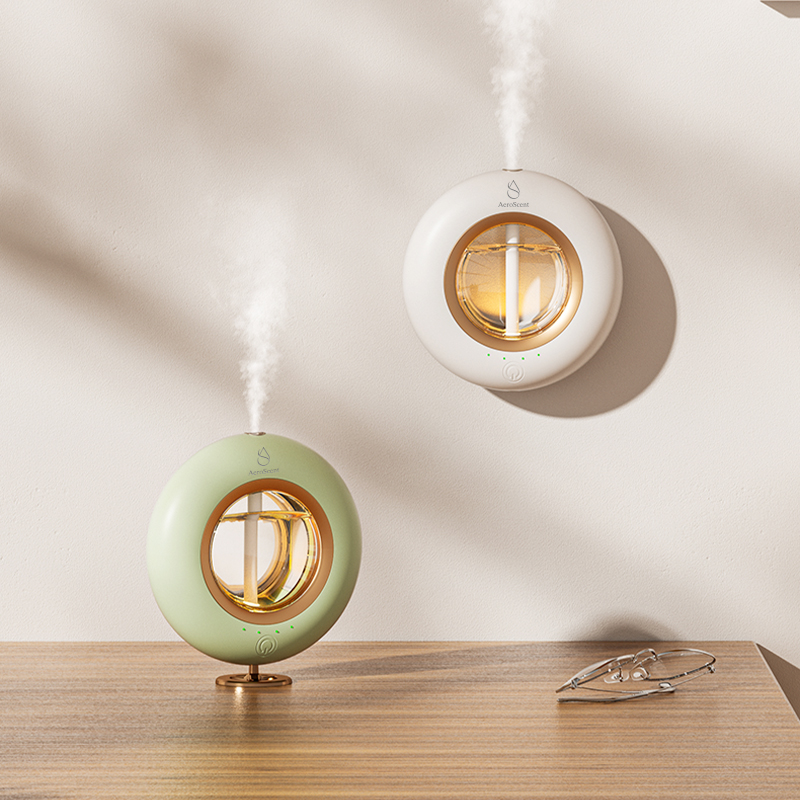
Static lighting models offer a single color output, typically a warm white or soft amber. These devices prioritize simplicity and function primarily as subtle nightlights alongside their misting capabilities. They use standard white LEDs with a colored plastic filter or a specific phosphor coating to achieve the desired color temperature. Dynamic, multi-color LED arrays utilize RGB (Red, Green, Blue) diodes to produce a wide spectrum of colors. Dynamic models allow users to cycle through various hues or lock onto a specific color that matches their current preference or room decor.
Beyond static color selection, advanced dynamic models feature pulsating light modes. These modes slowly fade the light intensity up and down in a rhythmic pattern. Manufacturers design this specific feature to guide breathwork, meditation, and structured relaxation protocols like the 4-7-8 breathing technique. By synchronizing your inhales and exhales with the brightening and dimming of the light, you can actively lower your heart rate. This turns the device into an active biofeedback tool rather than just a passive room accessory.
The integration of Wi-Fi and Bluetooth connectivity has transformed standard diffusers into smart home peripherals. App-controlled customization allows users to bypass physical buttons entirely. You can manage mist intensity, LED color, and timer settings directly from a smartphone. This connectivity often includes voice control integration with virtual assistants, enabling hands-free operation. The primary advantage of smart technology is the ability to program highly specific, automated routines that run without daily manual intervention.
Scheduling routines significantly enhances the user experience by aligning environmental changes with natural biological rhythms. Users can program a sunrise simulation for morning wake-ups. The app can be set to initiate a gradual increase in warm-to-cool light intensity starting 30 minutes before the alarm. You can pair this with the diffusion of an energizing citrus blend. This gentle, multi-sensory awakening reduces sleep inertia and provides a much less jarring start to the day compared to a traditional audible alarm.
Traditional aromatherapy relied heavily on heat lamps or candle-warmed rings. These outdated methods used a heat source to evaporate the essential oils into the air. Modern ultrasonic technology replaces heat with a piezoelectric transducer located at the base of the water tank. This small ceramic disc vibrates at ultrasonic frequencies—typically 2.4 million times per second. These rapid vibrations create capillary waves that atomize the water and essential oils into a fine, cool mist. The integration of LEDs into ultrasonic models provides illumination without contributing any thermal energy to the water reservoir.
Heat-free dispersion is mandatory for chemical preservation. Essential oils contain delicate volatile organic compounds (VOCs). Applying heat alters their chemical structure, degrading their therapeutic properties and sometimes producing a burnt, unpleasant odor. Ultrasonic cold-mist technology preserves the integrity of the botanical extracts. The cool-touch operation of LED ultrasonic models eliminates the fire hazards and burn risks associated with open flames or hot incandescent bulbs. This makes them infinitely safer for households with children or pets.
Ultrasonic models also deliver a distinct tri-functional benefit. They simultaneously disperse scent, provide ambient light, and introduce micro-humidification into the environment. While not powerful enough to replace a dedicated whole-room humidifier, the localized moisture output helps combat dry indoor air. This is particularly noticeable during winter months or in heavily air-conditioned spaces. This added moisture improves perceived indoor air quality and can soothe dry respiratory tracts.
The materials used to construct the water tank and the outer shell dictate both the lifespan of the device and the quality of the light output. The internal water reservoir must be constructed from medical-grade polypropylene (PP) plastic. Essential oils act as powerful solvents. Citrus oils containing high levels of limonene will rapidly corrode, crack, or melt standard plastics like ABS or polystyrene. The exterior shell materials range from basic plastics to premium ceramic, frosted glass, wood, or resin.
Material choice directly impacts the aesthetic quality of the illumination. Thin, cheap plastic shells often result in harsh glare. They expose the individual LED diodes and create an uneven, unappealing look with hot spots of light. Premium materials like frosted glass or unglazed ceramic provide excellent light diffusion. They scatter the LED output evenly across the surface, transforming a localized light source into a soft, ambient glow. This diffusion is what elevates a basic appliance into a visually appealing decorative diffuser that complements interior design.
A major failure point in low-tier models is the hardwiring of the mist and light functions. In these inferior devices, turning on the mist automatically activates the LED, with no option to separate the two. This design flaw renders the device useless for nighttime aromatherapy if the user requires a dark room to sleep. Independent controls are non-negotiable for a high-quality user experience. You must be able to run the mist with the light completely off, or use the light as a standalone lamp without generating mist.
For bedroom use, sleep-friendly features extend beyond independent switches. The device must offer dimming options, allowing you to reduce the light intensity to a barely-there glow. A complete blackout mode is also required. This means that when the primary LED is turned off, there are no secondary indicator lights piercing the darkness. Bright blue power LEDs or flashing Wi-Fi status lights will disrupt light-sensitive sleepers. You need a device that can operate in total darkness.
Selecting the correct tank capacity requires matching the device to the square footage of the intended room. An undersized tank in a large living room will fail to disperse scent effectively. An oversized tank in a small bathroom will overwhelm the space and leave surfaces damp. Understanding this scalability ensures optimal performance and prevents wasted essential oils.
| Tank Capacity | Ideal Room Size | Average Continuous Run-Time | Best Use Case |
|---|---|---|---|
| 100ml - 150ml | Up to 150 sq ft. | 3 to 5 hours | Desks, bathrooms, small bedside tables. |
| 200ml - 300ml | 150 to 300 sq ft. | 6 to 9 hours | Standard bedrooms, home offices. |
| 400ml - 500ml+ | 300 to 500+ sq ft. | 10 to 16 hours | Open-concept living rooms, large master suites. |
Run-time synergy also involves understanding power consumption. For corded models, the LED power draw is negligible and does not impact misting time. For cordless, battery-operated models, running the LED light at maximum brightness significantly drains the battery. This reduces the overall misting run-time. Users of cordless devices must balance their need for ambient light against the necessity of prolonged aromatherapy output. If you need the mist to run all night on battery power, you will likely have to keep the LED turned off.
Positioning the device correctly maximizes both mist dispersion and visual impact. You cannot just place the unit anywhere and expect optimal results. The heavy mist needs time to evaporate into the air before settling on the floor or surrounding furniture. Proper placement prevents water damage and ensures the scent reaches the entire room.
Internal component degradation is a reality for any device that constantly handles water and volatile oils. The ultrasonic disc has a finite lifespan. It is typically rated for a few thousand hours of use before its vibration frequency weakens, resulting in diminished mist output. While LEDs are generally long-lasting, the internal wiring and solder joints remain vulnerable. If the internal housing is poorly sealed, moisture ingress will eventually short-circuit the LED array or the main control board.
Constant exposure to corrosive citrus and resinous oils accelerates this degradation. If essential oil accidentally drips down the center air shaft or seeps into the base due to a cracked tank, it will eat through the protective coatings on the printed circuit board (PCB). High-quality manufacturers apply a conformal coating to their internal electronics to resist moisture and oil damage. Budget models skip this manufacturing step, leading to premature device failure the moment a single drop of water breaches the inner housing.
Illuminated diffusers require strict cleaning protocols. When water and essential oils are atomized, they leave behind a sticky residue inside the tank. If you use tap water, calcium and magnesium deposits will also accumulate on the ultrasonic disc and the tank walls. In a standard, non-illuminated device, this grime might go unnoticed for weeks. In a device designed to glow, the LED backlight acts as an inspection light. It highlights every speck of dirt, oil ring, and mineral scale.
This visibility necessitates more frequent deep cleaning to maintain aesthetic value. A dirty tank distorts the light output, turning a clean white glow into a murky, uneven yellow. You must follow a specific cleaning protocol to keep the device functioning and looking pristine.
A common compromise in the market involves prioritizing exterior lighting design over internal functional efficiency. Highly stylized devices often feature thick glass domes, intricate metal sleeves, or complex resin shapes designed to cast beautiful shadows. While visually stunning, these heavy, restrictive covers impede airflow. A weak internal fan struggling against a heavy, narrow-necked cover will result in poor mist projection. The mist will fall immediately around the base rather than dispersing into the room.
Buyers must balance visual appeal with functional aromatherapy output. If the primary goal is therapeutic scent dispersion across a large living room, a simpler design with a powerful fan and a wide output nozzle is superior. If the goal is bedside ambiance with light scenting, a heavier, more decorative cover might be acceptable. Always inspect the size of the mist output vent. A tiny aperture on a large decorative cover is a strong indicator that mist performance was sacrificed for aesthetic design.
An essential oil diffuser LED light operates as a functional tool for environmental control, provided the device allows for independent customization of light, mist, and moisture output. By merging aromatherapy with strategic ambient lighting, users can actively shape their physical spaces to support focus, relaxation, or sleep. The true value of these devices lies in their ability to deliver sensory stacking safely and efficiently through modern ultrasonic technology.
When shortlisting devices, buyers must look past superficial color-changing gimmicks. Prioritize models constructed with medical-grade plastics that resist oil corrosion. Ensure the device features independent switches for the light and mist, alongside dimmable warm-light settings specifically designed to protect sleep architecture. A high-quality build will provide even light diffusion without exposing harsh LED glare.
A: Yes. Mid-to-high-tier models feature independent controls for the mist and the light. You can turn off the ultrasonic misting function entirely and use the device solely as an ambient lamp. Always verify this feature before purchase. Budget models often hardwire the two functions together, forcing the light on whenever the mist runs.
A: No. Modern LED technology produces negligible heat compared to traditional incandescent bulbs. The water and essential oils remain at room temperature during operation. This heat-free environment preserves the delicate chemical structures and therapeutic properties of the volatile organic compounds found in your oils.
A: Scientific evidence points to red, orange, or warm amber hues under 2700K as the best options for sleep. These longer wavelengths do not disrupt the brain's natural melatonin production. You should avoid blue, green, or bright white lights at night. Those cooler colors suppress melatonin and signal your brain to remain alert.
A: No. They are highly energy-efficient devices. Both the ultrasonic piezoelectric transducer and the LED arrays operate on very low wattage. Most units draw between 10 to 15 watts in total. Running the device daily will have a minimal, almost unnoticeable impact on your monthly electricity consumption.
A: You should wipe out residual water and oil with a soft cloth after every single use. A deep clean with white vinegar is required weekly. Because the LED backlights the tank, any mineral scale from hard water or sticky oil residue becomes highly visible. Neglecting maintenance will eventually block the light output.
A: In the vast majority of cases, no. Manufacturers solder the LED diodes directly onto the internal printed circuit board to save space and maintain water resistance. If the LEDs fail, you usually have to replace the entire unit. This highlights the importance of purchasing from brands that offer strong warranties on internal components.


