
Views: 0 Author: Site Editor Publish Time: 2026-08-28 Origin: Site


Maintaining wellness routines, managing environmental odors, and creating positive memory scent associations during travel is often compromised by the logistical challenges of packing fragile, bulky home fragrance systems. Traditional diffusers require continuous AC power, rely on easily spilled water reservoirs, and feature delicate components that do not withstand the rigors of transit, luggage compression, or TSA scrutiny. Identifying the optimal solution requires moving beyond aesthetic preferences to evaluate technical specifications. You must look closely at atomization technology, power independence, leak-proof engineering, and spatial coverage capabilities. Transient environments like hotel rooms, rental cars, and airport lounges demand hardware built specifically for mobility. Finding the best travel essential oil diffuser means solving these exact friction points. A device designed to sit statically on a living room shelf will inevitably fail when subjected to the dynamic conditions of modern travel.
Evaluating a travel aroma diffuser starts with understanding the physical constraints of life on the road. Device dimensions directly dictate usability across different transportation modes. A unit intended for vehicle use must conform to standard automotive cup-holder dimensions, which typically range from 2.5 to 3 inches in diameter. Devices exceeding this footprint become unstable during transit. A tall, top-heavy unit with a narrow base will tip over during hard braking or sharp turns, creating a distraction and a potential mess.
Weight-to-output ratios also play a critical role in packing logistics. Airlines strictly enforce carry-on weight limits, and backpack space remains at a premium. Adding unnecessary bulk to your personal item allowance reduces space for other travel necessities. The ideal device fits seamlessly into small bags, shoe compartments, or side pockets without risking damage to internal components. You must evaluate whether the unit requires a dedicated protective travel case or if its native housing provides sufficient impact resistance against the compression forces typical of overhead bins and stuffed trunks.
Travel exposes electronics to blunt force, constant vibration, and extreme temperature fluctuations. Material selection determines how well a device survives these harsh conditions. Essential oils are highly volatile compounds that act as natural solvents. If a manufacturer uses cheap Acrylonitrile Butadiene Styrene (ABS) plastic, highly concentrated citrus oils containing d-limonene will literally dissolve the plastic over time. This chemical reaction causes the reservoir to warp, crack, and eventually leak.
Shatter-resistant, BPA-free polypropylene (PP) plastics represent the mandatory industry standard for high-quality mobile units. PP plastic resists chemical degradation from undiluted essential oils. Beyond the shell material, structural integrity extends to the locking mechanisms and internal seals. Luggage handlers do not treat bags gently. A travel unit must feature secure threading or robust mechanical latching systems to prevent accidental activation or leakage inside a suitcase. A simple magnetic lid might work perfectly on a bedside table, but it will easily detach when tossed into a backpack, spilling residual oil across your clothing and expensive electronics.
Mobility requires cutting the cord entirely. Analyzing battery capacity is essential for multi-hour transit. A cordless diffuser equipped with a 2000mAh to 4000mAh lithium-ion battery generally provides enough runtime to cover a transatlantic flight or a full day of driving. In practical terms, a 4000mAh battery might yield 8 hours of continuous output or up to 16 hours on an intermittent setting. Devices relying solely on direct USB power without internal batteries severely limit your placement options in hotel rooms or rental cars where outlets may be scarce, occupied, or inconveniently located.
Charging infrastructure must also align with modern travel tech packing. Transitioning from proprietary charging cables to universal USB-C inputs streamlines your packing list. Carrying a single high-wattage USB-C charger and cable to power your laptop, phone, and fragrance device reduces cable clutter. It also ensures you can easily replace a lost cord at any airport terminal or convenience store worldwide, rather than relying on a proprietary barrel jack that is impossible to source on the road.
The method a device uses to disperse scent heavily influences its viability for travel. Different environments demand different atomization technologies. Understanding the physics and mechanics behind each system helps you select the right hardware for your specific itinerary.
Ultrasonic technology uses a piezoelectric transducer to create high-frequency vibrations. A small ceramic disc at the base of the reservoir vibrates at approximately 2.4 million times per second. This rapid oscillation creates a standing wave that breaks down a mixture of water and essential oil into microscopic particles, projecting a fine, cool mist into the air.
Nebulizing diffusers rely on pressurized air and the Venturi effect to atomize pure essential oil directly from the bottle. A small internal air pump forces a high-velocity stream of air across a micro-tube connected to the oil. This creates a localized vacuum that pulls the liquid upward and blasts it against a baffle, shattering the oil into billions of micro-particles without using heat or water.
Evaporative and heat-based models use small internal fans or gentle heating elements to accelerate the evaporation of essential oils dripped onto a replaceable absorbent pad.
| Atomization Technology | Water Required | Spill Risk Level | Scent Throw Capacity | Ideal Travel Environment |
|---|---|---|---|---|
| Ultrasonic | Yes (Distilled preferred) | High (if tipped) | Medium (Up to 200 sq ft) | Stationary Hotel Rooms, Airbnbs |
| Waterless Nebulizing | No | Low (Sealed threading) | High (Up to 400 sq ft) | Moving Vehicles, Airplanes, Large Suites |
| Evaporative / Heat | No | Zero | Low (Personal space only) | Desktop, Immediate Airplane Seat |
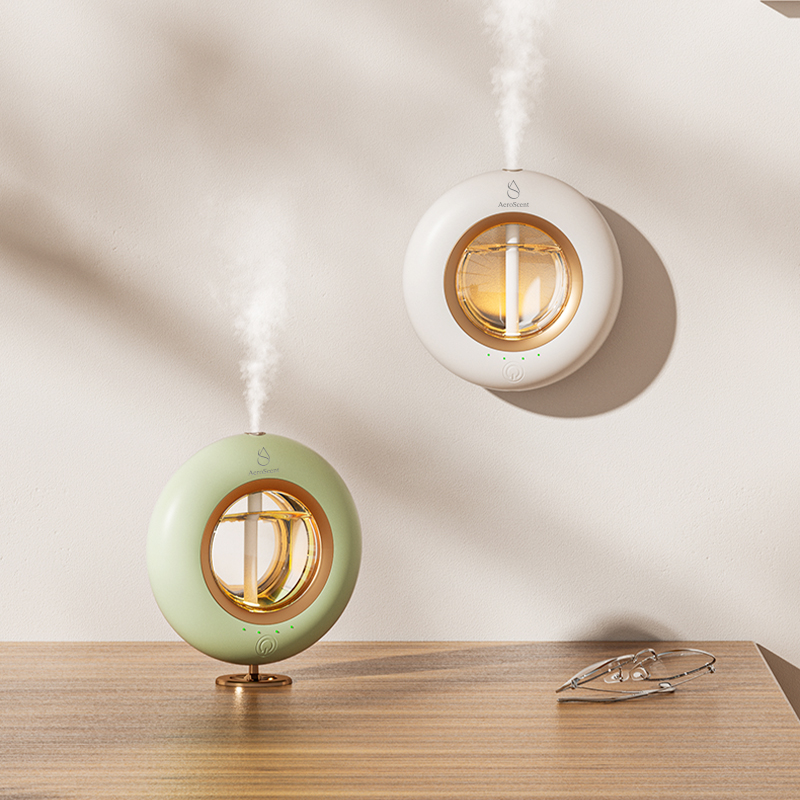
Selecting the right hardware requires matching the device specifications against the realities of your primary travel modes. A unit optimized for a cross-country road trip may perform poorly during international air travel. You must evaluate how the hardware interacts with security regulations, vehicle layouts, and accommodation sizes.
Navigating airport security requires strict adherence to liquid and battery regulations. The TSA 3-1-1 liquids rule applies directly to your accompanying essential oils. All oil bottles must be 3.4 ounces (100ml) or smaller and fit within a single quart-sized, resealable clear plastic bag. Fortunately, standard 10ml and 15ml essential oil bottles easily meet this requirement, allowing you to carry a diverse scent library.
Battery regulations dictate how you pack the hardware itself. The FAA and global aviation authorities mandate that devices containing non-removable lithium-ion batteries must be packed in your carry-on hand luggage. You cannot place a battery-powered portable diffuser in checked baggage due to the risk of thermal runaway and fire in the unpressurized cargo hold. Always verify the watt-hour (Wh) or mAh rating of your device. While most portable units fall well below the 100Wh airline limit, carrying the manufacturer's specifications can prevent unnecessary security delays.
Vehicle integration demands specific form factors and power management features. Assessing 12V/USB vehicle integration ensures the device can draw power directly from the car's center console or dashboard ports. Auto-shutoff features are critical for automotive use. If you leave the device running after exiting the vehicle, auto-shutoff prevents battery drain and protects the internal motor or ultrasonic plate from overheating and dry-running once the oil or water depletes.
Directional nozzles represent another crucial feature for road trips. You must be able to angle the mist output away from the windshield and dashboard electronics. Continuous mist accumulating on glass creates a dangerous, oily film that severely impairs visibility, especially at night. Furthermore, moisture forced into climate control vents or infotainment screens can cause expensive electrical faults. A 360-degree rotating nozzle allows you to direct the fragrance toward the rear seats safely.
Evaluating spatial coverage ensures the device meets your expectations upon arrival. You must differentiate between personal-space diffusers designed for under 50 square feet and room-filling devices capable of handling up to 300 square feet. A USB-powered evaporative pad will not mask stale cigarette smoke or damp mildew odors in a large resort suite, whereas a high-output nebulizer will neutralize the space in minutes.
Managing scent fatigue and prolonging battery life overnight requires advanced programming. Look for devices offering continuous versus intermittent mist modes. The human olfactory system experiences fatigue after 15 to 20 minutes of constant exposure to a scent, rendering you "nose-blind." Intermittent settings (e.g., 10 seconds of output followed by 50 seconds of rest) prevent this desensitization. This pulsing operation also stretches a single battery charge across an entire eight-hour sleep cycle, ensuring you wake up to a refreshed room.
Theoretical specifications only matter if the device performs reliably in the field. Travel introduces unique physical and logistical challenges that impact hardware performance and dictate your maintenance routines. Understanding these variables prevents equipment failure and ruined clothing.
Cabin pressure fluctuations during flights severely affect sealed liquid reservoirs and oil bottles. As an aircraft ascends to cruising altitude, the ambient cabin pressure drops. According to Boyle's Law, the trapped air inside your oil bottles and device reservoirs will expand. This expansion forces liquid upward, pushing it aggressively past rubber seals, threading, and nebulizer micro-tubes.
Mitigating this risk requires strict packing protocols to prevent oil from destroying your luggage contents. Follow these steps when preparing for a flight:
Maintaining optimal performance requires regular cleaning, which becomes complicated without access to standard kitchen supplies like white vinegar or deep sinks. Cleaning ultrasonic plates in a hotel room often means relying on alternative methods. You must wipe down the ceramic disc gently with a dry tissue to remove loose moisture, then use a standard 70% isopropyl alcohol wipe to dissolve stubborn oil residue and mineral buildup from hard tap water.
Waterless nebulizers face entirely different maintenance challenges. Switching between thick, resinous oils like vetiver, patchouli, or sandalwood and thin oils like citrus or peppermint can quickly clog the delicate micro-tubes. Clearing clogged nebulizer nozzles during a trip requires a specific flushing protocol:
The primary goal of mobile aromatherapy extends beyond masking unpleasant hotel odors; it serves as a powerful tool for psychological anchoring and physical wellness. Using consistent fragrances creates positive memory scent associations. The olfactory bulb connects directly to the brain's limbic system, which processes emotion and memory. Diffusing a familiar scent instantly makes an unfamiliar, sterile hotel room feel safe, relaxing, and recognizable.
Selecting specific essential oils helps target common travel ailments. Blends of lavender and clary sage promote serenity and combat sleep disruptions caused by changing time zones and unfamiliar beds. Spearmint, ginger, or sweet orange oils effectively manage motion sickness, nausea, and the heavy fatigue associated with jet lag recovery.
However, you must evaluate the spatial impact of your choices. Diffusing in shared environments like airplanes, trains, or crowded rental cars requires strict social awareness. Select universally tolerated, low-intensity oils. Avoid heavy florals like ylang-ylang or polarizing, highly medicinal blends like eucalyptus and tea tree that may trigger allergies, headaches, or discomfort in fellow passengers.
| Essential Oil Profile | Primary Travel Benefit | Best Travel Scenario | Social Tolerance Level |
|---|---|---|---|
| Lavender & Chamomile | Sleep induction, anxiety reduction | Hotel rooms, overnight flights | High |
| Peppermint & Ginger | Nausea relief, motion sickness | Road trips, turbulent flights | Medium (Can be overpowering) |
| Sweet Orange & Grapefruit | Energy boost, jet lag recovery | Morning commutes, arrival days | Very High |
| Eucalyptus & Tea Tree | Air purification, sinus relief | Stuffy hotel rooms | Low (Highly medicinal scent) |
A: Yes, it is safe and required. Devices containing built-in lithium-ion batteries must be packed in carry-on hand luggage due to airline fire safety regulations regarding the cargo hold. Ensure the device is completely empty of water or oil before packing to prevent pressure-induced leaks.
A: No. Aviation authorities globally prohibit devices with non-removable lithium-ion batteries in checked baggage. If the battery is damaged or short-circuits, it poses a severe fire risk in the unpressurized, inaccessible cargo area. Always pack battery-powered diffusers in your carry-on.
A: Waterless nebulizers are generally superior for dynamic travel like flying or driving because they eliminate spill risks and do not require sourcing clean water. However, ultrasonic models are better for hotel stays if you need to add humidity to dry, air-conditioned rooms.
A: Always empty the reservoir or detach the oil bottle completely before packing. Altitude and temperature changes cause pressure fluctuations that force liquids past seals. Store the empty device and the tightly capped oil bottles in separate, leak-proof secondary containers or plastic bags.
A: Most devices specifically marketed for automotive use are designed with a base diameter of 2.5 to 3 inches to fit standard cup holders. Always verify the base dimensions in the product specifications before purchasing if vehicle use is your primary goal.
A: For ultrasonic models, use a standard rubbing alcohol wipe to gently clean the ceramic disc and reservoir, removing oil residue. For nebulizers, run a few milliliters of high-proof rubbing alcohol through the device for five minutes to dissolve clogs and flush the micro-tubes.


