
Views: 0 Author: Site Editor Publish Time: 2026-08-04 Origin: Site


Scenting compact spaces like home offices, bathrooms, or vehicles requires precise output control. Standard 300ml to 500ml diffusers push too much moisture and concentrated vapor into small square footage. Running high-capacity units in confined areas causes rapid olfactory fatigue, damages nearby electronics through micro-condensation, and wastes expensive essential oils. You need a device calibrated for low-volume airframes. Selecting the right compact unit means evaluating active versus passive diffusion technology, physical footprint, power delivery, and maintenance demands. A smaller tank requires intermittent mist settings to prevent scent saturation in rooms under 150 square feet. We will examine the technical specifications necessary to identify a highly efficient, space-appropriate device. You must match the output capacity to the room size, compare waterless nebulizing against ultrasonic systems, and implement strict cleaning protocols to avoid common hardware failures.
A standard compact space typically ranges from 50 to 150 square feet. This includes environments like personal cubicles, half-bathrooms, walk-in closets, and vehicle interiors. In these zones, airflow is restricted and air exchange rates are low. Standard 500ml diffusers often push up to 50ml of water and oil mixture into the air per hour. This output level rapidly overwhelms a small room, creating a dense localized humidity dome. A properly sized small diffuser should operate with a much lower emission rate, typically between 10ml and 20ml per hour. Matching the output capacity to the room volume ensures a subtle, continuous fragrance rather than an aggressive cloud of scent. High-capacity units simply lack the lower-end calibration required for tight spaces. You must calculate the square footage of your target area and verify the manufacturer's milliliter-per-hour rating before installation.
The human olfactory system adapts quickly to continuous smells. This physiological response is known as olfactory fatigue or noseblindness. When a high-output device operates in a small room, scent molecules saturate the limited air volume in minutes. Receptors in the nasal cavity become overwhelmed and stop sending signals to the brain. Users stop smelling the fragrance and often mistakenly add more oil or increase the output setting. This results in severe over-saturation. High concentrations of airborne volatile organic compounds (VOCs) from essential oils can trigger headaches, respiratory irritation, and nausea. Compact diffusion requires precise control to maintain a scent level just above the threshold of perception. Devices that cannot restrict their output fail completely in these environments.
Ultrasonic devices emit a fine mist of water and oil. In large rooms with active HVAC returns, this mist dissipates into the ambient air. In confined areas with poor ventilation, the mist settles rapidly. This micro-condensation poses a severe risk to wooden desks, paper documents, and sensitive electronics. A localized damp zone forms directly around the base of the unit. Over time, this moisture warps veneer, shorts out printed circuit boards in keyboards, and encourages mold growth on drywall. To protect surfaces in tight spaces, you must utilize directional misting nozzles that propel the vapor upward and away from immediate surroundings. Alternatively, environments highly sensitive to moisture demand waterless technologies to eliminate condensation risks entirely.
Ultrasonic technology relies on a small piezoelectric ceramic disc located at the base of the water tank. This transducer vibrates at high frequencies—typically 2.4 MHz—creating ultrasonic waves that cause cavitation in the water. This process breaks the water and essential oils into microscopic particles. A small internal fan then pushes this mist out of the device. These units are generally quieter than other active diffusers and remain highly affordable. They also double as micro-humidifiers, adding a slight amount of moisture to dry, air-conditioned offices. However, they require a constant water source and pose a distinct risk of localized dampness if run continuously on high settings in unventilated areas. The ceramic disc is also a wearable part that degrades over time, especially if exposed to hard water scale.
Nebulizing technology operates entirely without water or heat. These devices use a built-in air pump to force pressurized air through a small venturi tube. According to Bernoulli's principle, this high-velocity air creates a vacuum that pulls pure essential oil from the attached bottle, atomizing it against a glass or plastic baffle into an ultra-fine vapor. A portable aroma diffuser utilizing this method delivers a highly potent, unadulterated scent profile. Because they add zero moisture to the air, they are optimal for travel, vehicles, and high-humidity climates. The primary drawbacks include faster oil consumption and a slightly higher decibel output due to the mechanical vibration of the internal air pump diaphragm.
Evaporative models use a small internal fan to blow ambient air across a fibrous pad soaked in essential oils. Heat-based models use a gentle warming element (like a PTC ceramic heater) to accelerate the evaporation process. Both methods require no water and feature ultra-compact designs. They are virtually silent, making them suitable for extreme close-proximity use. However, these technologies have significant limitations. Heat alters the delicate chemical composition of therapeutic essential oils, degrading their terpene profiles. Furthermore, lighter scent notes (like citrus) evaporate quickly, while heavier base notes (like vetiver) linger on the pad. This fractional evaporation results in an inconsistent scent throw that changes character and fades rapidly over a short period.
Passive diffusion relies on capillary action. Porous rattan reeds sit in a vessel of essential oil mixed with a carrier fluid, drawing the liquid upward through microscopic channels. As the oil reaches the exposed portion of the reeds, it naturally evaporates into the surrounding air. This method requires absolutely zero power and operates in complete silence. It is the ideal solution for ultra-compact, static spaces where power outlets are unavailable, such as small guest bathrooms or closets. The main disadvantage is the complete lack of output control. The device cannot be turned off, the intensity cannot be adjusted dynamically, and the reeds require regular flipping and eventual replacement as they become saturated with dust and heavy oil molecules.
| Technology Type | Operating Mechanism | Moisture Added | Primary Maintenance Task | Optimal Placement |
|---|---|---|---|---|
| Ultrasonic | Piezoelectric high-frequency vibration | Low to Medium | Descaling the ceramic disc | Desks, dry offices, bedside tables |
| Nebulizing | Pressurized air atomization (Venturi) | None | Flushing micro-tubes with alcohol | Vehicles, travel, humid environments |
| Evaporative/Heat | Fan airflow or PTC warming element | None | Replacing saturated fiber pads | Personal space, ultra-quiet needs |
| Passive (Reed) | Capillary action through rattan | None | Flipping and replacing reeds | Bathrooms, closets, no-power zones |
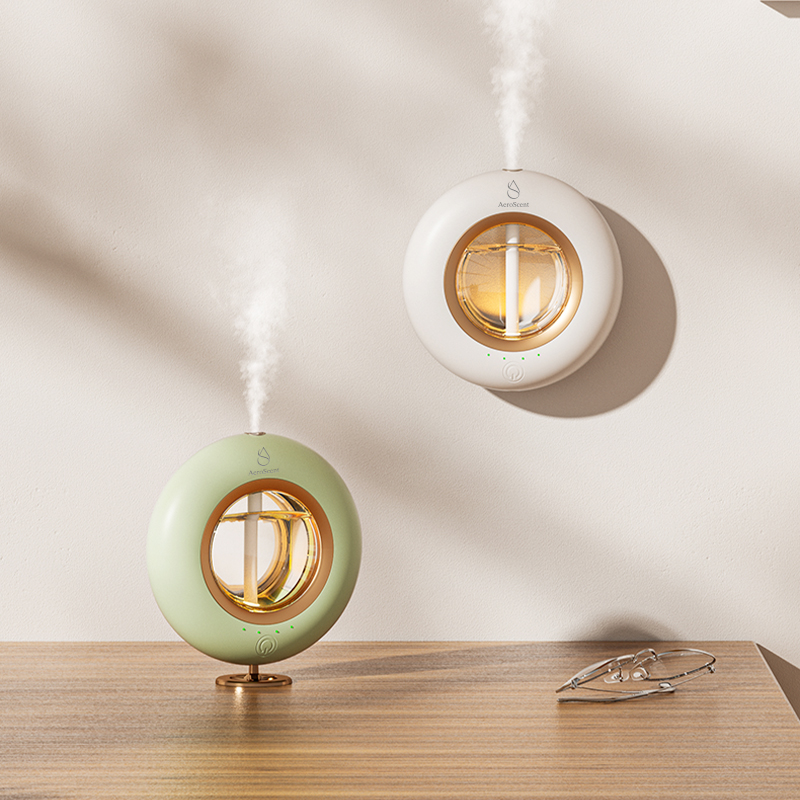
When dealing with limited real estate, physical dimensions dictate usability. A compact device must fit seamlessly onto a crowded desk, a narrow bathroom shelf, or a standard vehicle cup holder. Measure the base diameter carefully. Anything wider than 2.75 inches will likely fail to fit in a standard car console. Height is equally critical to prevent the unit from tipping over easily when subjected to vibrations or accidental bumps. For users who travel, the device must feature spill-proof locking mechanisms. A threaded, silicone-gasket-sealed lid prevents leaks inside luggage. TSA-friendly dimensions and durable exterior housings made from impact-resistant polymers are non-negotiable requirements for any device intended for frequent transit.
The power delivery system defines how and where you can use the device. Traditional AC plugs tether the unit to a wall, severely limiting placement options in bathrooms or older offices with sparse outlets. USB-C tethered models offer better flexibility, allowing you to power the unit directly from a laptop, a power bank, or a 5V/2A car adapter. For ultimate freedom, look for devices with built-in rechargeable lithium-ion batteries (typically utilizing 18650 cells). A high-quality battery can power a compact nebulizer for 20 to 50 hours on intermittent settings. This true portability allows you to move the scent source effortlessly from the car to the office to the hotel room without managing cables.
For water-based ultrasonic models, the tank capacity sweet spot for small spaces lies between 50ml and 150ml. Anything larger wastes desk space and encourages over-humidification. However, a small tank does not necessarily mean a short run time. Efficiency is achieved through intermittent misting features controlled by the internal printed circuit board (PCB). A setting that alternates 30 seconds of misting with 30 seconds of rest effectively doubles the operational lifespan of a single fill. This intermittent function allows a 100ml tank to easily last through an 8-hour workday without requiring a refill, bridging the gap between compact size and sustained performance.
Environmental dynamics change throughout the day. A room might require a strong scent burst in the morning and a subtle background aroma in the afternoon. Variable mist settings (low, medium, high) achieved through Pulse Width Modulation (PWM) of the internal fan are essential for adapting to these shifts. Furthermore, many diffusers include LED ambient lighting. While visually appealing in a living room, flashing lights are highly distracting in a focused work environment or a dark bedroom. The ability to completely disable all LED lights—including small power indicator lights—is a mandatory feature for distraction-free office use and optimal sleep hygiene.
Compact devices are often placed within three feet of the user. At this range, mechanical noise becomes highly noticeable. Ultrasonic models emit a faint trickling water sound and a low fan hum. Nebulizing models produce a distinct vibrating buzz from the internal air pump. Establish acceptable decibel (dB) ratings before purchasing. For bedside tables or quiet office environments, the device should operate below 30 dB. Anything louder will interfere with concentration, phone calls, or sleep. Always check the manufacturer's decibel rating and look for units that utilize rubberized motor isolation mounts to dampen vibration transfer to hard surfaces.
Essential oils are highly concentrated, volatile organic compounds. Citrus oils, in particular, contain high levels of d-limonene, a natural solvent that rapidly degrades standard plastics like ABS. If a manufacturer uses cheap materials, the internal reservoir will crack, leak, and potentially leach toxic chemicals into the mist. Finding the best mini essential oil diffuser requires verifying the construction materials. Look for medical-grade, BPA-free polypropylene (PP) plastics for water tanks. Polypropylene resists chemical degradation from terpenes. For waterless nebulizers, internal atomizing components should ideally be constructed from glass, ceramic, or high-grade aluminum to ensure long-term integrity and safe operation.
The choice between waterless and water-based systems involves weighing convenience against consumable costs. Waterless nebulizers offer unmatched operational convenience. You screw the essential oil bottle directly into the machine, eliminating daily water refills, measuring drops, and wiping down wet tanks. They are inherently spill-proof. However, this convenience comes at a price. Nebulizers consume pure essential oil at a much faster rate than ultrasonic models. If you use expensive oils like rose or sandalwood, a waterless system will significantly increase your ongoing operational costs. Ultrasonic models stretch a few drops of oil over several hours, making them far more economical for daily use.
Modern devices often feature app connectivity, Bluetooth speakers, and complex LED light shows. While these features look impressive on a specification sheet, they rarely add tangible value to a compact diffuser. In fact, they introduce unnecessary failure points. A small chassis has limited internal space. Packing it with Wi-Fi receivers and extra wiring increases heat generation and the likelihood of electronic malfunction. For small spaces, reliability stems from simplicity. Physical buttons, straightforward timers, and a singular focus on efficient scent dispersion result in a much longer lifespan than overly complicated smart devices.
Budget-friendly ultrasonic units saturate the market. These devices often cost very little upfront but suffer from poor long-term durability. The ultrasonic transducer disc is a wearable part with a lifespan of approximately 3,000 hours. In cheap models, it degrades quickly, leading to weak mist output or complete failure within months. Conversely, premium nebulizing models require a higher initial investment. However, they are built with robust air pumps and often feature replaceable atomizing nozzles. When evaluating value, compare the lifecycle of buying three cheap ultrasonic units over two years versus investing once in a high-quality, repairable nebulizer.
Water-based diffusers create the perfect environment for mold and bacterial biofilms if neglected. Stagnant water left in a tank for more than 48 hours will begin to breed pathogens. When the device is turned back on, it aerosolizes these bacteria directly into your breathing space. Strict cleaning protocols are mandatory. Empty any remaining water after each use. Wipe the reservoir dry with a clean microfiber cloth. Once a week, run a cleaning cycle using a mixture of water and white vinegar to descale the ultrasonic disc and eliminate mineral buildup. Never leave water sitting in a device used infrequently.
Confined spaces amplify the concentration of airborne particles. This poses a significant risk to pets and individuals with respiratory conditions like asthma. Many common essential oils—including eucalyptus, tea tree, peppermint, and citrus—are highly toxic to cats and dogs. In a small, poorly ventilated room, pets cannot escape the concentrated vapor. Always verify the safety of an oil before diffusing it around animals. Establish safe diffusion intervals; run the device for no more than 30 minutes at a time, and ensure the door remains open so pets can leave the area freely.
Compact units contain very narrow internal tubes and atomizing nozzles. These small pathways are highly susceptible to clogging. Essential oils vary wildly in viscosity, measured in centipoise (cP). Top notes like lemon and sweet orange are thin and flow easily. Base notes like vetiver, patchouli, and sandalwood are thick, heavy, and resinous. Using thick oils in a mini diffuser—especially a waterless nebulizer—will quickly block the micro-tubes. To manage viscosity, blend thick oils with thinner citrus oils before diffusion. Furthermore, perform regular maintenance by running a few milliliters of 99% isopropyl alcohol through the nebulizer to dissolve resinous buildup and keep the pathways clear.
A: For spaces under 150 square feet, the ideal tank size is between 50ml and 150ml. This capacity provides enough volume to run for several hours on intermittent settings without taking up excessive physical space or outputting too much moisture into a confined area.
A: Yes, but you must choose a waterless nebulizing model designed specifically for vehicles. It should fit securely in a standard cup holder, feature a spill-proof locking lid, and run on a rechargeable battery or USB power to prevent water damage to your car's interior.
A: Reed diffusers are often better for small bathrooms because they require zero electricity, operate silently, and provide a continuous, low-level scent. They are ideal for areas lacking accessible power outlets and where humidity from showers makes ultrasonic diffusers redundant.
A: You should empty residual water and wipe the tank dry after every use. Perform a deep clean once a week using white vinegar for ultrasonic models or rubbing alcohol for waterless nebulizers to remove mineral scale and sticky oil residue.
A: Most high-quality models allow you to turn off the ambient LED lights. However, always check the product specifications before purchasing, as some budget models have permanent power indicator lights that cannot be disabled and may disrupt sleep.
A: Yes. Thick, resinous base notes like vetiver, patchouli, and sandalwood can easily clog the narrow tubes of compact devices. To prevent this, blend thick oils with thinner oils like lemon and flush the device regularly with rubbing alcohol.


