
Views: 0 Author: Site Editor Publish Time: 2026-07-28 Origin: Site


Effective essential oil diffusion requires more than simply exposing volatile organic compounds to air. It demands precise mechanical, ultrasonic, or thermal dispersion to maintain chemical integrity and achieve the desired spatial coverage. Improper diffusion methods, such as excessive heat or incompatible materials, degrade the therapeutic properties of essential oils, waste expensive inventory, and fail to adequately scent the target environment. Buyers must navigate a saturated market of devices with varying atomization capabilities, material safety profiles, and maintenance requirements.
This guide deconstructs the mechanics of active and passive diffusion, establishes objective criteria for evaluating an essential oil diffuser, and provides a framework for selecting hardware that aligns with spatial requirements, oil chemistry, and operational scalability.
The primary goal of diffusion is to suspend microscopic oil particles in the air for maximum inhalation and olfactory reception without altering their molecular structure. Achieving this requires a firm understanding of fluid dynamics and how different diffusion methods interact with the chemical properties of plant extracts. When you introduce volatile organic compounds into an environment, you are essentially managing a controlled release of microscopic droplets. If the droplets are too large, they fall to the ground, damaging flooring or leaving an oily residue on furniture. If the chemical structure is altered during the release process, the therapeutic value is lost entirely.
Atomization involves the mechanical breakdown of oil into micro-droplets, creating a fine mist that disperses evenly throughout a space. This method ensures that the complete chemical profile of the oil is released simultaneously. You get the top, middle, and base notes all at once. Evaporation relies on the natural phase change from liquid to gas. Because essential oils are composed of various volatile compounds with different evaporation rates, passive evaporation often results in fractionation. Lighter top notes like citrus dissipate quickly, leaving heavier base notes like vetiver or cedarwood behind. This skews the scent profile over time and provides an inconsistent aromatic experience.
| Feature | Atomization (Active) | Evaporation (Passive) |
|---|---|---|
| Mechanism | Mechanical force or high-frequency vibration | Natural airflow and phase change |
| Scent Profile | Consistent, full-spectrum release | Fractionated, top notes evaporate first |
| Coverage Area | Medium to very large (up to 5000+ sq ft) | Small, localized micro-environments |
| Hardware Required | Yes (Ultrasonic plate or air pump) | Minimal (Reed sticks, clay, cotton) |
In water-based systems, essential oils float on the water's surface because they are hydrophobic and less dense than water. This separation requires active agitation to ensure uniform distribution in the emitted mist. Without mechanical disruption, the oil would remain pooled on the surface, preventing effective dispersion into the surrounding air. The ultrasonic transducer plate at the bottom of the reservoir creates high-frequency vibrations that travel through the water, hitting the surface and shattering both the water and the floating oil into a microscopic mist. If the transducer plate is weak or scaled with minerals, it cannot generate enough force to break the surface tension, resulting in poor scent output.
Heat-based methods, such as candles, electric heat plates, light bulb rings, and boiling water, accelerate evaporation but risk oxidizing delicate monoterpenes. This thermal degradation alters both the scent profile and the therapeutic yield of the essential oil. When you apply heat to a complex botanical extract, you risk scorching the oil. This not only destroys the intended aroma, replacing it with a burnt or synthetic smell, but it also neutralizes the active compounds. Heat should generally be avoided if the goal is clinical aromatherapy or maintaining the pure integrity of the plant extract.
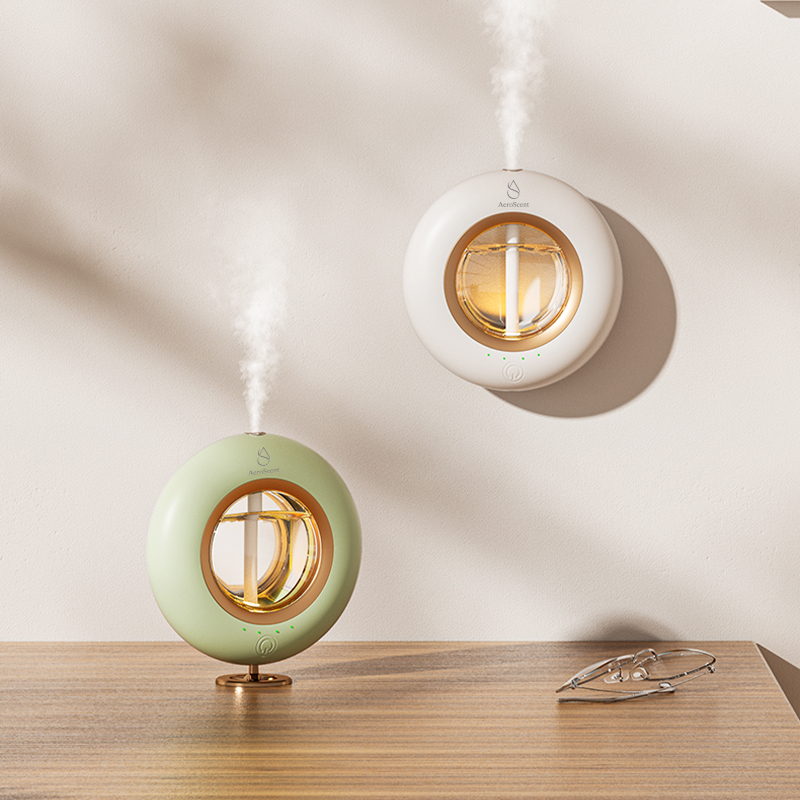
Understanding the mechanism of action for various hardware categories is essential for selecting the appropriate device for specific applications. The market offers several distinct technologies, each with specific operational parameters, maintenance needs, and ideal use cases.
Ultrasonic units utilize high-frequency electronic vibrations generated by an ultrasonic transducer plate to create a fine mist of water and essential oil. This method doubles as a micro-humidifier, generally features a lower upfront cost, and uses less oil per hour. However, it dilutes the oil, introduces moisture into the environment, and requires frequent cleaning to prevent microbial growth. If you live in a highly humid climate, adding more moisture to the air might not be desirable. Furthermore, leaving stagnant water in the reservoir between uses can lead to mold and bacterial buildup, which is then dispersed into the air upon the next use.
Nebulizing systems employ pressurized air, based on Bernoulli’s principle, to force pure oil through a specialized glass or metal nozzle, creating an undiluted micro-fine vapor. This cold-air method delivers the highest concentration of pure oil, preserves chemical integrity, and provides rapid room coverage. The trade-offs include a higher oil consumption rate, operational noise from pump vibration, and a higher hardware cost. Because they do not use water, nebulizers are ideal for large spaces and clinical settings where introducing humidity is unacceptable. The micro-particles produced by a nebulizer are significantly smaller than those produced by an ultrasonic unit, allowing them to remain suspended in the air for much longer periods.
Thermal diffusers use passive heat from a candle flame, electric coil, or light bulb to warm a small dish containing oil, often floating on a shallow layer of water, or a refillable pad. These devices are completely silent, highly affordable, and visually appealing. However, they cause fractionation of chemical compounds, pose a risk of scorching the oil, and carry an elevated fire risk with candle-flame variants. While they can create a pleasant ambiance, they are the least effective method for true aromatherapy due to the destructive nature of the heat applied to the volatile organic compounds.
Evaporative diffusers use ambient or forced air from a built-in fan to blow across an oil-soaked pad, filter, or cartridge. They offer quiet operation, portability, and are inexpensive. The primary drawbacks are fractionation, as lighter molecules evaporate faster than heavier base notes, and a limited coverage area. These are best suited for personal spaces, such as a desk or a car interior, where the user is in close proximity to the device. The scent pads must be replaced frequently, as they become saturated with heavy base notes over time, rendering them ineffective for dispersing lighter top notes.
Non-mechanical and DIY methods are suitable for micro-environments, travel, or budget-constrained applications where a traditional aromatherapy diffuser is unavailable. Sometimes, the simplest methods are the most practical for acute, localized needs.
Applying essential oils directly to furnace filters can facilitate whole-home dispersion. However, this method requires strict caution. Highly concentrated oils can degrade certain synthetic filter materials over time, compromising the filter's structural integrity. Furthermore, you must use high-MERV filters to prevent potential damage to HVAC motors. If the oil droplets are pulled into the blower motor, they can accumulate on the fan blades, attracting dust and eventually throwing the blower wheel out of balance. It is generally safer to use a dedicated HVAC-integrated cold-air nebulizer rather than applying raw oil directly to a disposable filter.
Reed diffusers utilize capillary action, while unglazed terracotta or clay pendants rely on absorption. These methods are best suited for continuous, low-level scenting in confined spaces, such as bathrooms, closets, or vehicle interiors, as the oil slowly diffuses into the air. The porosity of the material dictates the release rate. Rattan reeds have microscopic channels that pull the oil upward, exposing it to the air. Flipping the reeds weekly helps maintain a consistent scent throw. Clay pendants absorb the oil into their porous structure and release it slowly through natural evaporation, making them excellent for personal wearable aromatherapy.
The clinical approach of direct inhalation involves waving a hand over an open bottle to guide volatile vapors toward the nasal passages, rather than direct sniffing, which can irritate mucous membranes. Improvised evaporative carriers, such as cotton balls, tissue paper, or wool dryer balls, serve as passive, heat-free substrates. Adding a few drops of oil to a bowl of steaming water provides concentrated, acute inhalation therapy. When using the steam method, keep your eyes closed to prevent the volatile vapors from causing irritation, and drape a towel over your head to trap the steam and maximize inhalation.
Calculating the required output based on environmental factors is critical for effective scenting. An undersized unit will fail to scent the room, while an oversized unit can cause olfactory fatigue and headaches.
| Space Size | Square Footage | Recommended Technology | Typical Output Capacity |
|---|---|---|---|
| Micro-Environment | Under 100 sq. ft. | Passive, Evaporative, Small Ultrasonic | 10ml - 50ml reservoir |
| Standard Room | 100 - 400 sq. ft. | Standard Ultrasonic, Small Nebulizer | 100ml - 300ml reservoir |
| Large Open Concept | 400 - 1000 sq. ft. | High-Output Nebulizer, Large Ultrasonic | 500ml+ reservoir |
| Whole Building | 1000+ sq. ft. | HVAC-Integrated Cold-Air Nebulizer | Plumbed directly to ductwork |
Desktop, automotive, or personal wearable diffusers are ideal for spaces under 100 square feet. Focus on low-output evaporative, direct inhalation, or small ceramic and ultrasonic models. Bedrooms and living spaces require standard 100ml to 300ml ultrasonic units or mid-range nebulizers to achieve adequate coverage. Large commercial spaces necessitate HVAC-integrated cold-air diffusion systems. Focus on programmable timers, variable intensity settings, and large-capacity reservoirs exceeding 500ml to minimize maintenance intervals.
Addressing operational realities ensures long-term performance and safety. Hardware failure is almost always linked to improper maintenance or poor material selection during the manufacturing process.
Routine cleaning with isopropyl alcohol is necessary to prevent resin buildup, particularly with heavy oils like vetiver or patchouli in nebulizers, and mineral scaling in ultrasonic units. If a nebulizer nozzle clogs, the device will run, the pump will vibrate, but no mist will be produced. Flushing the system with 90% or higher isopropyl alcohol dissolves the hardened resins and restores functionality. For ultrasonic units, a weekly soak with equal parts water and white vinegar will dissolve the calcium and magnesium deposits left behind by hard water.
Essential oils act as powerful solvents, causing cheap plastics to fail, crack, or melt. Internal reservoirs must be made of Polypropylene (PP) or Polyethylene Terephthalate (PET) to withstand the solvent nature of citrus and conifer oils. If a manufacturer uses standard ABS plastic for the water basin, the essential oils will literally eat through the plastic over time, causing leaks and potentially releasing toxic chemical compounds into the air alongside the mist.
When purchasing for bulk, clinical, or commercial use, evaluate suppliers based on OEM/ODM capabilities, warranty terms, availability of replacement atomizing cores or glassware, and safety certifications. A reputable essential oil diffuser supplier will readily provide documentation proving their devices meet CE, RoHS, FCC, and UL standards. They should also offer a clear supply chain for replacement parts, as atomizing nozzles and glass reservoirs are consumable components that will eventually require replacement.
Audit the square footage of the target environment to determine the required output capacity before making a purchase. Determine the viscosity of your preferred essential oils, as heavy resins require nebulization rather than ultrasonic dispersion. Request specification sheets or sample units from a reputable supplier to verify material compatibility and output claims. Establish a strict weekly maintenance schedule using isopropyl alcohol or white vinegar to ensure the longevity of the internal components.
A: Cold-air nebulization is the most effective method. It disperses pure, undiluted essential oil into micro-particles without utilizing heat or water, preserving the oil's full chemical profile and providing maximum therapeutic benefit.
A: Yes, applying a few drops to a furnace filter allows the HVAC system to disperse the scent. However, this must be done cautiously, as highly concentrated oils can degrade certain synthetic filter materials over time.
A: Excessive heat alters the chemical composition of essential oils, causing delicate volatile compounds to oxidize. This reduces their therapeutic efficacy and alters the intended aroma, often resulting in a burnt smell.
A: Essential oils float on the surface of the water reservoir. Ultrasonic diffusers use high-frequency vibrations to disrupt this interface, breaking the surface water and the floating oil layer into a uniform, inhalable micro-mist.
A: Ultrasonic diffusers should be wiped down after every use and deep-cleaned with water and white vinegar weekly. Nebulizing diffusers require flushing with rubbing alcohol every 1-2 weeks to prevent resin clogs.
A: Weak output is typically caused by a clogged atomizing nozzle, mineral buildup on an ultrasonic plate, olfactory fatigue, or using an undersized diffuser for the room's square footage and airflow dynamics.


