
Views: 0 Author: Site Editor Publish Time: 2026-07-12 Origin: Site


While operating an Essential Oil Diffuser appears as simple as adding water and pressing a button, achieving consistent aromatic yield and maximizing device lifespan requires a technical understanding of diffusion mechanics. Improper operation frequently leads to premature device failure, wasted essential oils, and inadequate room coverage. Incorrect water-to-oil ratios, poor placement, or neglected maintenance compromise the internal components and limit mist output. Buyers often misjudge which diffuser type suits their specific environmental constraints, resulting in poor performance in either overly large open spaces or confined, high-moisture rooms.
This guide breaks down the operational realities of different diffusion technologies. It provides a clear framework for setting up, maintaining, and evaluating your device to ensure long-term reliability and optimal performance. Understanding these mechanical and environmental variables allows users to protect their hardware investments while achieving the desired scent distribution.
An ultrasonic essential oil diffuser utilizes a small ceramic disc located at the base of the water reservoir. When powered, this transducer vibrates at high frequencies—often exceeding 1.7 million times per second. These ultrasonic waves agitate the water and essential oil mixture, creating cavitation. This mechanical action breaks the liquids down into a fine micro-mist, which a small internal fan then propels into the air. The primary trade-off of this technology is that it adds mild humidity to the room and dilutes the essential oil, resulting in a subtler scent profile. It also requires regular water refills and consistent cleaning to prevent mineral scaling on the vibrating disc. If the disc becomes encrusted with calcium from hard water or lipid residue from heavy oils, the vibration frequency drops, and mist production stalls.
Nebulizing technology operates entirely without water or heat. It relies on pressurized air and Bernoulli's principle to atomize pure essential oils. An internal air pump forces air through a small tube, creating a vacuum that pulls the essential oil to the surface. A secondary stream of air then blows across the oil, shattering it into a micro-fine vapor. This method delivers a highly concentrated scent profile and maximizes the therapeutic yield of the oils, as they remain undiluted. However, nebulizers consume essential oil at a significantly faster rate than ultrasonic models. They also tend to operate with a slight humming noise due to the internal air pump and require rigorous maintenance. Thick, resinous oils can easily clog the delicate glass tubing, necessitating frequent cleaning with high-proof rubbing alcohol.
Passive diffusion methods rely on natural evaporation, gentle heat, or fan-based airflow to disperse scent. Heat diffusers use a warming element to accelerate the evaporation of the oil. While silent and inexpensive, these passive methods have distinct limitations. Applying heat can alter the chemical composition of the essential oils, potentially degrading their therapeutic properties and changing the scent profile. Fan-based evaporative models blow air across a pad soaked in essential oil. These offer limited room coverage and struggle to maintain a consistent scent throw over extended periods, as the lighter top notes evaporate quickly, leaving only the heavier base notes behind.
| Technology Type | Mechanism | Scent Intensity | Maintenance Level | Best Use Case |
|---|---|---|---|---|
| Ultrasonic | High-frequency vibration with water | Moderate (Diluted) | Medium (Regular wiping and descaling) | Bedrooms, living rooms, adding slight humidity |
| Nebulizing | Pressurized air (Bernoulli's principle) | High (Undiluted) | High (Requires alcohol cleaning to prevent clogs) | Large spaces, therapeutic applications |
| Evaporative/Heat | Airflow or warming element | Low to Moderate | Low (Replacing pads) | Small personal spaces, desks |
Proper placement dictates the efficiency of mist dispersion. Position the device in a centralized location to allow even distribution of the vapor. Keep the unit away from direct sunlight, open windows, or HVAC return vents. Strong drafts will pull the mist out of the room before it can circulate, wasting the oil. Elevation is critical for ultrasonic models. Place the device on a stable, level surface at least two feet above the floor. This height allows the mist to mix with the ambient air before settling. Always use a non-porous tray underneath the unit to protect wood finishes from accidental spills or moisture accumulation.
Confined and high-moisture spaces require special considerations. Using a diffuser in small rooms like bathrooms or above-toilet shelving increases the risk of localized dampness. In these environments, manage ventilation by keeping doors slightly ajar or running an exhaust fan to prevent condensation and mold growth on nearby walls. Never place a diffuser directly under low-hanging cabinets, as the continuous moisture will warp the wood over time.
Water selection impacts both mist output and device longevity. While distilled water prevents mineral buildup, many manufacturers specifically recommend room-temperature tap water. The natural minerals in tap water help the device's internal sensors accurately detect the water level, ensuring the auto-shutoff mechanism functions correctly. If you use highly purified or distilled water in a unit designed for tap water, the sensor may fail to register the liquid, causing the machine to shut off immediately.
Follow these steps for proper reservoir management:
Never exceed the maximum fill line indicated inside the reservoir. Overfilling suffocates the ultrasonic plate, leaving it unable to agitate the liquid properly, which results in weak or non-existent mist output.
Maintaining the correct oil-to-water ratio prevents hardware malfunction. A standard baseline is 3 to 5 drops of essential oil per 100ml of water capacity. Exceeding this ratio leaves heavy lipid residue on the transducer and can degrade the plastic components of the reservoir. Oil viscosity also plays a major role in operation. Heavy, resinous oils like Vetiver, Patchouli, or Sandalwood are thick and prone to clogging diffusers. When using highly viscous oils, blend them with lighter carrier-style essential oils like lemon or sweet orange to thin the consistency, or commit to cleaning the reservoir immediately after the cycle finishes.
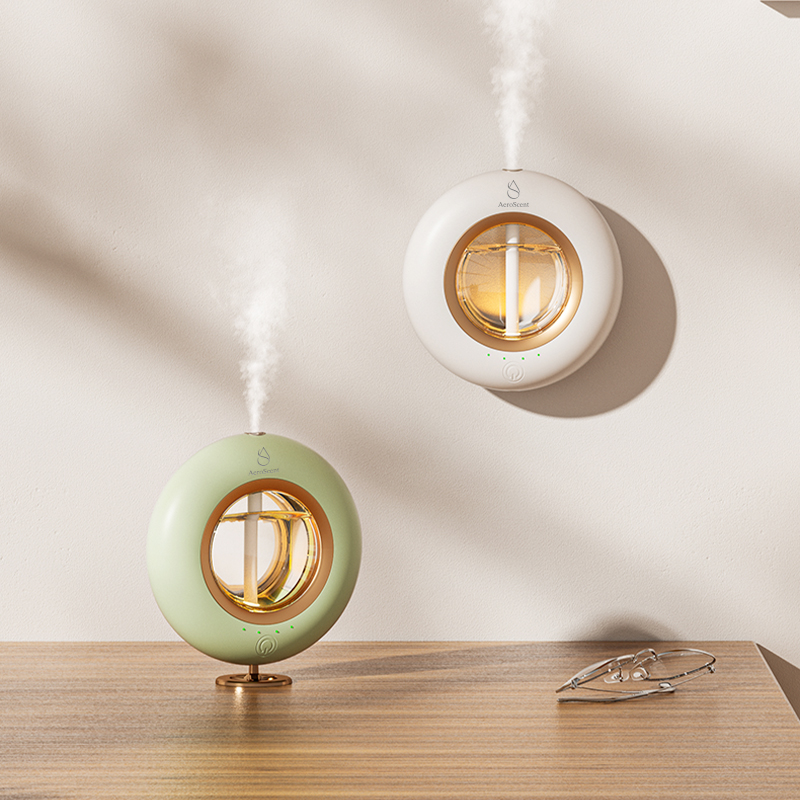
The construction materials of a diffuser determine its durability and chemical resistance. Premium units utilize medical-grade glass, ceramic, hand-blown covers, and BPA-free polypropylene (PP) plastics for the internal reservoir. Standard plastics can degrade when exposed to highly concentrated citrus oils over time, leading to cracking or leaking. When handling glass diffusers, users must secure the covers carefully and avoid thermal shock during cleaning. Never rinse a warm glass dome with cold water, as the rapid temperature change will cause it to shatter. Choosing dark or opaque glass covers helps protect the essential oils in the reservoir from UV light degradation.
Supply chain transparency provides insight into device longevity. Understanding the standards of an essential oil diffuser factory helps buyers assess the quality control on the ultrasonic transducer and the expected defect rates. Certifications like CE and RoHS indicate that the internal electrical components meet strict safety and environmental standards, ensuring the device will not overheat during extended operation.
Advanced diffusers offer both continuous and intermittent mist settings. Continuous operation depletes the water and oil rapidly, providing a strong initial burst of fragrance. Intermittent settings, which cycle the mist on and off (e.g., 30 seconds on, 30 seconds off), are far more efficient. This pulsing operation prevents olfactory fatigue—where the nose becomes blind to a constant scent—and significantly extends the lifespan of the oil supply within a single tank. Look for units with variable mist output controls (high/low) to further customize the diffusion rate based on the room's current airflow.
Matching tank capacity to square footage ensures adequate scent coverage without overwhelming the space. A single unit often struggles in open-concept spaces due to airflow disruption. Instead of relying on one massive diffuser, utilizing multiple smaller units placed strategically creates zoned aromatherapy and provides a more consistent ambient scent.
| Tank Capacity (ml) | Estimated Run Time (Continuous) | Ideal Square Footage | Best Room Types |
|---|---|---|---|
| 100ml - 150ml | 3 - 5 hours | Up to 150 sq. ft. | Bathrooms, small offices, bedside tables |
| 200ml - 300ml | 6 - 8 hours | 150 - 300 sq. ft. | Standard bedrooms, small living rooms |
| 400ml - 500ml+ | 10 - 14 hours | 300 - 500 sq. ft. | Large living areas, open-concept spaces |
Neglecting maintenance is the primary cause of an aromatherapy diffuser failing prematurely. Daily maintenance involves emptying residual water after each use and wiping the reservoir dry with a microfiber cloth to prevent bacterial growth. Never leave stagnant water sitting in the tank for days, as this promotes mold and degrades the plastic.
Every five to six uses, perform a deep cleaning cycle to maintain the transducer's efficiency:
Essential oils are highly concentrated plant extracts that carry specific toxicity risks, particularly concerning pets. Cats and dogs lack specific liver enzymes required to process certain phenols and ketones found in oils like tea tree, eucalyptus, and citrus. Always research the safety profile of an oil before diffusing it in a home with animals. Ensure the room is well-ventilated and that pets have an open door to leave the area if the scent becomes overwhelming.
For human respiratory safety, limit diffusion time to 30 to 60 minutes per session. Continuous, all-day diffusion can cause respiratory irritation, headaches, and sensitization. Using the intermittent timer setting is the most effective way to mitigate these risks while still enjoying the aromatic benefits.
If hardware is unavailable, passive diffusion offers viable alternatives. Reed diffusers draw oil up through wooden sticks, releasing scent slowly into small spaces. Terracotta clay pendants absorb oils and provide a localized, personal scent radius. Placing a few drops on cotton balls inside closets or air vents provides temporary fragrance. For a spa-like experience, dropping eucalyptus or peppermint oil onto the shower floor (away from the direct water stream) allows the steam to vaporize the oil. While these methods are accessible, their scent throw and duration are significantly lower than active mechanical diffusion.
Direct application bypasses diffusion entirely. Direct inhalation protocols involve breathing the scent directly from the bottle or adding a drop to a warm bowl of steaming water and inhaling the vapor with a towel draped over the head. Topical application requires strict dilution. Never apply pure essential oils directly to the skin. Mix them with carrier oils like jojoba, sweet almond, or fractionated coconut oil. Standard dilution ratios typically range from 1% to 3% essential oil to carrier oil to prevent contact dermatitis and skin sensitization.
Operating an essential oil diffuser effectively requires balancing the correct hardware choice with strict adherence to filling, blending, and cleaning protocols. Buyers must prioritize tank size relative to room dimensions, material quality, and the availability of intermittent timer settings to maximize both the device's lifespan and the therapeutic yield of the oils.
A: The standard recommendation is 3 to 5 drops of essential oil per 100ml of water. You can adjust this slightly based on the specific potency of the oil and the size of the room, but avoid excessive amounts to prevent residue buildup.
A: Yes, many manufacturers recommend using room-temperature tap water. The natural minerals present in tap water help the device's internal sensors detect the water level accurately. However, using distilled water can reduce mineral scale buildup over time.
A: It is generally recommended to use diffusers equipped with an auto-shutoff feature and an intermittent timer. This prevents overexposure and olfactory fatigue while sleeping, ensuring a safe and comfortable environment.
A: Common causes for poor misting include overfilling the water past the maximum fill line, heavy oil residue clogging the ultrasonic disc, or using water that is too cold. Ensure the tank is filled correctly and the transducer is clean.
A: Wipe out excess water and dry the reservoir daily. Perform a deep clean using rubbing alcohol or a water-and-vinegar solution every 5 to 6 uses to descale the internal components and maintain optimal performance.
A: Detach the glass dome carefully. Clean it with warm, soapy water or rubbing alcohol. Strictly avoid rapid temperature changes, such as rinsing a warm glass cover with cold water, to prevent thermal cracking. Ensure it is completely dry before reassembling.


