
Views: 0 Author: Site Editor Publish Time: 2026-07-15 Origin: Site


Operating an Essential Oil Diffuser appears straightforward, but achieving consistent aromatic output without compromising device longevity or indoor air quality requires specific operational protocols. Users frequently experience diminished scent throw, device clogging, or mechanical failure due to improper placement, incorrect water-to-oil ratios, and neglected maintenance. For commercial buyers, these failures translate to poor customer experiences and wasted inventory. This guide details the technical realities of setting up, operating, and maintaining your equipment, providing evidence-based frameworks for both individual users and commercial buyers evaluating bulk hardware investments. We focus on practical application, from optimizing spatial placement and managing water quality to executing strict maintenance routines that prevent microbial growth and hardware degradation.
Selecting the correct device depends on the target square footage, desired scent intensity, and tolerance for operational noise. Different environments demand specific hardware capabilities. A small bedroom requires different output metrics than a large hotel lobby or an open-concept office space. Understanding the mechanical differences between available technologies prevents operational frustration and ensures the hardware meets the spatial requirements.
The market primarily utilizes two distinct atomization methods. Each handles volatile plant compounds differently and requires specific maintenance protocols.
Evaluating an electric essential oil diffuser requires looking past the exterior design and focusing on internal components. Power sources directly impact motor strength and mist output volume. USB-powered units offer portability but generally lack the voltage required to push mist across large rooms. Standard AC adapters provide the consistent power necessary for high-volume output and reliable continuous operation.
Safety features dictate hardware quality. Units must include auto-shutoff mechanisms that trigger immediately when the water level drops below the sensor. Timer settings allow for intermittent operation, which protects the motor from overheating and prevents olfactory fatigue. The internal water reservoir must utilize BPA-free plastics to ensure volatile compounds do not degrade the material and leach chemicals into the air stream.
Passive scenting alternatives include clay stones, cotton ball evaporation, reed diffusers, and steam bowl inhalation. These methods rely on natural air currents to disperse scent. They offer zero control over scent intensity and lack the mechanical force required to push aroma across a large room. While passive methods work for small, localized areas like closets or bathrooms, they cannot compete with the spatial coverage and controlled output of a dedicated electric aroma diffuser.
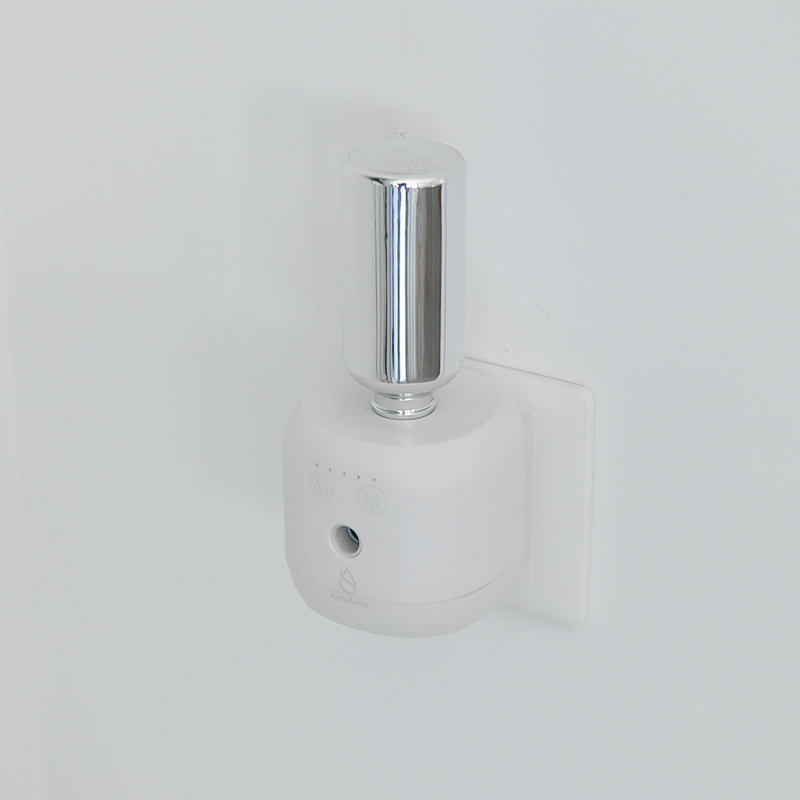
Hardware placement and setup procedures determine the effectiveness of the scent dispersion. Poor placement ruins scent throw, while incorrect filling procedures damage internal components and void warranties.
Identify the airflow patterns in the room before placing the unit. Avoid positioning the hardware directly under return air vents, next to exhaust fans, or near open windows. These locations pull the mist out of the environment before it can circulate. Keep the unit away from moisture-sensitive electronics, unsealed artwork, and paper documents.
Fill the reservoir only to the manufacturer's maximum fill line. Overfilling suppresses the ultrasonic vibration, resulting in zero mist output and potential water ingress into the motor housing. Standardize the oil-to-water ratio at 3 to 5 drops per 100ml of water. Adjust this baseline depending on the oil's viscosity and the room's square footage. Avoid heavy, resinous oils like vetiver, sandalwood, or myrrh in standard ultrasonic models, as they quickly coat and clog the ultrasonic plate.
When creating custom scent profiles, calculate the drop ratio as a cumulative total. If you have a 100ml reservoir, use 2 drops of lavender and 2 drops of sweet orange. Do not multiply the single-oil dosage for each oil added. This strict measurement prevents over-saturation, which strains the device and creates an overwhelming, unpleasant environment.
Continuous operation leads to olfactory fatigue, a physiological response where the nose stops registering a scent after prolonged exposure. Utilize intermittent settings, such as 30 seconds on and 30 seconds off. This operational cycle prevents fatigue, extends the life of the water tank, and reduces the frequency of required refills.
Matching hardware specifications to room dimensions ensures adequate coverage without overworking the device. Tank size directly correlates with operational hours and room capacity.
A standard 100ml tank typically covers 150 to 250 square feet, making it suitable for bedrooms, small offices, or massage rooms. Larger 500ml tanks are required for open-concept living spaces, hotel lobbies, or large retail environments. These larger units provide longer run times and higher mist output volumes, pushing the scent further across the room.
Material choice impacts both durability and maintenance requirements. Evaluate the utility of ambient LED lighting versus the necessity of a dark mode for bedroom or spa environments where light pollution disrupts the experience.
| Material Type | Durability Profile | Sanitation Requirements | Optimal Deployment |
|---|---|---|---|
| PP Plastic | High (Shatterproof) | Standard wiping, highly resistant to oil degradation | General home use, travel, high-traffic commercial spaces |
| Ceramic | Low (Prone to chipping/breaking) | Requires careful handling during deep cleans | Living rooms, decorative displays, low-traffic areas |
| Glass | Low (Fragile) | Easy to sanitize, shows water spots quickly | Spas, luxury retail environments, controlled spaces |
| Faux Wood | Moderate (Coating can peel) | Requires gentle cleaning to protect exterior finish | Offices, natural aesthetic spaces, yoga studios |
Neglecting maintenance guarantees hardware failure. Essential oils are volatile organic compounds that leave sticky lipid residues. When left uncleaned, this residue hardens, calcifies with water minerals, and permanently damages the ultrasonic disc.
Extend device lifespan by implementing strict cleaning habits. Empty residual water daily. Never leave stagnant water sitting in the reservoir, as it promotes microbial growth. Wipe the interior with a clean microfiber cloth and allow it to air dry completely.
Most hardware issues stem from user error and are easily resolved without replacing the unit. If the device is on but produces no mist, check for overfilling. Clean the ultrasonic plate to remove oil buildup. Verify the power adapter voltage matches the unit's requirements, as using a third-party cord often results in underpowering the motor. If the unit leaks from the base, inspect the inner cover alignment. Check for hairline cracks in the plastic reservoir caused by dropping the unit or using highly corrosive citrus oils without proper dilution.
Certain essential oils pose severe toxicity risks to pets. Tea tree, eucalyptus, peppermint, and citrus oils are highly toxic to cats and dogs. Always research specific oil safety profiles before diffusing around animals. Ensure adequate room ventilation during operation. Continuous misting in a closed, unventilated room causes excessive indoor humidity, which leads to condensation on windows and potential mold growth on walls and fabrics.
Commercial buyers face different operational challenges than individual consumers. Sourcing an essential oil diffuser wholesale requires strict vendor vetting and a focus on hardware reliability over pure aesthetics.
Identify the specific use case before initiating bulk purchases. Retail resale requires attractive packaging and consumer-friendly instructions. Hospitality deployment requires tamper-proof designs and minimal user interfaces. Large-scale spa operations demand continuous run-time reliability and large water reservoirs to minimize staff refilling duties.
Assess supplier credibility rigorously. Request documentation on CE, FCC, and RoHS certifications. These documents ensure electrical safety, interference compliance, and the absence of hazardous materials in the manufacturing process. Deploying uncertified hardware in commercial environments creates significant liability risks.
Evaluate customization options carefully. White labeling and custom packaging add brand value but significantly increase minimum order quantities (MOQs) and production lead times. Weigh the wholesale unit cost against historical defect rates and warranty replacement terms. Ensure the supplier provides access to proprietary replacement parts, such as specific power cords or internal water guards, to keep fleet units operational without replacing the entire device.
Proper operation and maintenance dictate the success and lifespan of your scenting hardware. By controlling water quality, adhering to strict oil ratios, and executing regular cleaning protocols, you prevent the most common mechanical failures. Commercial buyers must prioritize safety certifications and continuous run-time reliability when evaluating bulk purchases.
A: Place it on a flat, water-resistant surface at least two feet above the floor. Keep it near the center of the room to utilize natural air currents. Avoid direct sunlight, open windows, low-hanging cabinets, or HVAC return vents that will pull the mist out of the space.
A: The industry standard is 3 to 5 drops of essential oil per 100ml of water. Exceeding this ratio causes olfactory fatigue, creates an overwhelming environment, and leaves damaging lipid residue on the device's ultrasonic plate.
A: Using distilled or filtered water is strongly recommended. Tap water contains heavy minerals that cause scale buildup inside the reservoir. This calcification degrades mist output, damages the ultrasonic disc, and significantly shortens the device lifespan.
A: The most common causes are overfilling the water reservoir past the maximum fill line, a heavy buildup of oil residue on the ultrasonic disc, or a malfunctioning power adapter that fails to deliver the required voltage to the motor.
A: Empty residual water and wipe down the reservoir with a microfiber cloth after every use. Perform a deep clean with a water and white vinegar solution, followed by swabbing the disc with isopropyl alcohol, every 1 to 2 weeks.
A: Commercial buyers should evaluate minimum order quantities (MOQs), CE/FCC safety certifications, historical defect rates, replacement policies, and the availability of white-label customization and proprietary replacement parts.


