
Views: 0 Author: Site Editor Publish Time: 2026-08-08 Origin: Site


Commercial environment design has shifted from strictly visual and auditory branding to comprehensive, multi-sensory customer experiences. Facility managers know that manual scenting methods fail in large-scale spaces. Aerosols, candles, and consumer-grade diffusers create operational inefficiencies, inconsistent brand presentation, and potential safety liabilities. You cannot rely on small water-based units to handle a 10,000-square-foot lobby or a multi-level retail floor. To solve these operational headaches, facilities upgrade to commercial-grade scenting technology. Implementing an aroma diffusion machine shifts the focus from simply making a room smell good to driving dwell time, brand recall, and operational efficiency. We will look at how these systems integrate with existing infrastructure and eliminate the daily maintenance drain of manual alternatives.
Relying on localized, non-commercial diffusers creates a fragmented sensory environment. These small units generate isolated scent pockets immediately surrounding the device. Guests walking through a lobby or retail floor experience overwhelming bursts of fragrance followed by complete dead zones. This uneven distribution quickly leads to olfactory fatigue. The human nose stops registering the scent entirely when exposed to heavy, concentrated bursts. Consequently, the brand experience becomes disjointed and unprofessional. A premium environment requires a subtle, uniform ambient scent that lingers consistently in the background, which small-scale units simply cannot provide across expansive square footage.
Consumer-grade diffusers carry massive hidden labor costs. Facility staff must manually refill small water tanks multiple times a day. They spend valuable hours monitoring dozens of standalone units across a large property. This constant maintenance drains operational resources and pulls employees away from critical customer-facing duties. When staff inevitably miss a refill cycle, the scenting stops entirely. The daily workflow for managing manual diffusers typically involves:
This unreliability and heavy labor requirement make manual diffusers entirely unsuitable for high-traffic commercial applications.
Traditional scenting methods introduce unnecessary risks into commercial environments. Heat-based systems alter the chemical composition of fragrance oils and pose fire hazards if left unattended. Water-based ultrasonic diffusers present a different set of problems. They pump moisture into the air, increasing indoor humidity. This excess moisture encourages microbial growth and mold inside the HVAC system or on nearby drywall. Furthermore, heavy water droplets carry oil particles that eventually fall to the ground. This creates slippery oil residue on hard floors, increasing slip-and-fall liabilities. Public spaces require safer, strictly regulated scenting solutions that do not alter indoor humidity levels or leave physical residue on facility surfaces.
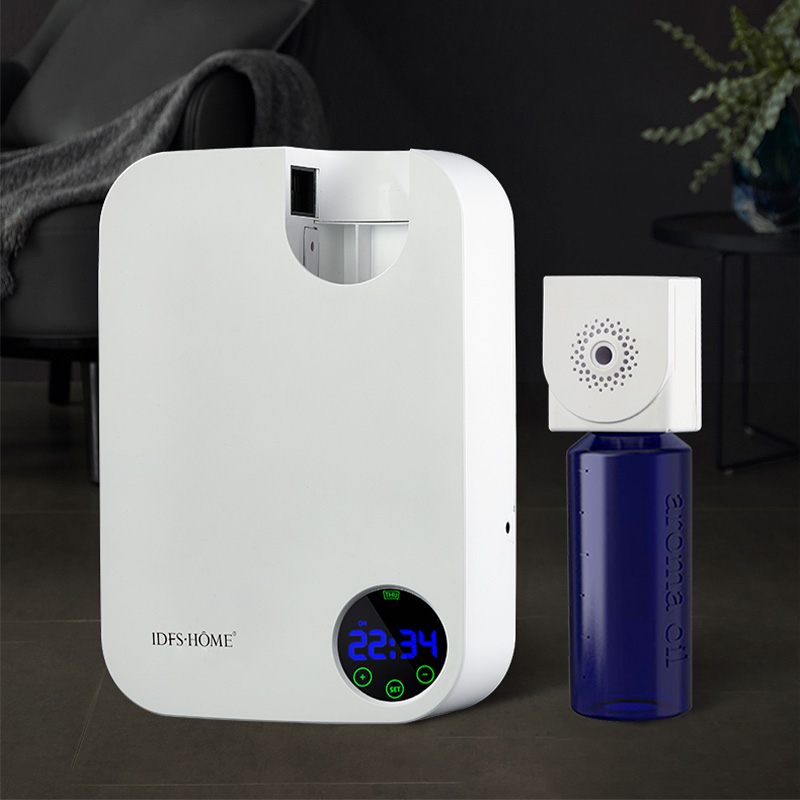
Connecting a hotel scent machine directly to existing ductwork transforms facility management. Installers mount the diffusion unit near the air handler and insert a specialized Teflon tube into the HVAC supply plenum. As the air conditioning or heating system runs, it carries the dry scent mist throughout the building. This method leverages your existing airflow infrastructure for massive, even coverage without requiring visible equipment on the floor.
Centralized management panels further streamline operations. Facility managers control the entire system from a single dashboard or mobile application. You adjust the fragrance intensity for different zones instantly. You monitor fluid levels remotely to anticipate refill needs. This centralized approach eliminates the need to manually inspect individual units scattered across a sprawling property, returning countless hours to your maintenance team.
Cold-air nebulizing technology is the definitive industry standard for commercial spaces. Unlike ultrasonic devices, nebulizers do not use water or heat. They use highly pressurized air to break down pure fragrance oils. The pressurized air forces the oil through a specialized internal baffle, atomizing it into microscopic, dry nanoparticles.
These nanoparticles are sub-micron in size and lighter than air. They float effortlessly on ambient air currents, ensuring maximum coverage without leaving any sticky residue on furniture, inventory, or floors. Because the oil is not diluted with water or altered by heat, its chemical integrity remains intact. This highly efficient atomization process significantly reduces oil waste. It directly translates to lower consumable usage, making it a highly sustainable retail scent solution for long-term operations.
Commercial diffusers feature advanced programmable automation. Facility managers set precise micro-schedules tailored to foot traffic patterns. You program the system to operate at a higher intensity during peak afternoon check-in hours. You then schedule it to lower the output automatically during quiet night shifts. This prevents fragrance waste when the building is empty and ensures the scent is only deployed when it has the maximum impact on visitors.
Multi-zone capabilities allow for distinct sensory experiences within the same building. You tailor different scents to specific operational areas. You might pump an energizing citrus blend into the hotel fitness center to motivate guests. Simultaneously, you deliver a calming lavender and chamomile fragrance to the spa area to promote relaxation. This level of control ensures the scent always matches the intended environment and operational goal of that specific room.
Ambient scent has a profound psychological impact on how guests perceive a space. A carefully selected fragrance instantly elevates the perception of luxury, cleanliness, and exclusivity in hotel lobbies. When guests walk through the doors, a sophisticated scent signals that they have arrived at a premium destination. It creates an immediate, positive first impression that visual decor alone cannot achieve. The environment feels intentionally curated and meticulously maintained.
A signature scent also plays a direct role in driving brand loyalty. The human olfactory bulb connects directly to the brain's limbic system, which processes emotion and memory. When guests associate a specific, pleasant fragrance with a wonderful vacation or a flawless business trip, that scent becomes a powerful memory trigger. This emotional connection fosters deep brand loyalty and encourages repeat bookings across different properties within the same hotel portfolio.
Scent marketing directly influences consumer behavior and drives retail revenue. Industry metrics consistently show that strategic ambient scenting increases retail dwell time. When a store smells inviting, shoppers naturally slow down. They feel more relaxed and spend more time browsing the merchandise. This increased dwell time directly correlates with higher impulse purchasing, larger average transaction values, and a higher likelihood of returning to the store.
Specific fragrance profiles contextualize the retail environment to match the merchandise. A luxury menswear boutique uses rich notes of leather, tobacco, and dark wood to convey masculinity and heritage. A home goods store diffuses crisp fresh linen or light floral scents to evoke a clean, comfortable living space. Aligning the scent with the product category enhances the overall shopping experience and validates the product's premium positioning in the mind of the consumer.
Calming fragrances deliver measurable physiological benefits. Stressed travelers arriving at a busy hotel often experience elevated heart rates and anxiety. Diffusing soothing scents like sandalwood or bergamot in the reception area helps lower stress levels immediately. Overwhelmed shoppers in high-traffic retail centers find similar relief in environments scented with calming, natural aromas, making them more likely to stay and shop rather than leave out of frustration.
Targeted aromatherapy applications extend beyond the lobby. Hotels use specific scents to aid sleep quality in VIP suites, offering a more restorative stay. Corporate conference rooms and business centers benefit from peppermint or rosemary blends. These specific fragrances improve cognitive focus, elevate mood, and keep attendees alert during long meetings, adding tangible value to the facility's corporate rental spaces.
Selecting the right equipment requires looking beyond basic square footage. You must calculate the required output based on total cubic footage. Ceiling height plays a massive role in scent dispersion. A 1,000-square-foot room with standard 8-foot ceilings requires significantly less output than a 1,000-square-foot lobby with 25-foot vaulted ceilings. You are scenting the volume of air, not just the floor space.
Natural airflow and HVAC exchange rates also impact coverage. A fragrance diffusion system must possess enough power to overcome high air turnover. If a building exhausts and replaces its indoor air six times an hour, the scent machine must work harder to maintain a noticeable ambient fragrance. Always evaluate a machine's cubic volume capacity to ensure it can saturate the space effectively without overworking the internal motor.
Different commercial spaces require different hardware applications. Understanding the use cases for each type of system ensures optimal performance and prevents costly installation mistakes.
| System Type | Best Use Cases | Key Advantages | Limitations |
|---|---|---|---|
| HVAC-Integrated | Expansive hotel lobbies, casinos, multi-floor retail spaces, large corridors. | Invisible installation, perfectly even distribution, utilizes existing airflow, centralized control. | Requires accessible ductwork, professional installation needed, affects all zones on that air handler. |
| Standalone Commercial | Open-plan retail stores, large showrooms, areas without accessible ductwork. | Powerful localized output, easy plug-and-play setup, highly visible if desired, easy to relocate. | Takes up floor or wall space, requires a nearby power outlet, can create stronger scent zones near the unit. |
| Compact / Portable | Executive conference rooms, VIP lounges, mobile retail pop-ups, spa treatment rooms. | Highly versatile, localized high-impact scenting, easy to move, lower initial investment. | Limited cubic coverage, requires more frequent refills, not suitable for massive open spaces. |
Commercial units demand a predictable, structured maintenance schedule to ensure maximum uptime. Facility teams perform monthly visual inspections of the oil levels. Commercial oil canisters typically range from 500ml to 5L in capacity. Depending on the programmed intensity and operating hours, a large canister provides several months of continuous operation between refills, drastically reducing the daily labor burden.
Quarterly maintenance protects hardware longevity. Staff clean the nebulizing nozzles with rubbing alcohol to dissolve any thickened oil residue. This simple step prevents nozzle clogs and ensures a consistent mist output. Annual system inspections help identify worn internal tubing or aging air pumps. Proactive maintenance prevents premature motor burnout and protects your initial hardware investment for years of reliable service.
Implementing a commercial scenting strategy requires a deep understanding of building airflow dynamics. Negative air pressure is a common challenge in commercial facilities. If a building exhausts more air than it takes in, the scent will be pulled out of the intended zones and vented outside. Facility managers must evaluate building pressure through a few standard checks:
Open-door retail environments face unique structural limitations. Stores that leave their front doors open to the street lose a significant amount of conditioned, scented air. To counter this, installers strategically place standalone diffusers near the entrance. This creates a scent billboard effect that catches the attention of passing pedestrians despite the compromised airflow.
Public safety and regulatory compliance are non-negotiable in commercial environments. You must exclusively use fragrance oils certified by the International Fragrance Association (IFRA). IFRA certification ensures the oils meet rigorous global safety standards and are free from banned or harmful chemicals. Using unverified oils in a public space exposes the facility to severe liability and health code violations.
Navigating guest allergies and asthma concerns requires transparency and the right technology. Cold-air diffusion inherently reduces risks because it does not introduce heavy, wet particles or mold spores into the air. The dry nanoparticles are generally well-tolerated by the public. Furthermore, commercial oils must comply with local Volatile Organic Compound (VOC) regulations to ensure they do not negatively impact indoor air quality or trigger respiratory distress in sensitive individuals.
To move forward with a commercial scenting strategy, take the following next steps:
A: Coverage depends heavily on the unit type and cubic volume. Compact portable units cover 1,000 to 2,000 square feet. Standalone commercial units cover up to 5,000 square feet. HVAC-integrated systems cover 10,000+ square feet. Always calculate cubic footage, factoring in ceiling height, to determine true coverage capacity.
A: Yes. Installers tap directly into the HVAC supply duct downstream from the fan. The machine requires an accessible power source and a compatible air handler. The system then uses the building's natural airflow to distribute the dry scent mist evenly across all connected zones.
A: Commercial systems require minimal but consistent maintenance. Check oil levels monthly to ensure uninterrupted service. Clean the nebulizing nozzles quarterly using rubbing alcohol to prevent clogs. Conduct an annual system inspection to check internal tubing and air pumps, ensuring maximum hardware longevity.
A: Yes, when properly managed. High-quality commercial systems use hypoallergenic, IFRA-compliant oils. Cold-air technology diffuses these oils as dry nanoparticles. This method significantly reduces the risk of allergic reactions and respiratory irritation compared to heavy aerosol sprays or mold-prone water diffusers.
A: Cold-air nebulizers use pressurized air to break down pure essential oils into a dry mist without water or heat. Ultrasonic diffusers dilute oils in water and use vibration. Ultrasonic units limit coverage, increase consumable waste, and risk mold growth due to added humidity in commercial settings.
A: Scent marketing delivers strong indirect returns. Retailers frequently cite a 15% to 20% increase in customer dwell time. This extended browsing period elevates perceived product value, encourages impulse purchasing, and significantly improves the customer's intent to return to the store.


