
Views: 0 Author: Site Editor Publish Time: 2026-08-02 Origin: Site


Travel disrupts the body. Crossing time zones confuses circadian rhythms. Recirculated cabin air strips moisture from your skin and respiratory tract. Unfamiliar hotel rooms, rental cars, and transit delays compound this physiological stress. Maintaining a consistent wellness routine on the road often feels impossible. Traditional home wellness devices are fragile, bulky, and rely entirely on constant wall power. You simply cannot pack them in a carry-on bag.
A travel essential oil diffuser provides a targeted solution for environmental continuity. It allows you to control your immediate surroundings, regardless of where you sleep or drive. Evaluating this tool requires looking beyond basic aesthetics. You must weigh its practical benefits against strict packing constraints, on-the-road maintenance requirements, and aviation security regulations.
Olfactory cues directly influence circadian rhythm regulation and sleep onset. When you enter an unfamiliar hotel room, your brain remains on high alert. This evolutionary response makes falling asleep difficult. Introducing a familiar scent bypasses cognitive resistance and signals the autonomic nervous system to down-regulate. We call this psychological anchoring. You recreate a distinct sense of home, which immediately reduces the anxiety of navigating a new space.
Clinical applications of specific botanical extracts show measurable impacts on sleep hygiene. Lavender, chamomile, and clary sage actively lower heart rate and reduce cortisol levels. Diffusing these specific profiles at your bedside establishes a consistent pre-sleep routine. Your body recognizes the environmental trigger, regardless of the time zone outside your window. This physiological continuity remains the strongest argument for packing a dedicated diffusion device.
To maximize this effect, you must maintain strict consistency. Use the exact same oil blend at home for two weeks prior to your departure. This conditions your brain to associate that specific olfactory profile with sleep. When you deploy the device on your first night in a new time zone, the conditioned response overrides the environmental disruption.
| Essential Oil Profile | Primary Travel Application | Physiological Response |
|---|---|---|
| Lavender (Lavandula angustifolia) | Hotel room sleep hygiene | Down-regulates autonomic nervous system; lowers heart rate. |
| Peppermint (Mentha piperita) | Motion sickness mitigation | Acts as a vasodilator; relieves cranial tension and nausea. |
| Sweet Orange (Citrus sinensis) | Jet lag recovery | Elevates mood; stimulates cognitive alertness. |
| Eucalyptus (Eucalyptus globulus) | Dry cabin air recovery | Opens respiratory pathways; soothes inflamed mucosal linings. |
Travel forces the body into cramped, uncomfortable positions. Sitting in rigid airplane seats or gripping a steering wheel for hours triggers tension headaches and severe muscle stiffness. Targeted aromatherapy offers immediate physical relief. Peppermint oil contains high levels of menthol, which acts as a natural muscle relaxant and vasodilator. Inhaling this profile eases cranial tension and mitigates the nausea associated with motion sickness.
Mental fatigue sets in quickly during long transit days. Navigating crowded terminals and driving unfamiliar highways drains cognitive reserves. Citrus blends, particularly sweet orange and grapefruit, elevate mood and sharpen focus. Diffusing an invigorating profile during a long drive prevents highway hypnosis. Upon arrival, utilizing these same energy-boosting extracts helps combat the heavy fatigue of jet lag, keeping you alert until a normal local bedtime.
Consider the physical toll of hauling heavy luggage across cobblestone streets or standing in endless customs lines. The body accumulates lactic acid and physical stress. While a diffuser cannot replace physical stretching, pairing a targeted scent like rosemary or black pepper with a hot hotel shower accelerates physical recovery by promoting deeper, more regulated breathing patterns.
You cannot control the cleanliness or smell of temporary accommodations. Older rental properties, heavily used rental cars, and smoking-adjacent hotel rooms often harbor stale, deeply embedded odors. A portable aroma diffuser neutralizes these environmental disruptions. High-efficiency dispersion breaks down odor molecules rather than simply masking them with synthetic fragrances. You reclaim the airspace within minutes of powering on the device.
Air quality presents another major challenge. Airplane cabins maintain humidity levels lower than most deserts. Climate-controlled hotel rooms constantly cycle dry, processed air. This environment dehydrates the skin and irritates the respiratory tract. Utilizing a water-based unit introduces micro-droplets of moisture back into your immediate breathing zone. This secondary humidification benefit soothes dry sinuses, prevents throat irritation, and helps maintain skin hydration during extended trips.
Follow this immediate room-neutralization protocol upon checking into a stale hotel room:
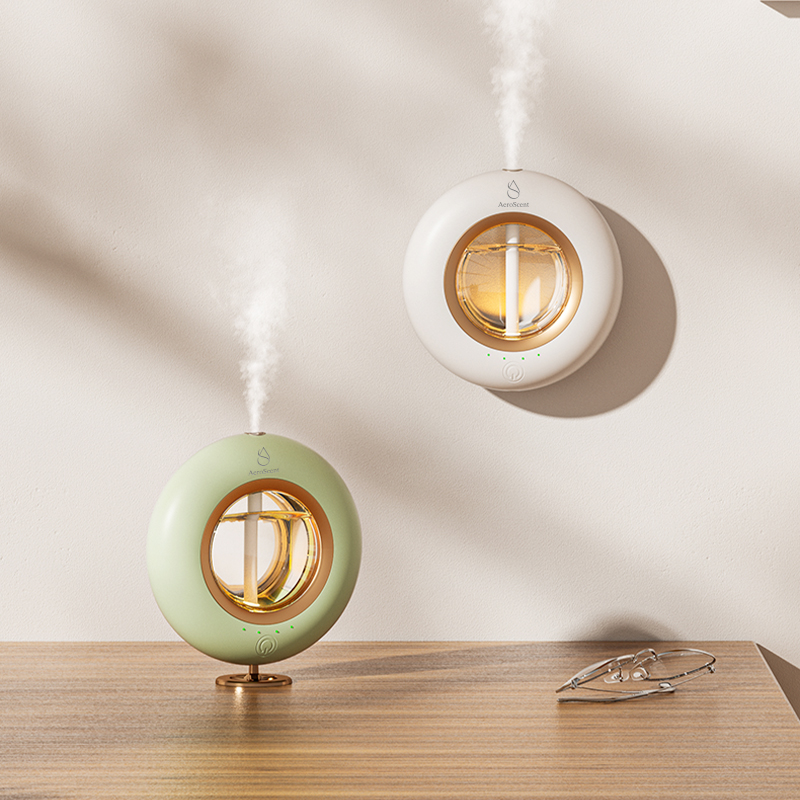
Selecting the right hardware dictates your success on the road. Manufacturers engineer different mechanisms to solve specific environmental problems. Understanding these operational differences prevents ruined luggage and wasted money.
| Diffuser Type | Operational Mechanism | Primary Travel Advantage | Major Limitation |
|---|---|---|---|
| Ultrasonic | Water + high-frequency ceramic disc vibrations | Adds localized humidity for dry environments; lower cost. | High spill risk; requires access to clean water; needs daily drying. |
| Waterless / Nebulizing | Pressurized air atomization (Bernoulli principle) | Zero water needed; highly concentrated scent; spill-proof. | Consumes oil rapidly; higher upfront cost; slight pump noise. |
| Evaporative / Passive | Ambient airflow over an absorbent pad or porous clay | Extremely lightweight; no power required; zero liquid risk. | Weakest scent throw; very limited coverage area. |
Ultrasonic models utilize a small ceramic disc that vibrates at ultrasonic frequencies. This rapid vibration breaks down a mixture of water and essential oil into a fine, cool mist. The primary advantage of this mechanism is moisture. Adding slight humidity to dry hotel air actively moisturizes skin and soothes dry sinuses after a long flight. They also tend to carry a lower price point.
However, ultrasonic units require a reliable water source. You must fill and empty the reservoir daily. Traveling with residual water creates a high risk of spills inside your luggage. Furthermore, the internal components demand frequent cleaning to prevent mold growth, which proves difficult when living out of a suitcase. If you pack an ultrasonic unit, you must commit to wiping the internal basin completely dry with a tissue every single morning before transit.
Nebulizing technology atomizes essential oils directly from the bottle. It uses pressurized air to force the liquid through a microscopic nozzle, creating an ultra-fine vapor without heat or water. A mini travel diffuser utilizing this mechanism eliminates the spill risk associated with water reservoirs. The compact footprint fits easily into a backpack side pocket or a vehicle cup holder.
The output remains highly concentrated, triggering an immediate stress response and neutralizing strong room odors instantly. The trade-offs include faster oil consumption and a higher initial purchase price. The pressurized air pump also generates a slight humming noise, which some users notice in dead-silent rooms. They provide zero humidification benefits, making them strictly an olfactory tool rather than a respiratory hydration device.
Evaporative models rely on a small internal fan to blow air across a pad soaked in essential oil. Passive models rely entirely on ambient room airflow over porous materials like unglazed clay or lava rock. These units require absolutely no liquids during transit, making them the safest option for packing alongside expensive electronics. They remain extremely lightweight and rugged.
The drawback is performance. Evaporative and passive units produce the weakest scent throw. The coverage area limits itself strictly to your immediate personal space. You might smell the profile while working at a hotel desk, but it will not neutralize odors across the entire room. They serve best as personal inhalation tools rather than environmental control devices.
Wall outlets in hotel rooms rarely sit where you need them. Airplane tray tables and rental car cup holders lack standard AC power entirely. A cordless diffuser provides the necessary flexibility to position the device exactly where it benefits you most. Power autonomy dictates usability.
Evaluate battery life benchmarks rigorously. A reliable unit must offer a minimum of 8 to 12 hours of intermittent use on a single charge. This ensures it runs through an entire night of sleep or a full day of driving. Universal USB-C charging is non-negotiable. You should not carry a proprietary charging brick. The device must charge using the same cable that powers your smartphone and laptop.
| Battery Capacity | Estimated Continuous Runtime | Estimated Intermittent Runtime | Best Travel Use Case |
|---|---|---|---|
| 1000 mAh | 2 - 3 hours | 5 - 7 hours | Short commutes; brief hotel layovers. |
| 2000 mAh | 4 - 6 hours | 10 - 14 hours | Overnight hotel stays; long-haul flights. |
| 4000+ mAh | 8 - 10 hours | 24+ hours | Multi-day road trips; off-grid camping. |
Baggage handlers throw suitcases. Overhead bins crush backpacks. Travel hardware must survive blunt force and heavy compression. Assess the build materials carefully. Look for thick, BPA-free polypropylene (PP) plastics or extruded aluminum casings. Flimsy acrylic shells crack under pressure, rendering the device useless. Essential oils are highly corrosive to cheap plastics; a cracked reservoir will leak oil onto your clothing, causing permanent stains.
If you select a unit that carries residual liquids, inspect the locking mechanisms. A simple push-fit lid will pop off inside a compressed bag. You need threaded, leak-proof seals with heavy silicone gaskets. The cost of ruined clothing far exceeds the price of a well-engineered, durable device. Always pack the unit inside a secondary dry bag for added insurance.
Physics dictates an inverse relationship between device size and square-footage coverage. You cannot expect a device the size of a soda can to saturate a massive hotel suite. Establish realistic expectations before purchasing.
Travel units are engineered for personal proximity. They excel in car cabins, immediate bedside tables, and small bathroom counters. If you require whole-room saturation for a large space, you must compromise on form factor and pack a significantly larger device. Match the hardware output to your actual travel footprint. For a standard 300-square-foot hotel room, place the unit within three feet of your pillow to ensure you receive the physiological benefits during sleep.
Aviation security strictly regulates liquids. You must adhere to the 3-1-1 rule when carrying essential oil bottles in carry-on luggage. All bottles must be 3.4 ounces (100ml) or smaller, and they must fit inside a single quart-sized, resealable transparent bag. Never pack large bottles of carrier oils or custom blends in your carry-on.
Hardware regulations also apply. Devices containing built-in lithium-ion batteries must travel in your carry-on baggage. You cannot place a battery-powered unit in checked luggage due to fire risks in the cargo hold. Always empty water reservoirs completely before approaching the security checkpoint.
Execute this airport security prep routine:
Standard cleaning supplies like white vinegar and dish soap rarely exist in hotel rooms. Cleaning an ultrasonic unit becomes a logistical headache. If you leave stagnant water in the reservoir, bacteria multiply rapidly. Wipe the basin completely dry with a clean tissue every single morning. Never pack a damp unit into a dark suitcase.
Waterless units require a different maintenance protocol. Highly viscous oils like vetiver, sandalwood, or patchouli will clog the microscopic nebulizing nozzle over time. To prevent this during extended trips, run a few drops of high-proof rubbing alcohol through the device for five minutes every week. This dissolves residual resins and keeps the air pathway clear. You can easily source small alcohol prep pads from any pharmacy to wipe down the exterior and nozzle threads.
Diffusing strong scents in public transit violates basic travel etiquette. Never operate a device on an airplane or a crowded train. You share recirculated air with hundreds of people, many of whom suffer from severe respiratory sensitivities, asthma, or fragrance allergies. Confine your usage to private spaces like your personal vehicle or closed hotel room.
Exercise caution in pet-friendly hotels or shared rental properties. Many common essential oils, including tea tree, eucalyptus, peppermint, and citrus, are highly toxic to dogs and cats. Felines lack a specific liver enzyme required to break down these compounds. If you share accommodations with animals, research the specific botanical profiles you intend to use. Ensure the room has adequate ventilation to prevent overwhelming the space.
A: Pack lavender, chamomile, or clary sage to promote sleep and reduce anxiety in unfamiliar hotel rooms. Use peppermint to relieve tension headaches and mitigate motion sickness during transit. Citrus oils, like sweet orange or grapefruit, provide an excellent energy boost to combat jet lag fatigue.
A: Yes, but you must follow TSA regulations. The device itself can go in your carry-on. If it contains a lithium-ion battery, it must stay in your carry-on and cannot be checked. All liquid essential oils must adhere to the 3-1-1 rule and fit inside a quart-sized bag.
A: Cordless models are optimized for personal proximity rather than large spaces. They produce a smaller output designed for car cabins or bedside tables. While they do not match the sheer volume of a large plug-in home unit, they provide excellent localized coverage without the restriction of wall outlets.
A: A waterless model atomizes pure essential oil directly from the bottle using pressurized air, offering superior travel convenience and zero spill risk. An ultrasonic model uses high-frequency vibrations to disperse oil diluted in water, which adds beneficial moisture to dry hotel or cabin air.
A: For waterless nebulizers, run a small amount of pure rubbing alcohol through the device for five minutes to dissolve resin clogs. For ultrasonic models, wipe the water basin completely dry daily with a clean tissue or an alcohol wipe to prevent bacteria growth. Avoid packing it while damp.
A: Yes, they are highly effective in rental cars. Ensure the device fits securely in a standard cup holder and utilizes USB power. Select non-drowsy, focus-enhancing oils like peppermint or lemon. Avoid heavy relaxants like chamomile while driving to maintain optimal alertness.
A: Battery life varies significantly based on the output settings. Industry averages range from 2 to 15 hours. Continuous high-output misting drains the battery quickly, while intermittent settings can extend operation through an entire night of sleep.


