
Views: 0 Author: Site Editor Publish Time: 2026-08-09 Origin: Site


Aromatherapy devices have shifted from basic utility hardware into dual-purpose environmental controls. Modern units combine scent dispersion with ambient illumination, solving a specific user requirement: scenting a room while providing adjustable atmospheric lighting. The market is currently flooded with low-grade units that prioritize external aesthetics over functional, safe, and durable hardware. Buyers frequently struggle to separate reliable diffusion technology from disposable plastic novelties.
You need a strict evaluation framework before selecting an essential oil diffuser with light. Visual appeal does not guarantee mechanical performance. You must analyze the underlying diffusion mechanism, the quality of the internal lighting components, material durability, and the reality of daily maintenance. A visually attractive device holds zero value if the ultrasonic plate degrades quickly or the water tank leaks into the circuitry. This guide breaks down the hardware specifications, operational features, and material trade-offs required to select a unit that delivers consistent scent throw and reliable illumination.
A device must physically move oil particles into the air efficiently. This fundamental mechanical action dictates room coverage, scent intensity, and how well the unit integrates with internal lighting. Evaluate the underlying hardware before looking at the exterior design. There are four primary methods these devices use to operate. Each method presents distinct mechanical advantages and physical limitations.
Ultrasonic technology is the standard for illuminated models. These units house a piezoelectric transducer—a small ceramic disc—at the base of a water reservoir. When powered, this disc vibrates at ultrasonic frequencies, typically around 2.4 MHz (million times per second). This intense vibration creates a standing wave in the water, breaking both the water and the floating essential oils into microscopic droplets. A small internal fan then pushes this fine, cool mist out of the top vent. Ultrasonic models integrate perfectly with LED lighting. The translucent water tank acts as a natural light diffuser. The moving water creates a soft, dynamic glowing effect. These units also add a slight amount of humidity to the room.
Nebulizing models operate on completely different physics. They utilize Bernoulli's principle and do not require a water reservoir. An internal air pump forces pressurized air through a narrow glass tube. This high-velocity air creates a vacuum that pulls pure essential oil from a secondary tube, atomizing it into a highly concentrated micro-mist. Nebulizers deliver the strongest possible scent profile and the highest therapeutic yield. However, they rarely feature integrated lighting. The lack of a water tank makes internal light dispersion difficult, and the complex glass components leave little physical space in the chassis for LED circuitry.
Traditional heat methods rely on thermal evaporation. Heat rings sit directly on standard incandescent light bulbs, using the bulb's surface temperature to warm a ceramic or metal ring holding the oil. Candle-warmed units use a standard tealight beneath a small basin of water and oil. These provide a natural, flickering light source. However, heat alters the volatile organic compounds (VOCs) in essential oils. High temperatures degrade the terpenes, destroying their therapeutic properties and altering the scent profile. Heat dissemination methods function poorly for serious aromatherapy and serve primarily as ambient decor.
Evaporative models use forced airflow. A small internal fan blows room air through a fibrous filter or cotton pad soaked in essential oils. The moving air accelerates evaporation and carries the scent outward. These units are highly portable and often run on standard batteries. Unfortunately, they lack visual appeal. They rarely include glowing mist or dynamic lighting arrays. The scent profile also skews heavily over time; lighter top notes evaporate rapidly, leaving only the heavier base notes behind.
| Diffusion Method | Mechanical Action | Lighting Integration | Primary Advantage | Primary Disadvantage |
|---|---|---|---|---|
| Ultrasonic | Piezoelectric transducer vibrates water/oil mixture | Excellent (water tank diffuses LED light) | Quiet operation, adds light humidity, visually appealing | Requires regular water refills and strict descaling |
| Nebulizing | Pressurized air atomizes pure essential oil | Poor (no water reservoir to catch light) | Maximum scent intensity, no water required | Higher noise levels, consumes oil rapidly |
| Heat | Thermal evaporation via bulb or open flame | Natural (candlelight or warm incandescent bulb) | Silent operation, cozy aesthetic | Degrades oil chemistry, potential fire hazard |
| Evaporative | Fan forces air through oil-soaked pad | Minimal (usually just basic indicator LEDs) | Highly portable, battery-operated options | Uneven scent dispersion, zero ambient lighting |
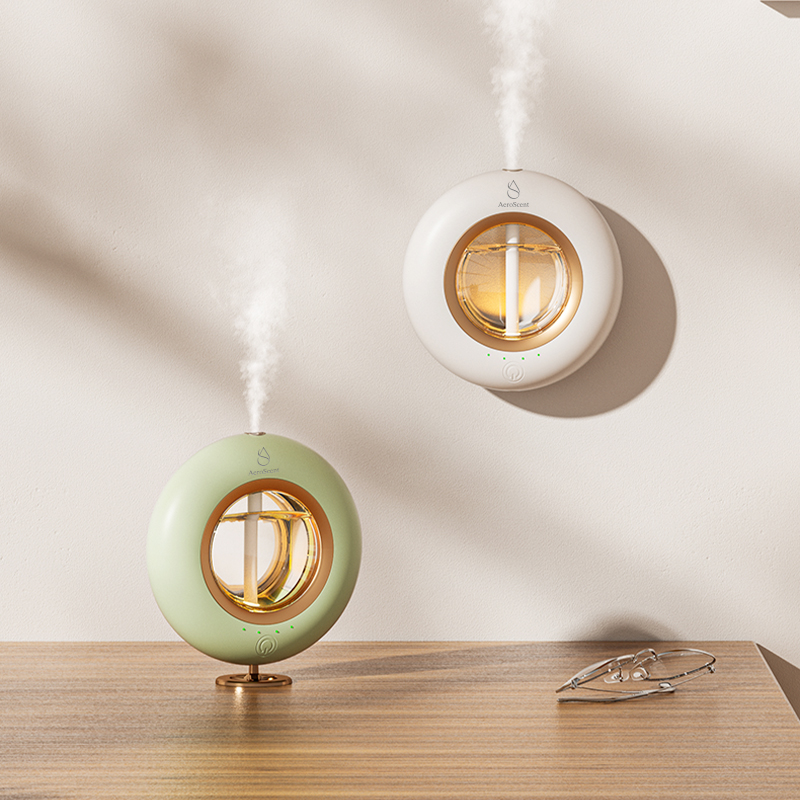
Lighting capabilities directly impact how you interact with the device and control your environment. The illumination must serve a specific functional purpose, enhancing the room without causing visual fatigue or glare. You must evaluate how the internal lighting hardware maps to your daily requirements. A high-quality LED aroma diffuser offers precise, independent control over its visual output.
Determine the primary use case for the room. Bright, cool-toned lights suit active daytime spaces like home offices or kitchens. Warm, dimmable lights belong in bedrooms and relaxation areas. RGB color-cycling creates a dynamic focal point during social gatherings, while fixed-color modes provide consistent ambient background lighting. The hardware must support your specific environmental needs. Do not buy a unit with only a bright, color-cycling mode if you intend to use it on a bedside table.
Assess the quality of the internal LED array. Cheap diodes use low-frequency Pulse Width Modulation (PWM) to dim the lights. This creates a high-frequency flicker that causes eye strain and headaches, even if you cannot consciously see the flickering. Premium units use high-quality LEDs with stable power delivery and high-frequency PWM. Look for accurate color rendering. The red diodes should produce a deep red, not a washed-out pink. The lifespan of the diode matters. High-grade LEDs last up to 50,000 hours. Budget models often use inferior surface-mounted diodes (SMDs) that dim permanently or burn out after a few months of continuous heat exposure from the internal circuitry.
Color temperature, measured in Kelvin (K), affects your circadian rhythm. Cool white light (5000K+) mimics daylight and promotes alertness. Warm white light (2700K) mimics sunset and signals the brain to relax. A versatile mood diffuser offers adjustable color temperatures. Dimming capabilities are equally critical. A bright glowing water tank disrupts sleep architecture. You need a true low-light setting. The lowest brightness level should provide just enough illumination to navigate a dark room safely without casting shadows on the walls.
This is a strict requirement for premium devices. The internal circuit board must feature separate relays for the transducer and the LED array. You must be able to control the mist and the light independently. Sometimes you want the scent without the glow, which is essential for dark sleeping environments. Other times, you want the light without the mist, allowing the unit to function as a standalone nightlight or ambient lamp. Devices that wire both functions to a single switch offer poor user control and limit the utility of the hardware.
Operational features separate reliable hardware from entry-level novelties. You must evaluate how the unit performs under daily, continuous use. Tank capacity, mist output rates, and safety mechanisms dictate the device's reliability. Proper setup ensures optimal performance and prevents premature component failure. Focus on the mechanical capabilities rather than just the exterior shell.
Output variability is essential for controlling scent density. You need continuous high and low mist modes. High output (e.g., 30-50ml per hour) quickly scents a large room. Low output (e.g., 15-20ml per hour) provides a subtle background fragrance. Intermittent timers are highly valuable. These settings use a relay to cycle the transducer on and off. A common duty cycle is 30 seconds on, followed by 30 seconds off. This prevents olfactory fatigue. The human olfactory system stops registering a scent if the exposure remains constant. Intermittent misting keeps the fragrance noticeable and doubles the duration of the water tank.
Match the reservoir size to your room dimensions. A 100ml tank suits a small bathroom or office desk, typically running for 3 to 4 hours before triggering the auto-shutoff. A 300ml to 500ml tank covers a large living room or open-concept space, running for 8 to 12 hours. Calculate actual run times based on your preferred mist settings. Manufacturers often advertise maximum run times based on the lowest intermittent setting. A 500ml tank running on continuous high output will drain much faster than the advertised maximum.
The specific essential oils you choose physically alter the visual output of the device. Dark or highly resinous oils tint the water in the reservoir. Vetiver, myrrh, and patchouli are thick, dark, and sticky. Blue tansy turns the water deep blue. This tinted water acts as a physical filter, altering the color projection of the internal LED. A crisp white light setting may appear yellow, green, or blue depending on your oil blend.
Follow these strict setup protocols to ensure optimal performance:
Safety is paramount when combining standing water and active electrical components. The device must feature a reliable auto-shutoff mechanism. Most units use a capacitive liquid level sensor or a physical float switch. When the tank empties, the sensor cuts power to the vibrating disc. This prevents the ceramic plate from overheating, cracking, and potentially causing a short circuit. Verify electrical safety certifications. Look for UL (Underwriters Laboratories) or ETL listings on the power adapter. These marks indicate the power supply passed rigorous independent safety testing for voltage regulation and fire resistance.
External housing materials impact both structural durability and light dispersion. You want a device that complements your interior design, but you cannot sacrifice chemical resistance for aesthetics. Essential oils are highly concentrated, volatile plant extracts. They act as powerful solvents. Citrus oils, rich in D-limonene, will rapidly dissolve cheap plastics. A true decorative diffuser balances visual appeal with industrial-grade structural integrity.
The build material dictates the price point, the lifespan of the unit, and how the light physically looks in the room. High-grade materials cost more to manufacture but resist chemical degradation. The material also changes the light diffusion pattern. Translucent plastics create a uniform, glowing orb. Solid materials restrict light to specific cut-outs, frosted bands, or top vents. You must decide which aesthetic fits your space while accepting the maintenance trade-offs associated with each material.
Different materials offer distinct advantages and vulnerabilities:
Some models combine ambient lighting with extra features, including white noise generators, nature sounds, or Bluetooth speakers. These all-in-one devices seem appealing on paper. However, they introduce significant mechanical trade-offs. Added features increase the physical footprint of the device and elevate the price point. Most importantly, they introduce potential points of failure. A broken Bluetooth speaker or a blown internal speaker cone renders the entire expensive unit frustrating to use. Standalone devices usually perform their specific functions better than multi-tools. Stick to units dedicated to diffusion and lighting.
Long-term ownership requires physical effort. These devices are not set-it-and-forget-it appliances. They require consistent, scheduled maintenance. Neglect leads to poor performance, bacterial growth, and total device failure. You must understand the hidden labor associated with illuminated water tanks. Proper care preserves both the aesthetic value of the light and the mechanical function of the transducer.
Illuminated tanks highlight dirt and neglect. Mineral buildup from hard tap water creates a white, crusty scale (calcium carbonate) on the plastic. Oil residue leaves a sticky, yellow film. This combination severely degrades light quality. It clouds translucent plastics, making the LED glow look muddy and dim. More importantly, residue impairs the ultrasonic plate. A dirty plate cannot vibrate efficiently. Mist output will drop dramatically, and the unit may overheat.
Implement strict cleaning protocols to maintain performance:
Internal components fail long before the external housing degrades. The ultrasonic ceramic disc has a finite lifespan. It endures millions of vibrations per second and constant exposure to water and solvents. Eventually, it cracks, loses efficiency, or the waterproof seal around it fails. LED diodes also fail over time, especially if moisture breaches the internal circuitry due to a cracked tank. Understand that these devices have a practical lifespan of one to three years under heavy daily use. Evaluate warranty lengths before purchasing. Check if the manufacturer offers replacement power adapters, as the power supply often fails before the main unit.
Ultrasonic models are not entirely silent. The high-frequency vibration creates a distinct water-trickle sound. Many users find this relaxing. However, the internal DC fan that pushes the mist out of the top vent generates mechanical noise. As the fan bearings wear out over time, this noise increases. This fan noise can disrupt light sleepers. Evaluate decibel (dB) ratings if you plan to use the unit in a bedroom. Look for devices rated under 30dB. This is equivalent to a quiet whisper. Anything above 40dB will likely interfere with sleep and become an annoyance in quiet rooms.
An illuminated aromatherapy device serves as a highly effective dual-purpose tool for environmental control. It manages the olfactory profile of a room while providing customizable ambient light. Success depends on prioritizing the diffusion mechanism over novelty lighting effects. Ultrasonic technology remains the most practical choice for combining mist and light. Material safety, particularly the use of BPA-free polypropylene or resilient ceramics, ensures long-term durability against corrosive oils. Independent controls for mist and light are essential for daily usability. By understanding the maintenance requirements and mechanical trade-offs, you can select a unit that enhances your space reliably.
Take the following actionable steps before making a final selection:
A: Yes. High-quality models feature independent circuitry. This allows the LED array to function as a standalone nightlight or ambient lamp without running the mist. You simply press the light button without engaging the power or mist buttons.
A: No. Modern LED components generate negligible heat. They preserve the chemical integrity and therapeutic benefits of the oils. This differs greatly from traditional incandescent bulb rings or candle warmers, which rely on high heat for evaporation.
A: Realistic estimates for LED lifespans range from 10,000 to 50,000 hours of continuous use. In almost all cases, the ultrasonic transducer or internal DC fan will fail long before the LED diodes burn out.
A: Yes, provided the unit features an automatic shutoff mechanism. This capacitive sensor detects low water levels and cuts power to prevent overheating. Using intermittent mist settings also ensures safety and prevents over-saturation of the bedroom air.
A: Common issues include heavy oil residue clouding the inner plastic casing, water ingress damaging the circuitry, or a failing power adapter. Regular weekly maintenance with vinegar prevents most dimming issues caused by residue buildup.
A: Ultrasonic models use high-frequency vibrations to create a cold mist, preserving the oil's properties. Heat diffusers use evaporation via a warm bulb or candle. Heat provides cozy, natural light but alters the therapeutic composition of the essential oils.


