
Views: 0 Author: Site Editor Publish Time: 2026-09-13 Origin: Site


Managing ambient scent across commercial facilities requires precise environmental control, not just a manual on/off switch. Facilities without automated scheduling face inconsistent customer experiences, rapid fragrance depletion during unoccupied hours, and unnecessary manual oversight by staff. Transitioning to smart environmental controls solves these operational bottlenecks immediately. Proprietary mobile and desktop applications transform scent marketing from a manual chore into an automated, scalable operational asset. Facility managers can dictate exact operating windows, adjust intensity based on foot traffic, and monitor consumable levels remotely without ever touching the physical hardware.
This guide details exactly what parameters facility managers can control through modern scheduling applications. By understanding these software capabilities, operators can deploy a highly efficient olfactory strategy that prevents fragrance waste, ensures a consistent guest experience, and completely removes the burden of daily manual adjustments from on-site personnel.
Granular Time Management: Modern apps allow for minute-by-minute start and stop times, ensuring diffusers only operate during actual business hours.
Traffic-Adjusted Intensity: Advanced scheduling permits variable scent concentration levels based on anticipated foot traffic throughout the day.
Multi-Zone Scalability: A true commercial wifi aroma diffuser app enables centralized control of multiple units across different rooms or geographic locations.
Operational Cost Control: Automated scheduling directly correlates to reduced fragrance waste and lower consumable costs.
Deploying a scent strategy across a facility begins with the initial software handshake. The standard step-by-step process required to initiate a schedule dictates how easily staff can manage the system. Setup typically involves pairing the device via a local connection, assigning the unit to a specific room or zone within the app, selecting the designated fragrance profile, and adding precise start and stop parameters. A commercial aroma diffuser relies heavily on this initial configuration to establish its baseline operating logic.
An intuitive user interface minimizes staff training requirements and prevents programming errors. High-quality applications utilize visual calendar dashboards where users can view the entire week at a glance. Simple '+' icons allow operators to add new scent events, while drag-and-drop timelines enable rapid adjustments to operating windows. When the interface mimics standard calendar applications, facility managers can confidently adjust settings without consulting technical manuals.
The standard setup workflow for enterprise-grade scent applications generally follows these exact steps:
Power the unit and activate the local Bluetooth connection for the initial hardware handshake.
Assign the specific device MAC address to a designated zone within the facility dashboard.
Input local network credentials to establish a persistent cloud connection for remote management.
Select the designated fragrance profile from the app library to track specific oil viscosity.
Input the baseline operating parameters, including start times, stop times, and weekend exceptions.
Day-parting forms the foundation of automated scent management. This capability allows users to set precise start and stop times that mirror actual facility usage. Instead of a machine running continuously, an operator can program the unit to activate at 8:00 AM and power down exactly at 6:00 PM. This granular control ensures the environment reaches the optimal scent concentration just as the first guests arrive.
Aligning scent diffusion strictly with open hours provides immense operational value. Preventing overnight fragrance waste is one of the primary reasons facilities upgrade to app-controlled systems. If a building is unoccupied for 14 hours a day, running a diffuser during that window depletes consumables rapidly while providing zero benefit to the customer experience. Strict operating windows ensure every drop of fragrance oil is utilized solely when it impacts the target audience.
Standard Operating Windows by Facility Type | ||
Facility Type | Typical Operating Window | Rationale for Scheduling |
|---|---|---|
Corporate Office | 7:30 AM - 6:00 PM | Captures early arrivals and shuts down after standard business hours to save oil. |
Retail Store | 9:30 AM - 9:00 PM | Activates 30 minutes before opening to establish the baseline scent before shoppers enter. |
Fitness Center | 5:00 AM - 11:00 PM | Requires extended hours to combat active odors during peak early morning and late evening workouts. |
Hotel Lobby | 24 Hours (Variable Intensity) | Never powers down completely, but shifts to a micro-dose schedule between 1:00 AM and 5:00 AM. |
Facility hours rarely remain static across a seven-day week. Applications allow unique schedules for different days to accommodate shifting operational demands. A retail environment might require extended diffusion hours on weekends to match longer shopping hours, while an office building might disable the system entirely on closed holidays and Sundays.
The interface mechanics driving this customization must be fluid. Calendar views and toggle switches for specific days allow for rapid weekly programming. Operators can create a baseline schedule for Monday through Friday, duplicate it, and then apply modified parameters for Saturday and Sunday. This flexibility ensures the scent strategy automatically adapts to the natural rhythm of the building without requiring manual intervention at the end of each week.
Unlike basic humidifiers that output a continuous stream of mist, professional cold-air diffusion relies on precise intervals. The mechanics of these intervals involve specific work and pause cycles, such as operating for 30 seconds and then pausing for 60 seconds. This intermittent delivery method allows the microscopic fragrance nanoparticles to disperse evenly through the air currents without saturating the environment.
Applications allow users to fine-tune these micro-cycles to achieve the exact desired ambient baseline. A smaller room might require a 15-second work cycle followed by a 90-second pause, while a massive lobby might demand a 45-second work cycle with a 30-second pause. Adjusting these ratios prevents the scent from overwhelming the space, ensuring the fragrance remains a subtle, pleasant background element rather than a dominant distraction.
Recommended Work/Pause Cycle Ratios by Room Size | |||
Square Footage | Work Cycle (Seconds) | Pause Cycle (Seconds) | Expected Intensity Level |
|---|---|---|---|
Under 500 sq ft | 15 | 120 | Subtle / Background |
500 - 1,500 sq ft | 30 | 90 | Moderate / Noticeable |
1,500 - 3,000 sq ft | 45 | 60 | Strong / Immersive |
Over 3,000 sq ft | 60 | 30 | Maximum Output |
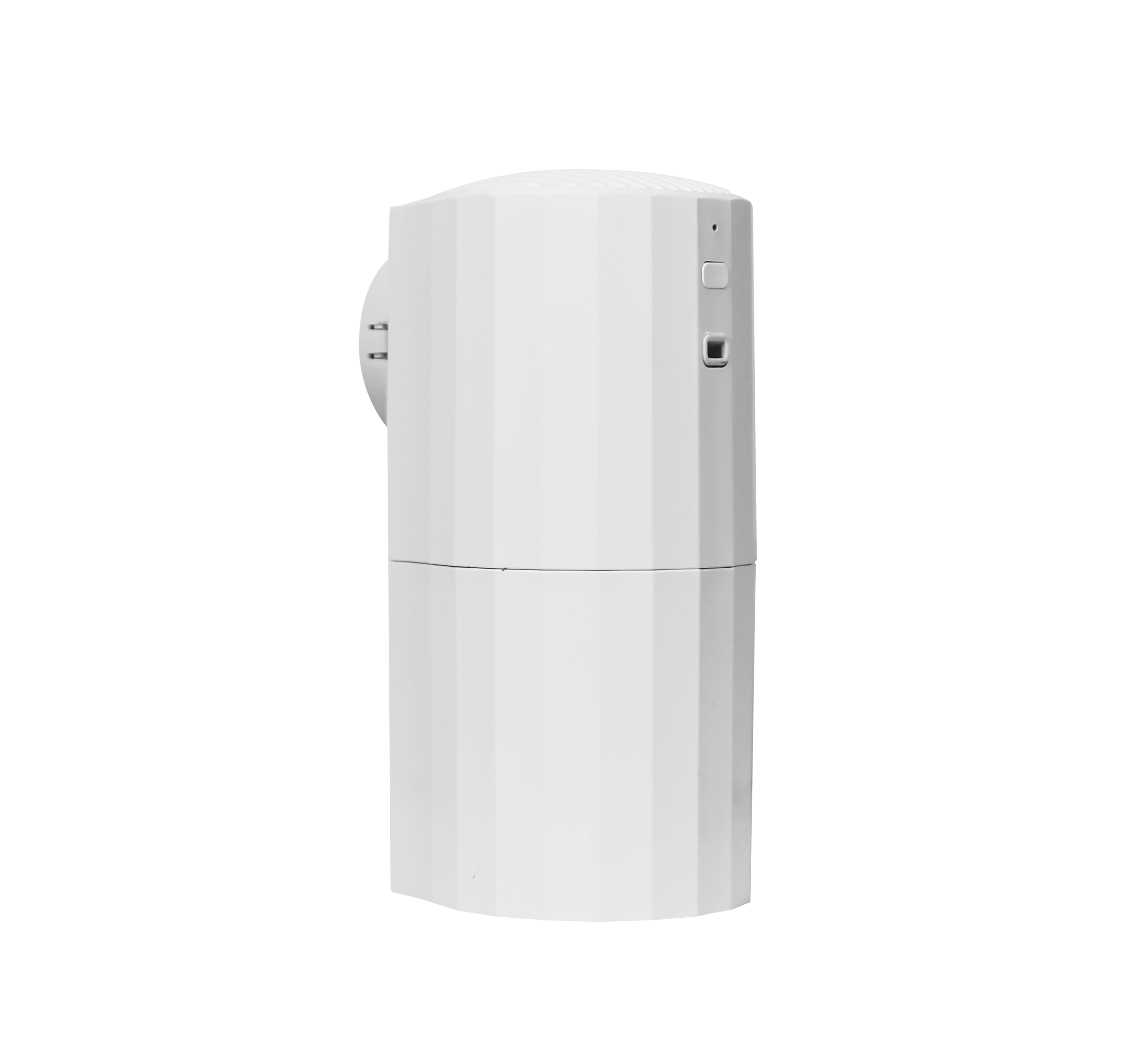
Foot traffic within a commercial space fluctuates drastically throughout the day. Premium applications address this by allowing operators to schedule different intensity levels within the same 24-hour period. Rather than maintaining a static output that might be too strong in the morning and too weak in the afternoon, the system dynamically adjusts to the environment's current needs.
Consider a fitness center or a busy hotel lobby. A facility manager can set a low intensity during slow morning hours when the space is relatively empty. As peak afternoon foot traffic arrives—bringing competing odors and increased air circulation—the app automatically increases the work cycle ratio. This dynamic scheduling ensures the olfactory experience remains perfectly balanced regardless of occupancy levels.
Managing a large facility often requires deploying dozens of units. A robust wifi aroma diffuser ecosystem simplifies this through multi-zone synchronization. The app allows administrators to group multiple diffusers into logical categories, such as a "Main Lobby Group," a "Restroom Group," or a "Conference Wing Group."
Applying a single master schedule to an entire fleet of devices simultaneously eliminates redundant data entry. If the facility extends its holiday hours, the manager updates the "Main Lobby Group" schedule once, and the cloud pushes the new operating parameters to all associated devices instantly. This centralized control is required for maintaining brand consistency across expansive square footage or multiple geographic locations.
Scheduling applications frequently integrate directly with internal hardware sensors to track consumable usage. By monitoring the exact run time and the specific work/pause ratios programmed into the schedule, the software calculates the depletion rate of the fragrance oil. This transforms maintenance from a guessing game into a precise, data-driven operation.
Push notifications for low fragrance levels or required maintenance represent a major operational advantage. Instead of staff opening units weekly to visually check oil levels, the app sends an alert when a specific bottle drops below 15% capacity. This ensures zero downtime in the scent experience and allows facility managers to order replacement inventory exactly when needed.
Moving from a 24/7 manual operation to a strictly scheduled app-based system yields immediate financial benefits. A clear framework for calculating fragrance savings involves comparing total weekly operating hours. A unit running continuously operates for 168 hours a week. A scheduled unit running 10 hours a day, six days a week, operates for only 60 hours. This represents a massive reduction in consumable depletion.
The financial impact of preventing off-hour diffusion directly accelerates the return on investment for smart hardware. By cutting fragrance waste by more than half, facilities can reallocate those operational funds elsewhere. The software essentially pays for the hardware upgrade through sustained, long-term consumable savings.
Comparison of Manual vs. App-Scheduled Scent Operations | ||
Operational Metric | Manual Operation (24/7) | App-Scheduled Operation |
|---|---|---|
Weekly Operating Hours | 168 Hours | Custom (e.g., 60 Hours) |
Fragrance Depletion Rate | Maximum / High Waste | Optimized / Zero Off-Hour Waste |
Intensity Adjustments | Static (Requires physical interaction) | Dynamic (Adjusts automatically by time) |
Staff Labor Required | High (Daily manual checks) | Minimal (Automated alerts) |
Automated scheduling completely eliminates human error from the scent marketing equation. When relying on manual operation, staff inevitably forget to turn the unit on during opening procedures or fail to turn it off at closing. These lapses create an inconsistent environment where guests experience a perfect ambiance one day and a sterile, unscented space the next.
A consistent olfactory baseline is a core component of modern brand identity. Just as a luxury retail store maintains strict guidelines for lighting and background music, the ambient scent must remain reliable. App-based scheduling ensures the fragrance is always present at the exact right intensity, reinforcing brand memory and elevating the overall customer experience every single time they enter the building.
Facility managers carry immense daily workloads, and adjusting environmental controls manually adds unnecessary operational overhead. Evaluating the reduction in labor hours reveals significant efficiency gains. Staff no longer need to walk the floor to manually adjust standalone units or climb ladders to access HVAC-integrated systems.
By centralizing control within a mobile or desktop application, adjustments take seconds rather than hours. This allows maintenance and front-of-house staff to focus on guest-facing interactions and critical facility repairs, rather than micro-managing scent machines. The operational efficiency gained through software automation is a major factor when evaluating system upgrades.
Reliable infrastructure dictates the success of any smart deployment. Most commercial scent systems require a 2.4GHz wireless network rather than a 5GHz network. The 2.4GHz band offers superior wall penetration and longer range, which is required for devices installed in HVAC closets, ceiling voids, or distant corners of a large lobby.
Understanding what happens to the schedule if the local internet connection drops is required for continuous operation. Enterprise-grade units feature local memory retention. Once the schedule is pushed from the cloud to the device, the internal chip stores the data. If the internet fails, the diffuser continues to execute its programmed work/pause cycles and day-parting flawlessly. Bluetooth pairing serves as a reliable fallback for initial setup and localized scheduling when network access is restricted.
Placing environmental controls on a network introduces security considerations. Unauthorized personnel altering scent schedules can lead to overwhelming fragrance concentrations or rapid consumable depletion. Securing the application prevents employees from tampering with the ambient baseline.
Premium apps offer administrator versus user permissions to lock down scheduling capabilities. An administrator can set the master schedule, define the work/pause ratios, and lock the settings. Local staff might be granted "view-only" access to check oil levels or receive maintenance alerts without the ability to alter the diffusion intensity. This role-based access control protects the brand standard across all locations.
Software ecosystems require ongoing support to remain functional. App compatibility across current iOS and Android operating systems ensures facility managers can control the system from their preferred devices. However, available scheduling controls often vary significantly depending on the specific diffuser model and the current app version.
Feature verification is required prior to purchase. Buyers must confirm that the hardware they select supports the advanced scheduling features advertised in the software. Furthermore, over-the-air (OTA) firmware updates are essential. These updates keep the diffuser's internal clock synchronized, refine the scheduling logic, and patch security vulnerabilities without requiring physical access to the machine.
Attempting to commercialize consumer hardware rarely succeeds. Plugging a standard aromatherapy diffuser into a smart outlet fails in commercial settings for several technical reasons. When a smart plug cuts power to a consumer unit, the device loses its internal settings. When power is restored, the unit typically remains off until a button is physically pressed, rendering remote scheduling useless.
Furthermore, consumer units lack the ability to control micro-intensity intervals and are limited by water-based ultrasonic technology, which cannot scent large square footage. Consumer app interfaces focus on basic timers and LED light colors, whereas enterprise-grade scent management dashboards focus on multi-zone synchronization, consumable tracking, and precise cold-air diffusion logic.
Scenting massive spaces often involves integrating diffusers directly into the building's ductwork. Scheduling scent delivery in these scenarios is highly complex because it must synchronize with existing HVAC fan schedules. If the scent machine runs while the HVAC fan is off, the fragrance simply pools in the ductwork, wasting oil and potentially damaging the system.
Commercial apps are engineered to handle this high-capacity, multi-floor diffusion logic. They allow operators to program the scent unit to mirror the exact operating hours of the air handler. This synchronization ensures the fragrance is efficiently carried through the ductwork and distributed evenly across the designated zones, a feat impossible to achieve with basic consumer timers.
Robust app scheduling is a non-negotiable feature for any commercial scenting deployment. Moving beyond basic hardware evaluation to software capability ensures you maintain strict control over consumable waste, brand consistency, and operational efficiency. The ability to dictate precise operating windows and variable intensities transforms a simple scent machine into an intelligent environmental asset.
Audit your current facility hours and identify exact periods of high and low foot traffic to build a theoretical scent schedule.
Calculate your potential fragrance waste by comparing your current manual run times against a strictly optimized, app-controlled operating window.
Request a live software demo from your commercial scent provider to verify the intuitive nature of the setup workflow and multi-device grouping features.
Confirm that your facility's IT infrastructure can support the necessary 2.4GHz network requirements for seamless cloud synchronization.
A: Yes, enterprise apps allow grouping and centralized scheduling for multiple units across different zones or locations. You can apply a master schedule to an entire fleet simultaneously, ensuring brand consistency without redundant programming.
A: Most commercial units feature internal memory that retains the schedule and continues operating. The device will execute its programmed work and pause cycles offline, though remote adjustments will be unavailable until the network is reconnected.
A: Yes, advanced apps allow you to program variable work/pause intervals to increase scent output during peak traffic hours and lower it during slow periods. Note that this feature may depend on your specific diffuser model and app version.
A: Pairing typically involves downloading the manufacturer's app, enabling Bluetooth for the initial handshake, assigning the device to a specific room, and passing local WiFi credentials to the diffuser before setting your schedule.
A: Basic scheduling apps are usually free with the hardware, but enterprise-level cloud dashboards designed for managing hundreds of locations and multiple users may require a software-as-a-service fee depending on the manufacturer.
A: No, commercial apps are proprietary and designed specifically to communicate with the manufacturer's cold-air diffusion hardware, not consumer-grade ultrasonic water diffusers.


