
Views: 0 Author: Site Editor Publish Time: 2026-08-26 Origin: Site


Maintaining consistent air quality and odor control in unpredictable environments requires specialized hardware. Standard home diffusers fail on the road. They are tethered to wall outlets, feature unsealed water reservoirs prone to leaking in transit, and occupy too much luggage space. Consumers often waste money on miniaturized standard models that crack under travel conditions or spill water across expensive electronics. Selecting a functional unit requires evaluating specific engineering criteria: battery capacity, atomization technology, spill-proof sealing, and travel compliance. You cannot simply buy the smallest unit available and expect it to perform well in a moving vehicle or a poorly ventilated cabin. This guide breaks down the technical specifications required to confidently evaluate and purchase a travel-ready unit. We will examine the mechanics of atomization, battery architecture, and the realities of travel restrictions so you can select a device that delivers consistent performance.
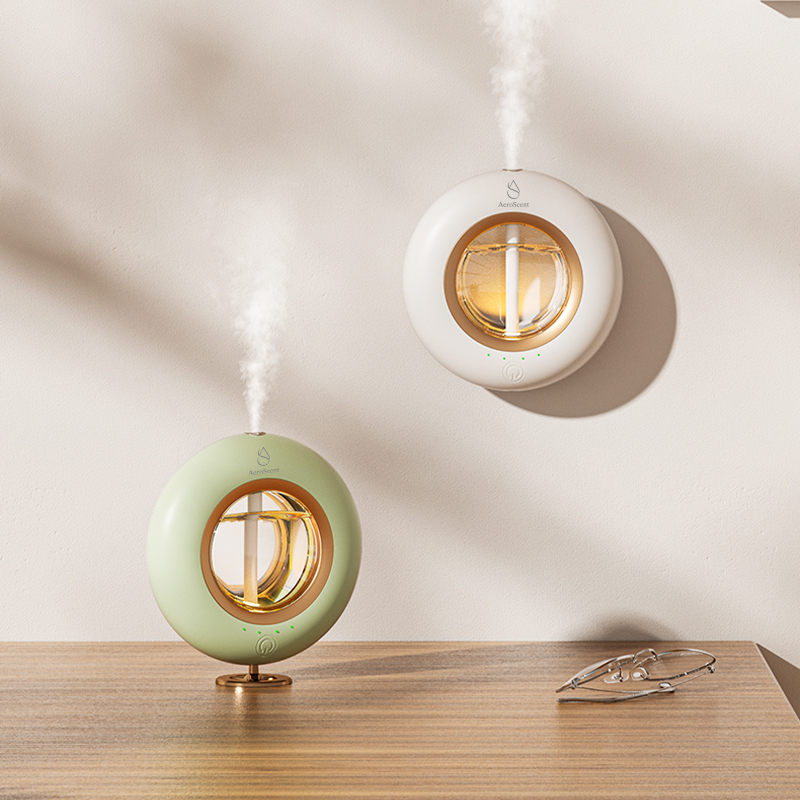
Standard units are bulky and constructed with fragile plastics that crack under luggage compression. Home diffusers prioritize aesthetic design over structural integrity. They often feature thin ceramic shells, glass domes, or brittle polystyrene bases. When subjected to the impact forces of airport baggage handling or the tight squeeze of a carry-on backpack, these materials shatter. Even if the exterior survives, the internal water basin is rarely designed to withstand being turned upside down. Most home units use a simple resting lid or a weak magnetic catch. Any residual water left inside the basin will immediately escape during transit.
Lack of accessible 120V/240V outlets in vehicle cup holders, small bathrooms, or older hotel rooms renders corded units useless. A device that requires a dedicated wall plug restricts placement options. In a rental car, you need a unit that fits securely in a cup holder and draws power from a USB port. In an older hotel room, available outlets are often hidden behind heavy furniture or already occupied by lamps and alarm clocks. Power dependency eliminates the flexibility required for effective travel use.
Relying on DIY methods, like dropping oil on cotton balls or using temporary room sprays, fails to provide sustained odor neutralization in stuffy, multi-occupancy spaces. A cotton ball saturated with peppermint oil will project scent for perhaps thirty minutes before the volatile compounds evaporate completely. Room sprays mask odors temporarily but leave behind a sticky residue and dissipate rapidly. When sharing a windowless room with family members, you need continuous, regulated scent dispersion to maintain a pleasant environment overnight.
Residual water in unsealed reservoirs can destroy surrounding electronics and clothing during transit. If you pack a recently used ultrasonic diffuser without thoroughly drying the internal basin, the remaining moisture will seep out. This water can easily ruin a laptop, short-circuit a tablet, or cause mold growth on clothing packed in the same compartment. The risk of collateral damage makes unsealed units a liability on the road.
Cheap travel models often use low-grade plastics that degrade when exposed to undiluted essential oils in high-heat environments. Essential oils, particularly citrus oils containing limonene, act as natural solvents. Manufacturers of high-quality travel units utilize Polypropylene (PP) or Polyoxymethylene (POM) for the internal reservoirs. These thermoplastics offer exceptional chemical resistance against highly corrosive essential oils like lemon, clove, and cinnamon. Cheaper units use Acrylonitrile Butadiene Styrene (ABS), which quickly degrades, crazes, and cracks when exposed to these natural solvents. When evaluating a unit, always verify the plastic grading of the reservoir.
Common failure points for standard diffusers during travel include:
Ultrasonic technology uses high-frequency vibrations to create a fine mist of water and oil. Inside the base of the unit sits a small ceramic disc, known as a piezoelectric transducer. When electrical current is applied, this disc vibrates at ultrasonic frequencies—typically around 2.4 million times per second. These rapid vibrations agitate the water and the drops of essential oil floating on the surface, breaking them down into microscopic droplets that are expelled into the air as a cool mist.
This method adds necessary humidity to dry environments, like airplane cabins or air-conditioned hotels. HVAC systems in commercial lodging are notorious for stripping moisture from the air, leading to dry sinuses and scratchy throats. An ultrasonic unit mitigates this by functioning as a micro-humidifier. Furthermore, because the oil is suspended in a larger volume of water, it dilutes the oil for a subtler scent. This is beneficial in tight quarters where a highly concentrated fragrance might cause headaches.
However, ultrasonic technology requires a water source. Sourcing clean, distilled water while traveling is inconvenient, and using hard tap water leaves mineral dust on hotel furniture and clogs the transducer over time. There is also a higher risk of spills if the unit is knocked over. Finally, ultrasonic models require frequent cleaning to prevent mold and bacterial growth in the damp reservoir.
Pressurized air atomization forces high-pressure air through the essential oil, breaking it into nanoparticles without water. This process relies on the Bernoulli principle. A small internal air pump generates a high-velocity air stream across a tiny tube connected to the oil reservoir. The pressure difference draws the pure essential oil up the tube, where the air stream shatters it into an ultra-fine, invisible vapor.
Zero water is required, resulting in a completely spill-proof reservoir. Because there is no water basin to slosh around, these units can often operate at an angle or even withstand being knocked onto their side without leaking. The absence of water also means a stronger, more immediate scent throw. The vapor consists of 100% pure essential oil, delivering maximum therapeutic benefit and rapid odor neutralization.
Many waterless models allow users to screw standard essential oil bottles directly into the atomizer. This makes it exceptionally easy to switch from an energizing daytime citrus to a relaxing nighttime lavender without cleaning a reservoir. You simply unscrew one bottle and attach another. The primary drawback is that nebulizing technology consumes essential oil at a much faster rate than ultrasonic dilution. Additionally, the internal air pump motor can be slightly louder, producing a low hum during operation.
Evaluating mAh ratings is critical for understanding operational limits. A standard 2000mAh battery typically yields 2-4 hours of continuous output or 8-12 hours on intermittent settings. Larger units might feature 4000mAh batteries, extending usage across multiple days of travel without a recharge. When assessing battery life, consider your typical transit times. A cross-country road trip requires different power reserves than a short commuter flight.
The necessity of USB-C compatibility for integration with existing travel adapters, power banks, and car chargers cannot be overstated. Proprietary charging cables are easily lost and difficult to replace on the road. USB-C has become the universal standard for modern electronics. A unit equipped with a USB-C port allows you to charge the device using the same cable you use for your smartphone or laptop, significantly reducing cable clutter in your luggage.
A true cordless diffuser isn't just for transit; it allows users to seamlessly move the unit from a rental car to a hotel bathroom, and finally to a bedside table without hunting for wall outlets. This intra-destination mobility is the defining feature of a premium travel unit. You can place the device exactly where the scent is needed most, regardless of where the architect decided to install the electrical sockets.
Vehicle integration requires specific physical dimensions. A standard automotive cup holder measures approximately 3.1 inches in diameter. A travel unit must feature a tapered base to sit flush within this space without rattling during transit. Furthermore, the power port must be positioned high enough on the device body so that the charging cable does not bend or crimp against the edge of the cup holder.
| Battery Capacity (mAh) | Continuous Runtime | Intermittent Runtime (30s on / 60s off) | Best Travel Application |
|---|---|---|---|
| 1000mAh | 1 - 2 Hours | 3 - 5 Hours | Short commutes, gym bags |
| 2000mAh | 2 - 4 Hours | 8 - 12 Hours | Domestic flights, daily rental car use |
| 4000mAh+ | 5 - 8 Hours | 15 - 24 Hours | Long-haul international travel, camping |
Look for IPX-rated water resistance and deep-threaded screw tops combined with silicone O-rings. If you opt for an ultrasonic model, the sealing mechanism is the single most important component. A simple friction-fit lid will fail. The reservoir must thread securely into the base, compressing a thick silicone gasket to create a watertight seal. This engineering ensures that even if the unit is inverted in a backpack, the water remains contained.
Push-button or twist-lock closures prevent accidental activation or opening inside a bag. Travel gear is subjected to constant pressure and shifting. A device with a sensitive, exposed touch-capacitive power button will inevitably turn itself on inside your luggage, draining the battery and potentially burning out the motor if the reservoir is dry. Physical, tactile buttons that require deliberate pressure, or physical lock switches, are mandatory for travel hardware.
A mini diffuser is engineered for micro-environments, typically ranging from 50 to 150 square feet. Buyers must balance compact size against the required scent strength for their specific travel accommodations. A unit designed to fit in a car cup holder will struggle to adequately scent a sprawling resort suite. Understanding the volumetric limits of your device prevents disappointment.
Evaluating models with programmable intervals is necessary to prevent olfactory fatigue in confined spaces and extend battery life. Olfactory fatigue, or nose blindness, occurs when constant exposure to a scent causes your olfactory receptors to stop registering the smell. In a small space like a car cabin, continuous diffusion quickly becomes overwhelming. Programmable duty cycles—such as 30 seconds of mist followed by 2 minutes of rest—keep the scent perceptible without causing headaches, while simultaneously conserving both battery power and essential oil.
Travel environments already have high ambient noise. The unit must operate below 30dB to avoid disrupting sleep in tight quarters. Hotel rooms often have noisy mini-fridges, loud HVAC units, and thin walls. Adding a whining motor to that environment degrades sleep quality. A decibel rating below 30dB is generally considered whisper-quiet and should blend seamlessly into the background acoustic profile of the room.
Nebulizing pumps inherently vibrate more than ultrasonic plates. Because waterless models rely on a mechanical air pump, they generate physical vibration. If placed on a hard, hollow surface like a hotel nightstand, this vibration amplifies into an annoying hum. Evaluate base padding and vibration dampening features. Look for thick, soft rubber feet that isolate the device from the surface it rests on, absorbing the kinetic energy before it translates into sound.
Essential oil bottles must comply with the 3.4 oz (100ml) liquid rule and fit within a quart-sized bag if carried in the cabin. The Transportation Security Administration strictly enforces the 3-1-1 rule for liquids in carry-on baggage. Fortunately, most standard essential oil bottles are 10ml, 15ml, or 30ml, which fall well below the limit. Ensure the caps are screwed on tightly, as changes in cabin pressure during ascent and descent can cause poorly sealed bottles to leak.
The diffuser reservoir must be completely empty and dry before passing through airport security to avoid secondary screening. X-ray scanners easily detect pools of liquid inside electronics. If a TSA agent spots an opaque device containing an unidentified fluid, your bag will be pulled for a manual search and chemical swabbing. Emptying the reservoir and wiping it dry before packing ensures a frictionless experience at the security checkpoint.
Cruise lines strictly prohibit open flames and heat-generating appliances. Candles, incense, and heated wax melters are universally banned on cruise ships due to the catastrophic risk of maritime fires. Security personnel will confiscate these items during embarkation. A cold-mist travel aroma diffuser bypasses these restrictions entirely, as it utilizes mechanical agitation or air pressure rather than thermal energy to disperse the scent.
Unlike candles or heated plug-ins, a high-quality unit can be safely left running while sleeping or away from the room, providing continuous odor control without fire risks. Most modern devices feature automatic shut-off mechanisms triggered by low water levels or built-in timers. This allows you to return to a fresh-smelling hotel room after a long day of sightseeing without worrying about leaving an appliance unattended.
Using diffusers in interior cruise cabins, which lack windows, requires strict adherence to intermittent settings to avoid overpowering the limited ventilation system. Interior cabins rely entirely on the ship's centralized HVAC for air circulation. A continuous stream of pure essential oil from a nebulizer will quickly saturate the small space, making the air uncomfortably dense. Utilizing the lowest intermittent setting ensures a pleasant ambient aroma without overwhelming the cabin.
A highly compact 50ml reservoir saves luggage space but requires daily refilling, whereas a 150ml unit lasts longer but occupies the space of a coffee mug. Every piece of travel gear involves a compromise between footprint and functionality. If you travel with a minimalist carry-on, a slim, cylindrical unit that fits in a side pocket is ideal, even if you must refill it every evening. If you travel with checked luggage and prioritize convenience, a larger reservoir reduces daily maintenance.
Maintenance on the go presents unique challenges. Ultrasonic models require wiping down with citric acid or vinegar to remove hard water scale. When traveling, sourcing white vinegar is often difficult. You can substitute with vinegar packets from a hotel dining room or simply wipe the ceramic disc carefully with a damp cotton swab. Waterless models require periodic flushing with rubbing alcohol to prevent clogged nozzles. Running a few milliliters of high-proof isopropyl alcohol through the nebulizer clears out sticky resin left behind by heavier oils like vetiver or patchouli.
Neglecting maintenance during a two-week trip will permanently damage the hardware. For ultrasonic units, stagnant water left in the reservoir for more than 24 hours breeds bacteria, which the device will then aerosolize into your breathing space. Always dump residual water daily. For nebulizing units, switching between thick oils like sandalwood and thin oils like sweet orange without an alcohol flush will clog the micro-tubes, rendering the pump useless.
| Feature | Ultrasonic Travel Diffuser | Waterless (Nebulizing) Travel Diffuser |
|---|---|---|
| Atomization Method | High-frequency vibration (water + oil) | Pressurized air (pure oil only) |
| Spill Risk | Moderate to High (requires strict sealing) | Zero (no water reservoir) |
| Scent Intensity | Subtle, diluted | Strong, concentrated |
| Maintenance Needs | Frequent cleaning to prevent mold/scale | Occasional alcohol flush for clogs |
| Best Use Case | Dry hotel rooms, adding humidity | Rental cars, rapid odor neutralization |
Packing a portable essential oil diffuser requires a systematic approach to prevent damage and leaks. Never pack the unit with the essential oil bottle still attached to the internal nozzle. Changes in atmospheric pressure during flights will force the oil up the intake tube, flooding the motor housing and destroying the internal circuitry. Always detach the oil bottle, seal it with its original factory cap, and store it separately in a sealed plastic bag.
Position the hardware in the center of your suitcase, surrounded by soft clothing. This creates a shock-absorbing buffer against the hard impacts of baggage carousels. If your unit includes a dedicated hard-shell travel case, use it. These cases are molded to protect the delicate atomizer nozzles and prevent the power button from being accidentally depressed during transit.
A: Yes, you can pack it in either carry-on or checked luggage. However, the reservoir must be completely empty and dry before passing through TSA security checkpoints. Any essential oils you carry must comply with the 3.4 oz (100ml) liquid rule and fit inside a quart-sized clear bag.
A: Yes. Cruise lines prohibit open flames and heat-generating devices like candles or wax warmers due to strict fire safety codes. Cold-mist ultrasonic and nebulizing units generate no heat and are entirely safe and compliant for use in all cruise ship cabins.
A: A standard unit with a 2000mAh lithium-ion battery typically provides 2 to 4 hours of continuous misting. If you utilize intermittent settings, such as misting for 30 seconds and resting for 2 minutes, the battery life can extend to 8 to 12 hours on a single charge.
A: Travel models are specifically engineered for mobility. They feature deep-threaded silicone seals to prevent water leaks, utilize rechargeable batteries or USB-C power instead of wall plugs, and are built with durable, impact-resistant plastics to survive luggage compression.
A: Yes. Passive methods, like dropping oil on cotton balls, evaporate quickly and fail to project scent across a room. Active diffusion forces the scent particles into the air, providing continuous, regulated odor neutralization for hours without requiring constant reapplication.
A: It depends on the technology. Ultrasonic models require water to create a mist. Waterless or nebulizing models do not use water at all; they use pressurized air to atomize pure essential oil directly from the bottle, eliminating spill risks entirely.
A: For ultrasonic models, wipe the internal basin and ceramic disc carefully with a damp cotton swab or a tissue. For waterless nebulizing models, run a small amount of high-proof rubbing alcohol through the unit for five minutes to dissolve any sticky oil residue.


