
Views: 0 Author: Site Editor Publish Time: 2026-08-29 Origin: Site


Maintaining a clean, consistent scent profile in enclosed sleeping spaces presents a persistent challenge. You want a fresh-smelling room, but introducing respiratory irritants or fire hazards defeats the purpose of a relaxing sanctuary. Traditional home fragrance solutions fall short. Paraffin candles, synthetic plug-ins, and aerosol sprays rely heavily on volatile organic compounds. They present safety risks during sleep and offer poor long-term efficiency.
Switching to a bedroom essential oil diffuser provides a viable, customizable alternative. This device replaces synthetic chemicals with botanical extracts. You control both the intensity and the exact ingredients of your room's fragrance. We will evaluate specific diffuser mechanisms and compare them against other fragrance methods. We will look at maintenance requirements, material sustainability, and safety considerations to help you make an informed purchasing decision.
Synthetic plug-ins dominate the commercial fragrance market due to convenience, but they carry significant mechanical and health drawbacks. These units use a small heating element to vaporize a synthetic gel or liquid. This constant heat alters the chemical structure of the fragrance. The resulting vapor coats drywall, HVAC filters, and ceiling fan blades with a sticky, difficult-to-remove residue. Continuous exposure to these strong synthetic fragrances also leads to olfactory fatigue, where your nose simply stops registering the scent after a few days.
Scented candles introduce a different set of problems in a bedroom setting. Most commercial candles use paraffin wax, a petroleum byproduct. Burning paraffin produces soot. Over time, this particulate matter accumulates on your walls and ceilings, degrading your indoor air quality. The open flame creates an inherent fire hazard. You cannot safely fall asleep while a candle is burning, which limits their utility strictly to waking hours.
Passive room sprays offer a quick burst of fragrance but fail to provide lasting results. They rely on aerosol propellants to push the liquid into the air. The scent molecules are heavy and fall to the floor rapidly. This leaves the upper breathing zone of the room odorless within minutes, resulting in a short scent duration and uneven dispersion across the space.
Ultrasonic units use a piezoelectric transducer. This small ceramic disc sits at the bottom of the water reservoir. When powered, it vibrates at ultrasonic frequencies, typically around 2.4 million times per second. This rapid vibration creates a standing wave in the water, pulling the botanical extracts and water into microscopic droplets. A small internal fan then blows this cool mist out of the top nozzle. This process provides a secondary benefit of mild humidification, helping combat dry indoor air during winter months.
Nebulizing units operate on entirely different physics, utilizing the Bernoulli principle. An internal air pump forces pressurized air through a small micro-tube. As the air passes over a secondary tube containing pure botanical extract, it creates a vacuum. This vacuum pulls the oil up and shatters it into a fine vapor against a glass baffle. No water is used in this process. The pressurized air delivers superior scent concentration and does not alter the room's ambient humidity levels.
Evaporative and heat models represent older, less effective technologies. Evaporative units use a fan to blow air through an oil-soaked pad, while heat models warm the oil to speed up evaporation. Both methods alter the chemical composition of the extracts, degrading their structural integrity and altering the intended scent profile.
| Technology Type | Mechanical Process | Scent Concentration | Humidity Impact | Ideal Room Size |
|---|---|---|---|---|
| Ultrasonic | Piezoelectric vibration with water | Moderate | Adds mild moisture | Small to Medium (150-300 sq ft) |
| Nebulizing | Pressurized air atomization (no water) | High | None | Medium to Large (300+ sq ft) |
| Evaporative | Fan blowing across saturated pad | Low to Moderate | None | Micro-spaces, desks |
The construction materials of the unit directly impact its lifespan and safety. Botanical extracts are potent natural solvents. Citrus oils contain high levels of d-limonene. If you put pure lemon or sweet orange oil into a cheap polycarbonate plastic reservoir, the d-limonene will slowly dissolve the polymers. This degradation causes the plastic to crack and leak. It also means the unit will diffuse dissolved plastic particles into your bedroom air.
High-quality devices utilize medical-grade glass, unglazed ceramic, or polypropylene (PP) plastic. Polypropylene resists solvent degradation effectively. Glass and ceramic do not react chemically with potent extracts at all. These materials ensure the device remains non-toxic and structurally sound over years of daily use.
Matching the specific technology to your room size guarantees optimal performance, but placement dictates actual efficacy. You must map the airflow of your bedroom. Every room has supply registers that push conditioned air and return vents that pull stale air. If you place your unit directly beneath a return vent, the HVAC system will immediately suck the vapor out of the room. The scent will travel into the ductwork and get trapped in your MERV filter, wasting your extracts.
Position the unit near a supply register instead. The forced air will catch the mist and distribute it evenly across the room's square footage. Keep the unit at least three feet off the floor. Placing it on a solid nightstand or dresser allows the vapor to mix with the ambient air before gravity pulls the heavier particles down to the floorboards.
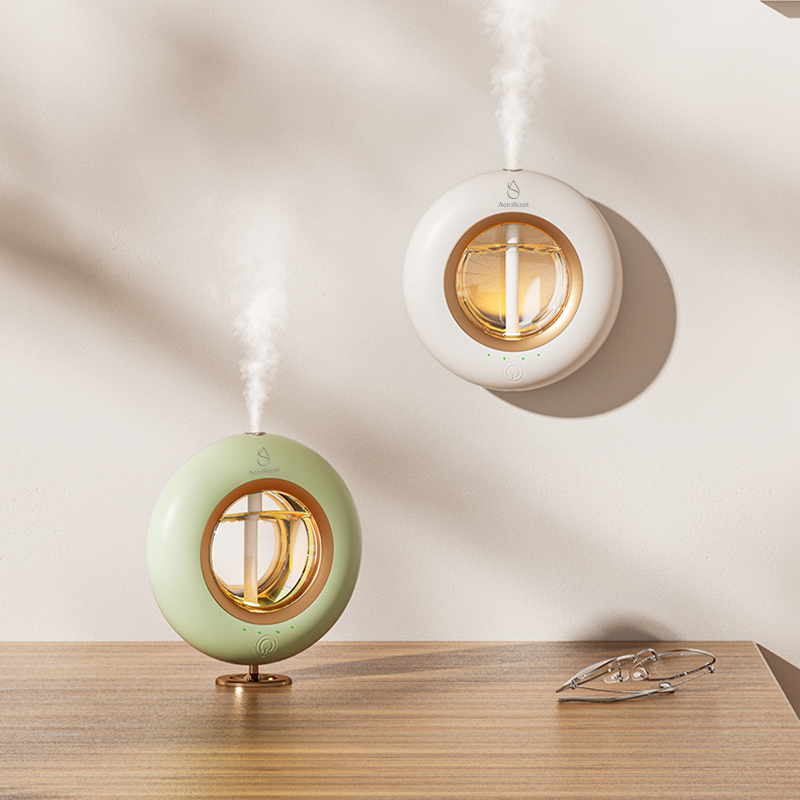
Shifting from synthetic fragrances to pure botanical extracts fundamentally changes your indoor environment. Synthetic room sprays mask odors with heavy chemicals. Pure extracts neutralize odors while keeping the air clean. From an indoor air quality perspective, reducing volatile organic compounds is a primary health objective. Switching to a natural home diffuser eliminates the continuous off-gassing associated with commercial plug-ins. You gain complete control over exactly what enters your lungs while you sleep.
Pre-purchased candles and plug-ins offer static scent profiles. Active units allow you to blend single-note extracts to create custom profiles tailored for specific use cases. However, you must understand oil viscosity to blend effectively and protect your hardware.
Botanical extracts vary wildly in their physical thickness. Citrus oils like sweet orange, lemon, and grapefruit are highly volatile and thin. They flow easily through nebulizer tubes and evaporate rapidly. Base notes like vetiver, patchouli, and sandalwood are incredibly thick and resinous. If you put pure vetiver into a nebulizer, it will clog the microscopic glass tubes within hours.
To use thick base notes effectively, you must blend them with thinner top notes. A ratio of three drops of sweet orange to one drop of vetiver creates a balanced viscosity. This flows smoothly through the hardware while providing a grounded, lasting scent profile.
| Note Category | Evaporation Rate | Viscosity | Common Examples |
|---|---|---|---|
| Top Notes | 1 to 2 hours | Thin / Watery | Lemon, Bergamot, Peppermint, Grapefruit |
| Middle Notes | 2 to 4 hours | Medium | Lavender, Roman Chamomile, Eucalyptus |
| Base Notes | 4 to 8 hours | Thick / Resinous | Cedarwood, Vetiver, Frankincense, Patchouli |
Running a dedicated device offers significant long-term efficiency compared to buying premium candles. Luxury candles burn out quickly and require constant replacement. A quality hardware unit requires only a small amount of consumable extract per use.
A standard 15ml bottle holds roughly 250 to 300 drops. A typical overnight diffusion cycle requires only 5 to 8 drops. One small bottle easily lasts for over a month of nightly use. This scalability makes active diffusion a highly efficient method for maintaining a consistently scented bedroom without generating physical waste like empty candle jars or plastic plug-in refills.
Electronic devices provide immediate, controllable scent throw. You turn the unit on, and the room fills with fragrance within minutes. You can adjust the intensity and set timers. An active aroma machine forces scent into the environment mechanically.
Passive methods, such as reed diffusers, offer a continuous but subtle scent. They rely entirely on ambient airflow and natural evaporation, which you cannot control or turn off. Porous diffusers, like unglazed ceramic stones or wooden blocks, absorb oil and release it slowly. These are highly localized alternatives. They work perfectly for micro-spaces like nightstands or closets, but they lack the mechanical power to scent an entire bedroom.
Users occasionally note that scents do not seem to last very long in an active device. This happens due to olfactory fatigue. Your brain filters out constant stimuli. If you run the unit continuously, your olfactory receptors will stop registering the scent after 30 minutes, even though the room is still heavily fragranced.
You can maximize scent longevity by leveraging intermittent timer settings. Set the unit to run for 10 minutes and pause for 20 minutes. This releases the scent in bursts, preventing your nose from adapting to the smell. Formulating smarter blends also helps. Use heavy base notes to anchor your lighter citrus or floral oils, slowing down their overall evaporation rate.
The primary drawback of an active bedroom diffuser is the necessity of routine maintenance. Passive reeds require no cleaning, but electronic units demand regular attention. Neglecting maintenance leads to residue buildup, microbial growth, and eventual hardware failure.
Acoustic footprints vary significantly between models. Ultrasonic units generally operate quietly, but they produce a distinct water trickling sound. Many users find this white noise soothing, akin to a small tabletop fountain. Nebulizers do not use water, so there is no trickling sound. Instead, they emit a low-frequency hum from the internal air compressor.
Placement affects noise levels. If you place a nebulizer on a hollow nightstand, the furniture acts as an acoustic amplifier, making the pump vibration much louder. Put a dense cork pad or a thick felt mat beneath the unit to dampen the acoustics. If you require absolute silence to sleep, run the unit for an hour before getting into bed, allowing the scent to linger while the machine is powered off.
Certain botanical extracts pose severe health risks to household pets. Cats lack a specific liver enzyme called UDP-glucuronosyltransferase. They cannot metabolize phenols and monoterpenes found in many extracts. Dogs are also sensitive to specific compounds. Oils like eucalyptus, tea tree, peppermint, and citrus can cause respiratory distress, lethargy, or liver damage in pets.
Stick to pet-safe oils if your animals sleep in your room. Ensure the room remains well-ventilated. Always leave the bedroom door open so the pet can exit the space if the scent becomes overwhelming. Never apply extracts directly to your pet's fur or skin.
Running an ultrasonic model continuously in a small, closed bedroom increases relative humidity. A closed bedroom door traps moisture. If your room already sits at 60% relative humidity, adding an ultrasonic unit can push it to 70%. Over time, this excess moisture encourages mold and mildew growth on windowsills, drywall, and fabrics.
Manage this by utilizing intermittent timers and monitoring your room with a basic hygrometer. If you live in an inherently damp climate or already struggle with high indoor humidity, bypass ultrasonic technology entirely. Choose a nebulizing unit that disperses pure extract without adding any water to the air.
The fragrance market is flooded with synthetic fragrance oils masquerading as natural products. Many cheap extracts are heavily diluted with carrier oils or synthetic solvents like diethyl phthalate. Using low-grade oils results in weak scent throw, unpleasant chemical aromas, and clogged hardware.
Establish strict criteria for evaluating brands. Look for companies that provide transparent Gas Chromatography/Mass Spectrometry (GC/MS) testing results for every batch. This test breaks down the exact chemical constituents of the liquid, proving it has not been adulterated. Verify the botanical naming on the bottle. High-quality extracts ensure you achieve the desired fragrance profile without damaging your machine.
A: Yes, provided the device features an automatic shut-off sensor. Most modern units power down when the water or oil level drops below a specific threshold. Use an intermittent timer setting to prevent olfactory fatigue and conserve your botanical extracts while you sleep.
A: Empty leftover water and wipe the reservoir daily to prevent bacterial growth. Perform a deep clean once a week using 90% isopropyl alcohol or a water-and-vinegar solution. This removes stubborn oil residue from the ultrasonic disc and prevents hardware failure.
A: Always check the manufacturer specifications. Most ultrasonic models perform better with standard tap water. The natural minerals in tap water help the piezoelectric disc conduct vibrations efficiently. Distilled water lacks these minerals and can hinder mist production in certain units.
A: A weak scent usually results from using heavily diluted oils, a dirty ultrasonic disc covered in hardened resin, or placing a small-capacity unit in a large master suite. Clean the hardware thoroughly and switch to pure, third-party-tested botanical extracts.
A: Infants possess highly sensitive respiratory systems. Medical professionals generally recommend avoiding active diffusion around babies under six months old. For older infants, consult a pediatrician, use heavily diluted gentle oils, and ensure the room maintains excellent cross-ventilation.
A: Lavender remains the most heavily researched option for promoting relaxation. Other effective choices for sleep hygiene include Roman Chamomile, Cedarwood, and Vetiver. Blending a heavy base note like Vetiver with a lighter top note creates a lasting, calming aroma throughout the night.


