
Views: 0 Author: Site Editor Publish Time: 2026-08-01 Origin: Site


Standard room diffusers fail in individual workstations. They take up too much physical space, output excessive mist, and risk damaging nearby electronics. You cannot run a high-capacity unit in a shared cubicle without bothering your colleagues or violating workplace policies. Professionals need targeted, localized solutions that respect shared boundaries while delivering functional benefits. A purpose-built desk essential oil diffuser solves this problem directly. It acts as a strategic tool for workspace optimization, creating a controlled scent bubble right where you sit. This guide evaluates the technical specifications, operational risks, and selection criteria necessary to choose the right unit for home or corporate offices. We will examine footprint constraints, output control mechanisms, and acoustic profiles to ensure your setup enhances focus without causing disruptions or damaging your computer hardware.
Deep work requires a stable psychological and environmental baseline. You must manage ambient stress, mask stale office odors, and anchor focus routines to maintain productivity during long shifts. Standard ambient room diffusers waste resources and flood entire floors with scent, creating unpredictable environments for different individuals. A localized desktop diffuser delivers precision. It restricts the aromatic footprint to your immediate desk area, usually within a three-foot radius. The primary goal is achieving functional aromatherapy benefits without compromising workspace ergonomics or professional etiquette. You want to control your sensory input. Unregulated background odors from breakrooms, commercial carpets, or HVAC systems disrupt concentration and increase cognitive load. By introducing a controlled scent profile, you actively engineer your environment for optimal mental performance. You dictate the exact sensory baseline required to execute complex tasks.
Botanical profiles directly influence cognitive function through the olfactory bulb, which connects to the brain's limbic system. Specific chemical constituents in essential oils trigger measurable physiological responses. Rosemary contains 1,8-cineole, a compound proven to aid memory retention and cognitive speed. Peppermint boosts alertness and combats mid-afternoon lethargy. Bergamot reduces cortisol levels, facilitating stress reduction and mood elevation during tense projects. Scent anchoring leverages these reactions. You use specific aromas to trigger flow states during complex tasks. By diffusing a particular scent only when performing deep work, you train your brain to associate that aroma with intense focus. Work-From-Home professionals possess a unique opportunity here. They can tailor their space for emotional well-being without the constraints of a shared office, utilizing potent oils that might otherwise disturb colleagues.
Your chosen office scent reflects your professional personality and sets the tone for your workday. Crisp citrus blends, featuring grapefruit or sweet orange, project high energy and dynamism. They suit fast-paced tasks, sales calls, and creative brainstorming. Grounding woods, such as cedarwood or sandalwood, promote steady, calm focus. They work best for analytical tasks, coding, or extensive reading. A mini diffuser also improves perceived air quality. Sterile or stuffy workspaces often feel oppressive. Introducing a natural, botanical aroma makes the environment feel inviting and conducive to long hours. It masks the synthetic smells of warm electronics, fresh printer paper, and commercial carpet off-gassing. You replace flat, processed air with a dynamic sensory experience that keeps you engaged with your work environment.
Ultrasonic technology dominates the market due to its versatility. These devices use a small piezoelectric transducer submerged in a water reservoir. The transducer vibrates at ultrasonic frequencies, breaking the water and essential oil into micro-particles. This creates a fine, cool mist. For desk use, this mechanism offers distinct advantages. It adds localized humidity to combat severe dryness caused by aggressive office HVAC systems. This moisture prevents dry eyes and irritated respiratory tracts during long shifts staring at monitors. Ultrasonic units generally consume very little oil, making them highly efficient. However, they carry specific drawbacks for workstations. They require constant water access for refills. They pose a tangible spill risk near keyboards, laptops, and sensitive documents. Furthermore, if you use standard tap water instead of distilled water, the transducer will vaporize the minerals. This results in a fine white mineral dust settling over your dark monitors, desk mats, and optical mouse sensors.
Nebulizing diffusers operate on the Bernoulli principle. They use pressurized air to atomize pure essential oil directly from the bottle, forcing it through a microscopic glass tube. This creates an incredibly fine, potent vapor without using a single drop of water. The primary advantage for a desk setup is the absolute zero spill risk. You eliminate the danger of water damage to nearby electronics. Nebulizers deliver immediate, potent scent delivery and typically feature a very compact footprint. They look sleek and professional on a modern desk. However, the drawbacks require careful consideration. They consume essential oil at a significantly higher rate than ultrasonic models. The internal air pump often produces a slight humming or vibrating noise. This acoustic profile may distract you in ultra-quiet environments. Because the output is undiluted, a nebulizer can easily overpower a small space if not carefully regulated with strict timer settings.
Passive diffusers rely on natural evaporation. They utilize porous materials like unglazed ceramic, natural wood blocks, or felt pads. You apply drops of oil directly to the material, and it slowly releases the scent into the surrounding air. Some evaporative models include a small internal fan to accelerate this process. For desk environments, passive models offer unmatched discretion. They operate completely silently. They produce zero moisture output, ensuring absolute safety for paper documents and electronics. Their highly localized scent throw makes them ideal for strict open-office environments where you must respect shared air space. The scent rarely travels beyond a two-foot radius. The cons include the weakest scent throw among all technologies. You must frequently re-apply oils to maintain the aroma. They also lack timer functions or intensity controls, relying entirely on ambient airflow and temperature to dictate the evaporation rate.
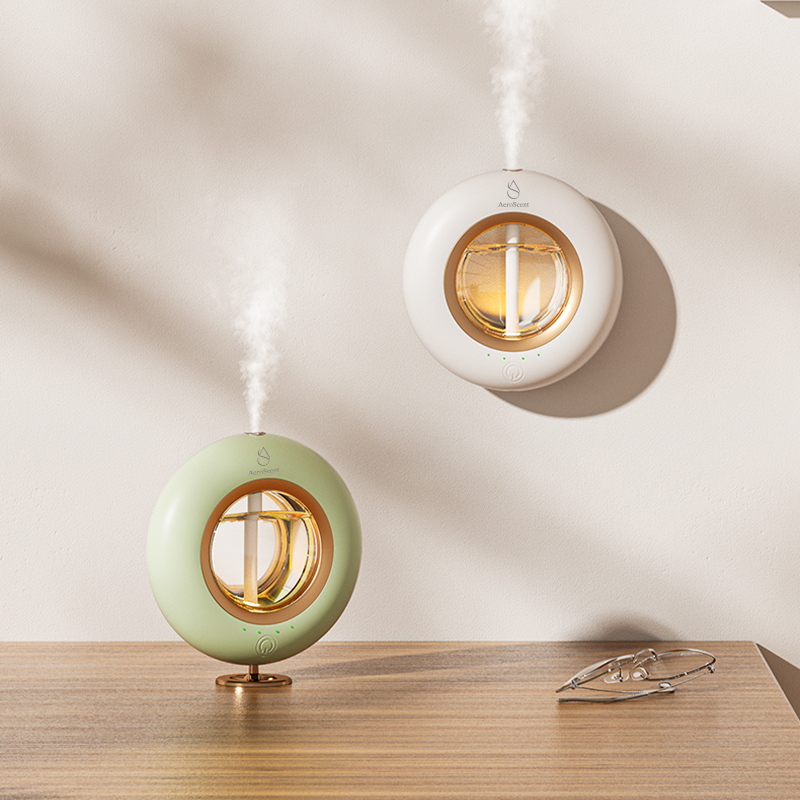
Desk real estate is a premium commodity. Spatial constraints dictate your selection. The device must not interfere with monitor placement, mouse movement, or document storage. Measure your available clearance before selecting a unit. Evaluate the power options carefully. USB-powered models offer excellent versatility. You can plug them directly into a laptop dock, a monitor hub, or a standard phone charger. Standard AC adapters require access to a wall outlet, which often leads to cable management issues behind the desk. Battery-operated or rechargeable models provide the ultimate ergonomic advantage. They eliminate cable clutter entirely. You can move them freely around your workspace, placing them exactly where you need the scent without worrying about cord length or snagging.
The human olfactory system adapts quickly to continuous stimuli. This biological reality is known as olfactory fatigue, or nose blindness. If you run a diffuser continuously, your brain stops registering the scent within thirty minutes. Continuous output wastes oil and over-saturates the room. Programmable intervals are a mandatory feature for any office diffuser. You need intermittent misting capabilities. Setting a cycle of five minutes on and ten minutes off maintains efficacy. It allows the olfactory receptors to reset, ensuring you perceive the aroma throughout an eight-hour workday. This duty cycle also conserves essential oil and prevents the ambient air from becoming overwhelmingly fragrant.
Acoustic dynamics play a major role in workspace comfort. Different technologies produce different noise profiles. Ultrasonic models emit a soft water trickling sound, often accompanied by a faint fan noise. Nebulizing units generate a distinct motor vibration and air-hissing sound. Evaporative fan models produce a steady mechanical whir. You must compare the decibel (dB) ratings. Anything above 35 dB will likely disrupt deep concentration. Furthermore, acoustic resonance changes based on placement. When you place a vibrating device on a hard, hollow desk surface, the desk acts as an amplifier. The structural-borne noise becomes much louder than the airborne noise. Rubberized dampening feet are critical. They absorb internal vibrations, isolate the device from the desk surface, and maintain a quiet environment.
| Diffuser Technology | Scent Potency | Moisture Output | Acoustic Profile | Ideal Workspace Application |
|---|---|---|---|---|
| Ultrasonic | Medium | High (Visible Mist) | Low (Trickling/Fan) | Home offices, dry HVAC environments |
| Nebulizing | High | None (Waterless) | Medium (Motor Hum) | Private offices, high-tech desks |
| Passive/Evaporative | Low | None (Waterless) | Silent | Open corporate offices, shared cubicles |
Introducing fragrances into a shared workspace carries significant social risks. Coworker complaints regarding allergies, asthma, or general scent aversion represent the primary implementation hurdle. You must establish strict scent boundaries. Ensure the aroma does not travel beyond a three-foot radius of your chair. Proactive communication prevents conflict. Talk to your immediate neighbors before bringing any scent device to your desk. Gain consensus in shared spaces. Opt for universally tolerated, non-sensitizing oils. Sweet orange, lemon, and light peppermint generally face fewer objections than heavy florals like ylang-ylang or spicy oils like cinnamon. If a coworker expresses discomfort, you must immediately discontinue use. Respecting shared air space takes precedence over personal aromatherapy preferences.
Water and electronics do not mix. Ultrasonic models risk moisture accumulation on sensitive hardware. Localized relative humidity spikes can cause condensation on cold metal surfaces, such as laptop chassis or mechanical keyboard plates. Prolonged exposure to mist damages paper documents and warps notebook pages. Pure essential oils present a chemical risk. Citrus oils act as natural solvents. If spilled, they will rapidly degrade ABS plastics, dissolve varnishes, and ruin polyurethane desk mats. Mitigation strategies are essential. Use directional nozzles to steer mist away from hardware. Opt for waterless nebulizing models when placing devices near expensive equipment. Always place a protective ceramic or silicone tray under the unit to catch accidental drips or spills during the refilling process.
| Desk Material / Component | Vulnerability to Essential Oils | Vulnerability to Ultrasonic Mist | Protection Strategy |
|---|---|---|---|
| ABS Plastic (Keyboards, Mice) | High (Melts/Degrades) | Low | Keep 2 feet away; use silicone tray |
| Polyurethane Desk Mats | High (Stains/Bubbles) | Medium (Can warp) | Place diffuser on a hard coaster |
| Paper Documents | Medium (Stains) | High (Warps/Bleeds ink) | Use directional nozzles away from paper |
| Aluminum Laptop Chassis | Low | High (Condensation risk) | Maintain 3-foot distance from mist output |
Corporate environments operate under strict regulatory frameworks. Review your company's HR handbook regarding personal appliances, air quality modifiers, and fragrances. Many modern corporations enforce strict scent-free policies to comply with accessibility standards and accommodate employees with severe chemical sensitivities. In these environments, even natural essential oils are prohibited. Differentiate between the regulatory environment of a corporate cubicle and a private home office. Work-From-Home setups offer complete freedom for environmental customization. You dictate the rules. In a corporate setting, you must navigate facility management guidelines. If your building prohibits plug-in appliances due to fire codes, you must rely on battery-operated or passive evaporative models.
Entry-level plastic models dominate the market, but they often lack durability. The essential oils eventually degrade cheap plastic reservoirs, leading to micro-cracks and leaks. Premium glass, ceramic, or machined aluminum units offer superior longevity. They resist chemical degradation and provide a heavier base, reducing the risk of accidental tip-overs on a busy desk. Evaluate the lifespan of internal components. Ultrasonic plates degrade over time, especially if you use hard tap water. Nebulizing pumps can burn out if run continuously without breaks. Investing in a unit with replaceable parts or a solid warranty ensures your setup remains functional through years of daily eight-hour usage.
Routine maintenance dictates the lifespan of your device. Water-based ultrasonic units require strict cleaning protocols to prevent mold growth and mineral buildup. You must empty the reservoir daily and wipe it dry. Twice a week, run a cycle with water and a splash of white vinegar to descale the ultrasonic plate. Nebulizing units demand different care. The microscopic glass tubes clog easily if thick oils dry inside them. You must run a quick cycle with isopropyl alcohol every two weeks to dissolve the residue. Operational overhead also includes oil consumption. Nebulizers consume oil rapidly, requiring frequent bottle replacements. Ultrasonic models stretch a single bottle over several months. Passive diffusers require manual re-application every few hours, demanding more of your time and attention during the workday.
A: Peppermint and rosemary provide excellent cognitive stimulation. They promote alertness and memory retention during complex tasks. Lemon and sweet orange offer uplifting properties that combat mid-afternoon fatigue without causing drowsiness. Avoid heavy florals like lavender if you need to maintain high energy levels.
A: Direct, prolonged exposure to moisture from an ultrasonic mist can damage electronic components. Position the device at least two feet away from monitors and keyboards. Ensure the mist nozzle points away from all hardware. If your desk is highly cluttered, opt for a waterless nebulizing model instead.
A: Clean water-based ultrasonic units twice a week to prevent mold and mineral buildup. Wipe the reservoir with a damp cloth and a drop of white vinegar. Nebulizing units require a quick isopropyl alcohol rinse every two weeks to dissolve thick oil residue and prevent internal clogs.
A: Yes, but strictly use passive or evaporative models with a low scent throw. Consult with immediate neighbors first. Avoid heavy floral or spicy scents, opting instead for light, universally tolerated citrus blends. If your company has a scent-free policy, you must comply and avoid diffusing entirely.
A: This phenomenon is called olfactory fatigue, or nose blindness. Your brain stops registering the continuous scent stimulus to prevent sensory overload. Use intermittent timer settings, such as five minutes on and ten minutes off, to maintain scent perception and conserve oil throughout the workday.
A: Yes. Pure essential oils, particularly citrus varieties, act as natural solvents. If undiluted oil drips onto ABS plastic keycaps or the keyboard chassis, it can melt the plastic, remove the legends, and permanently warp the surface. Always refill your device away from your peripherals.


