
Views: 0 Author: Site Editor Publish Time: 2026-08-15 Origin: Site


Spatial limitations remain the most common frustration in traditional aromatherapy. Being tethered to wall outlets dictates room layout and restricts usage in transitional spaces. Traditional plug-in units create cord clutter and present tripping hazards. They fail to accommodate mobile or off-grid environments like cars, patios, or bathrooms lacking safe electrical access. Users often find themselves compromising on placement, forcing diffusers into corners rather than central locations where scent dispersion works best.
Untethered technology resolves this placement friction. Upgrading to an essential oil diffuser battery powered completely eliminates outlet dependency. This shift requires a technical evaluation of device capabilities. Selecting the right unit means balancing portability with reliable scent dispersion, battery capacity, and maintenance requirements. Understanding the mechanics behind these devices ensures you choose a model that fits your specific environmental needs without sacrificing performance.
Flexible use requires the ability to move a device seamlessly across different environments. You might start your morning with a diffuser on your home office desk, move it to the living room coffee table in the afternoon, and carry it out to the patio by evening. A battery-powered unit allows this transition without interrupting the diffusion cycle or forcing you to crawl under furniture to unplug cables.
Eliminating cords also removes significant safety hazards. Power cables stretching across countertops or floors create tripping risks. In households with children or pets, a snagged cord often results in spilled water, wasted essential oils, and potential electrical hazards. Removing the tether creates a safer, more adaptable environment where the device serves your routine rather than limiting it. We see this frequently in residential setups where older homes simply lack adequate wall outlets in central living spaces.
Consider the specific spatial constraints that untethered units solve:
Interior design benefits heavily from wireless technology. Removing the power cable allows for true 360-degree placement. You can position the unit on dining room centerpieces, floating shelves, or minimalist bathroom counters without compromising the visual space with ugly black or white wires.
Tethered devices are often banished to the perimeter of a room, pushed against walls where outlets live. This compromises both aesthetics and function. Central placement ensures even scent distribution across the room. Untethered units blend into the decor as standalone objects, maintaining the integrity of your interior design while delivering optimal aromatherapy performance. When we evaluate room acoustics and airflow, placing a unit in the dead center of a room utilizes natural HVAC circulation much better than trapping it against a baseboard.
Battery power directly creates new use cases. Maintaining a consistent aromatherapy routine is no longer confined to residential or commercial buildings. RV owners, frequent travelers, and daily commuters rely on portable units to transform unfamiliar or stressful environments.
Hotel rooms often suffer from stale air, and rental cars carry lingering odors. A compact, battery-operated device allows you to control your olfactory environment regardless of your location. This off-grid capability ensures that your preferred scents are always accessible. Whether you need peppermint oil for focus during a long highway commute or lavender to establish a sleep routine in a temporary living space, the hardware travels with you.
Ultrasonic technology relies on water and high-frequency vibrations. A small piezoelectric plate at the base of the reservoir vibrates at ultrasonic speeds, breaking water and essential oil molecules into a fine, cool mist. This mist is then pushed into the air by a small internal fan.
The primary advantage is lower essential oil consumption. Because the oil is diluted in water, a few drops last for hours. These units also double as micro-humidifiers, adding a slight amount of moisture to dry environments. However, the requirement for a water reservoir introduces a spill risk during transport. Additionally, powering both the ultrasonic plate and the fan draws significant battery power, often limiting continuous run times compared to simpler technologies. You will typically see these units max out at 4 hours of continuous misting before the lithium-ion cells require a recharge.
Nebulizing technology uses pressurized air to atomize pure essential oil without water or heat. Utilizing Bernoulli's principle, an internal air pump forces air across a small tube, creating a vacuum that pulls the oil upwards and shatters it into micro-particles. A rechargeable diffuser using this method delivers the most potent scent throw available.
Because they require zero water, nebulizers are ideal for travel and car use. You never have to worry about water spilling in your cup holder or luggage. The trade-off includes higher oil consumption, as you are dispersing undiluted oil. The internal air pump also generates noticeable motor noise, and maintaining the necessary air pressure requires a robust battery output. The atomization process is highly efficient, meaning you only need to run the device for 10 to 15 minutes to fully scent a standard vehicle cabin.
Evaporative units use a small fan to blow air across an oil-soaked pad, while heat-based models use gentle, battery-powered warmth to accelerate evaporation. These represent the simplest forms of portable diffusion.
Their main advantage is extremely low power consumption, allowing for highly compact designs and long battery life. However, they deliver the weakest scent throw, making them suitable only for personal spaces like a desktop or directly next to a bed. Heat-based models also risk altering the chemical composition of the essential oil, potentially degrading its therapeutic properties. We generally advise against heat-based models if you are using high-grade, expensive essential oils, as the thermal degradation ruins the volatile organic compounds.
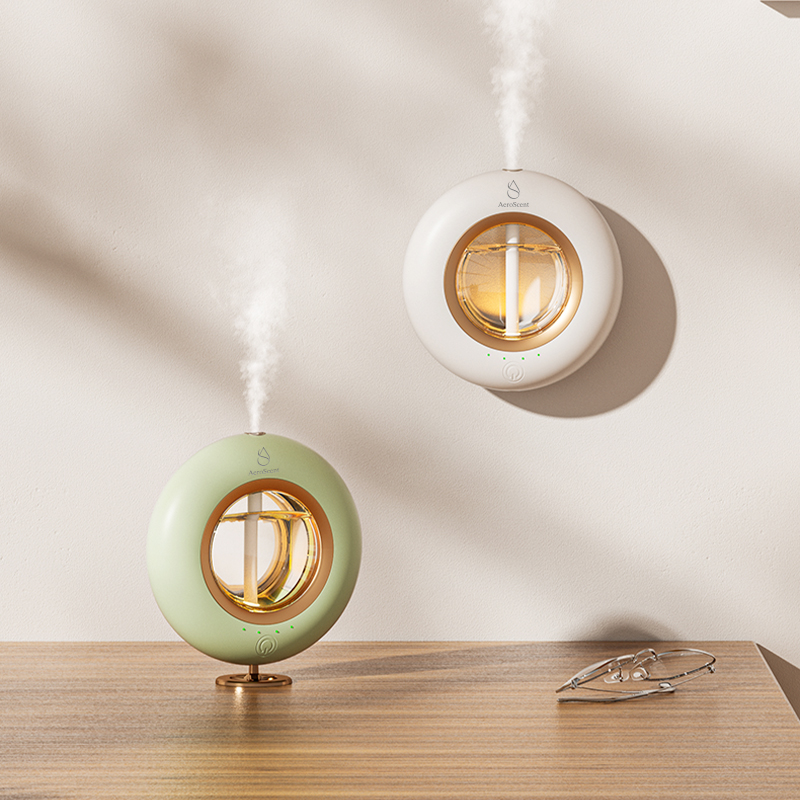
Evaluating a unit requires understanding milliampere-hour (mAh) ratings. A standard portable unit might feature a 2000mAh battery, while premium models offer 4000mAh or higher. In real-world terms, a 2000mAh battery running an ultrasonic plate might yield 3 to 4 hours of continuous misting. Using intermittent settings can stretch this to 8 hours.
Charging standards dictate daily convenience. USB-C is the modern standard, offering universal compatibility and faster charging times. Devices relying on outdated Micro-USB ports or proprietary charging docks limit your flexibility. If you lose a proprietary cable while traveling, the device becomes useless. USB-C allows you to use the same charger for your phone, laptop, and diffuser.
| Battery Capacity (mAh) | Technology Type | Est. Continuous Run Time | Est. Intermittent Run Time | Ideal Use Case |
|---|---|---|---|---|
| 1500 - 2000 mAh | Ultrasonic | 2 - 3 Hours | 5 - 6 Hours | Short commutes, desktop use |
| 2500 - 3000 mAh | Nebulizing | 4 - 5 Hours | 10 - 12 Hours | Rental cars, hotel rooms |
| 4000+ mAh | Ultrasonic | 6 - 8 Hours | 15+ Hours | Living rooms, outdoor patios |
| 4000+ mAh | Nebulizing | 8 - 10 Hours | 20+ Hours | Large open-concept spaces |
Device specifications must map accurately to your room sizes. A compact unit designed to fit in a car cup holder lacks the atomization efficiency to scent a 400-square-foot living room. Scent throw depends on the volume of mist produced per minute and the concentration of the oil.
Battery voltage directly impacts mist density. As the battery drains, cheaper units experience a drop in voltage, resulting in a weaker mist output. High-quality units incorporate voltage regulators to maintain consistent atomization efficiency from a full charge down to the last few minutes of battery life. When testing hardware, we look for Pulse Width Modulation (PWM) controllers on the circuit board, which ensure the fan and pump receive steady power regardless of the battery's current charge state.
Premium portable units increasingly feature Bluetooth or Wi-Fi connectivity, allowing for app-based control. This enables users to adjust settings without physically interacting with the device, which is useful if the unit is placed on a high shelf.
More importantly, smart controls help conserve battery life. Programmable timers and variable mist intensity settings let you customize the output. You can set the device to run heavily for the first 20 minutes to establish the scent, then drop to a low-intensity intermittent mode to maintain the aroma while preserving battery capacity. This prevents olfactory fatigue, where your nose becomes blind to the scent after prolonged exposure.
Mobile use demands durable construction. Devices will be bumped, packed into bags, and subjected to temperature changes. Medical-grade, BPA-free plastics like polypropylene (PP) are shatter-resistant and ideal for travel. They resist the corrosive nature of pure essential oils, particularly citrus oils which contain limonene that can melt cheap ABS plastics.
Aluminum alloys provide a premium, tactile feel and excellent durability, often used in high-end car diffusers. Glass and ceramic offer superior aesthetic integration for home use but are entirely impractical for travel due to their fragility. Evaluate the material based on how frequently the unit will be moved. If it goes in a suitcase, stick to high-density PP or aluminum.
Ultrasonic units face an inverse relationship between run time and portability. A larger water tank means less frequent refills and longer continuous operation. However, a 300ml tank significantly increases the device footprint, making it bulky and difficult to pack.
Conversely, a highly portable 50ml unit is easy to carry but requires constant refilling. Users must determine their primary use case. If the unit stays mostly at home but moves from room to room, a larger reservoir is acceptable. If it goes into a travel bag weekly, a smaller footprint is mandatory. You cannot cheat physics; water weight and volume dictate the physical dimensions of the hardware.
Nebulizing models deliver intense output but introduce acoustic realities. Forcing pressurized air through a micro-tube requires a strong internal pump. This pump generates a humming or vibrating noise.
Higher output requires stronger pumps, which increases decibel levels. While this noise is negligible in a car or a busy living room, it can disrupt quiet environments like bedrooms or focus-heavy workspaces. Buyers must balance their need for strong scent concentration against their tolerance for ambient motor noise. We measure standard ultrasonic units at around 25 decibels, while high-output nebulizers often hit 40 decibels.
Evaluating long-term value requires looking past the initial purchase. High-quality rechargeable units feature better battery chemistry, stronger internal pumps, and superior plastics. These components resist degradation and withstand the rigors of daily movement.
Cheaper, tethered alternatives might seem appealing initially, but they lack the flexibility that ensures daily use. A portable unit that seamlessly integrates into your car, office, and home provides higher utility value over its lifespan. The durability of the internal components dictates how many years of reliable service the unit will provide. A unit that breaks after three trips in a suitcase offers zero long-term value.
Electronics with sealed lithium-ion batteries have a finite lifespan. Once the battery degrades, a sealed unit becomes obsolete. Brands that design their units with replaceable battery packs offer significantly higher long-term value. When the battery eventually fails, you replace a single component rather than discarding the entire device.
Manufacturer warranties require careful reading. Many warranties cover the motor and electronics for a year but explicitly exclude battery degradation. Understanding these terms helps you gauge the manufacturer's confidence in their power management systems and sets realistic expectations for the device's lifespan. Look for hardware that guarantees at least 500 charge cycles before dropping below 80% capacity.
Lithium-ion batteries naturally degrade over hundreds of charge cycles. Managing this degradation extends the life of your device. Avoid deep discharges; do not let the battery drain to zero before recharging. Keeping the charge between 20% and 80% reduces stress on the battery cells. When a wireless aroma diffuser is left plugged in constantly, it can cause micro-cycling that wears out the battery chemistry prematurely.
Temperature extremes accelerate degradation. Leaving a battery-powered unit in a hot car during summer will permanently damage the lithium-ion cells and potentially warp the plastic casing. Utilize smart-charging features if available, and unplug the unit once it reaches a full charge to prevent trickle-charge stress.
Mobility introduces strict maintenance requirements. When a unit is moved between varying climates—like an air-conditioned home to a humid patio—condensation can form. For ultrasonic units, standing water combined with temperature shifts creates an ideal environment for mold and bacterial growth. Empty the reservoir daily and wipe it dry.
Nebulizing units face different risks. Pure essential oils are highly viscous. If left unused in the device, the oil thickens and clogs the micro-tubes. Regular maintenance requires a specific protocol to keep the internal pumps functioning correctly.
Transporting water-based ultrasonic units requires careful attention to sealing mechanisms. Even when emptied, residual water can leak into the internal electronics if the device is packed upside down. Always ensure the unit is completely dry before placing it in luggage. We recommend storing the unit in a dedicated waterproof dry bag during transit.
Air travel introduces strict compliance rules. A portable diffuser containing a lithium-ion battery must be packed in carry-on luggage; they are generally prohibited in checked bags due to fire risks. Additionally, the essential oils accompanying the device must comply with TSA liquid limits, typically restricted to containers of 100ml or less. Keep all oils in a clear, quart-sized bag to expedite the security screening process.
A: Battery life depends on the mAh capacity and the diffusion technology. Most portable units provide 2 to 8 hours of continuous use. Utilizing intermittent misting settings can extend this run time up to 15 hours on a single charge.
A: Yes, many modern units support pass-through charging, allowing simultaneous operation and charging. However, doing this constantly generates excess heat, which can degrade the lithium-ion battery's overall lifespan over time.
A: No. Extreme temperature fluctuations pose severe risks. High heat inside a parked car can permanently damage the lithium-ion battery, warp the plastic housing, and degrade the therapeutic properties of the essential oils stored inside.
A: Compact ultrasonic models generally have a smaller scent throw due to lower fan power. However, portable nebulizing diffusers use pressurized air to disperse pure oil, easily matching or exceeding the scent potency of larger plug-in models.
A: This depends on the manufacturer. Premium models often feature accessible compartments for replaceable battery packs. Conversely, many budget units are completely sealed, meaning the entire device must be replaced once the battery fails.
A: For ultrasonic models, wipe the reservoir with a water and vinegar solution, ensuring it is completely dry before packing. For nebulizers, run a small amount of rubbing alcohol through the cycle to dissolve any thick oil residue and prevent clogs.
A: Yes, but strict rules apply. Devices with lithium-ion batteries must be packed in your carry-on luggage, not checked bags. Any accompanying essential oils must adhere to TSA liquid guidelines, meaning containers must be 3.4 ounces (100ml) or smaller.


