
Views: 0 Author: Site Editor Publish Time: 2026-08-15 Origin: Site


Shifting from daytime stress to deep sleep is tough. Many people grab oral sleep aids. These take 30 to 45 minutes to digest before you feel anything. At the same time, stuffy bedroom air and poor environmental controls keep your nervous system on high alert. You need a fast, non-pill way to wind down. Putting an essential oil diffuser in bedroom spaces fixes this directly. It uses scent to trigger your autonomic nervous system. You breathe in specific plant compounds, and they hit your olfactory receptors instantly. This skips the stomach entirely. Your body starts relaxing in seconds, not hours. We will look at the hardware, the features you actually need, and the safety rules to follow so your room is perfectly set up for rest.
Your nose wires directly to your brain's limbic system. This area houses the amygdala and hippocampus. When you breathe in mist from a diffuser, odor molecules hit receptors inside your nasal cavity. These receptors fire electrical signals straight to the olfactory bulb. Visual and auditory signals have to pass through a relay station first. Scent does not. That is why a smell can instantly change how you feel.
Real-world testing shows inhaling certain plant oils triggers serotonin and dopamine release. These chemicals calm your sympathetic nervous system. That is your fight-or-flight response. When it calms down, your heart rate drops. Your blood pressure lowers. Your muscles stop holding tension. The biggest benefit here is speed. Pills take up to 45 minutes to work. Inhaled scents hit your central nervous system right away. It stops racing thoughts fast.
Set your expectations right. A bedroom diffuser is an environmental tool. It will not cure chronic insomnia. It changes the room's atmosphere to help you fall asleep naturally. You use it alongside dark curtains and a cool room temperature. How do you know it is working? Look for these specific results:
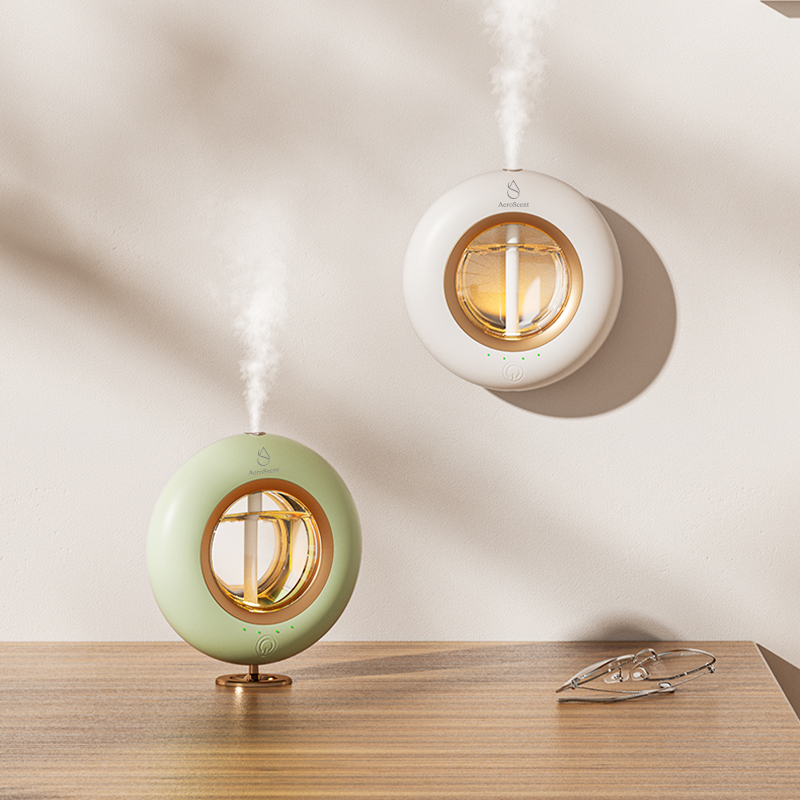
Ultrasonic units are the go-to for bedrooms. They use a small ceramic disc at the bottom of a water tank. Power turns on, and the disc vibrates at high speeds. This vibration whips the water and oil into microscopic particles. The machine blows this out as a cool mist. They run quiet. That makes them great for sleeping. They also act as tiny humidifiers. This helps your throat if you run the AC or heater all night. The downside is you have to fill them with water constantly. The mist also dilutes the oil, so the smell is lighter.
Nebulizers use pressurized air. They do not use water or heat. An air pump blows across a glass tube holding pure oil. This creates a vacuum, pulling the oil up and blasting it into the room as micro-droplets. You get a massive, heavy scent profile. It keeps the plant's exact chemical makeup intact. But they fail in the bedroom. The air pump hums loudly. If you are a light sleeper, it will keep you awake. They also burn through expensive oils fast. You have to clean the glass tubes with alcohol constantly so they do not clog.
Heat diffusers use hot plates or candles to melt the oil into the air. Do not use these. Heat destroys the volatile terpenes in the oil. It ruins the exact compounds that help you relax. Evaporative models use a fan to blow air through an oil-soaked pad. The light scents evaporate in minutes. The heavy scents stay on the pad. You get a blast of smell up front, and nothing an hour later. That does not work for an overnight home scent diffuser.
| Diffuser Type | Mechanism | Noise Level | Sleep Suitability |
|---|---|---|---|
| Ultrasonic | Vibrating ceramic disc with water | Very Low (<30dB) | Excellent |
| Nebulizing | Pressurized air pump with pure oil | Moderate to High | Poor (Too loud) |
| Evaporative | Fan blowing across an oil pad | Low to Moderate | Poor (Uneven scent) |
| Heat | Thermal plate or candle | Silent | Poor (Destroys oil compounds) |
Noise matters. A good sleep diffuser must run under 30 decibels. That is the sound of a whisper. Loud water drips, vibrating plastic, or motor hums will pull you out of light sleep. Light is just as bad. Many units have bright, color-changing LEDs. Blue and green light stops your body from making melatonin. You need a machine with a blackout mode. It must mist while every single light is turned off.
You need a tank that lasts 8 hours. Look for 300ml or larger. Small tanks run dry at 3 AM and stop the scent. You also need a waterless auto-shutoff. When the tank empties, the machine must kill power to the disc. If a dry disc keeps vibrating, it overheats. It will break the machine and can start a fire. Do not buy a unit without a sensor shutoff.
Your nose gets blind to smells fast. It is called olfactory fatigue. If a machine runs non-stop, your brain ignores the scent after 20 minutes. Running it all night wastes oil. You need intermittent timers. Set it to run for 10 minutes, then pause for 20 minutes. This gives your nose time to reset. You keep smelling the oil, you get the calming effects all night, and you use half the liquid.
Essential oils eat cheap plastic. Citrus oils contain limonene, a heavy solvent. If the water tank uses low-grade plastic, the oil will melt it. You will end up breathing aerosolized microplastics. Check the materials. The tank must be medical-grade, BPA-free polypropylene (PP) or high-density polyethylene (HDPE). Glass, ceramic, or treated wood exteriors are even better.
Lavender (Lavandula angustifolia) is the heavy hitter for sleep. It contains linalool and linalyl acetate. These compounds lower anxiety. Breathing real lavender increases your deep, slow-wave sleep. Roman Chamomile and Bergamot drop cortisol levels. They strip away the physical stress of the workday. If you hate floral smells, use Cedarwood or Vetiver. These are heavy-molecule oils. They smell like dirt and wood. Because they are heavy, they evaporate slowly. They last all night in the tank. Mix a light oil like Bergamot with a heavy oil like Vetiver. The light oil hits you when you walk in. The heavy oil keeps you asleep.
| Oil Type | Evaporation Rate | Primary Benefit for Sleep |
|---|---|---|
| Bergamot | Fast (Top Note) | Reduces cortisol and immediate stress. |
| Lavender | Medium (Middle Note) | Increases slow-wave sleep duration. |
| Roman Chamomile | Medium (Middle Note) | Calms the central nervous system. |
| Vetiver | Slow (Base Note) | Provides sustained, overnight grounding. |
You can use the machine in the morning, too. Dump the sleep water. Add Peppermint or Sweet Orange. High-limonene and menthol oils shock your central nervous system awake. It clears brain fog fast. It builds a hard sensory wall between sleep time and wake time.
Never use synthetic fragrance oils. Labs make them to smell good, but they have no plant compounds. They will not relax you. They are packed with phthalates and VOCs. They cause headaches and ruin your air quality. Throw out your scented candles and plug-ins. Candles put soot and open flames in your bedroom. Plug-ins leak unregulated chemicals. Pure plant oils in a diffuser give you a clean, safe scent.
Plant oils are strong. If you pump too much into a closed room, your throat will burn. It can trigger asthma. You want a background scent, not a thick cloud. Keep the bedroom door cracked. Leave the HVAC fan on. Use 3 to 5 drops of oil per 100ml of water. If you have a small room, use less.
Dogs and cats process chemicals differently than we do. Cats lack a liver enzyme needed to break down certain oils. Breathing them in causes liver failure. Eucalyptus, tea tree, citrus, peppermint, pine, and wintergreen are highly toxic to pets. Talk to your vet first. If you run a machine, leave the bedroom door open so the dog or cat can leave if the smell bothers them.
A wet tank grows mold, mildew, and bacteria fast. If you do not clean it, the machine blows that bacteria straight into your lungs. You will get sick. Follow a hard cleaning schedule.
A: Yes, if the device has a waterless auto-shutoff sensor. This prevents the ceramic disc from overheating when the tank runs dry. You must also use an intermittent mist setting, like 10 minutes on and 20 minutes off. This stops the room from filling with too much vapor, which can irritate your throat. Always keep the bedroom door slightly open to maintain basic airflow.
A: Place the unit on a solid, level surface like a nightstand or dresser. Keep it 2 to 3 feet above the floor so the mist disperses properly. Keep it away from direct sunlight, open windows, or heavy HVAC drafts. Do not place it directly next to your face or pillow to prevent concentrated mucosal irritation.
A: A standard baseline is 3 to 5 drops of pure essential oil per 100ml of water. For a standard 300ml tank, use 9 to 15 drops. Adjust this ratio based on the square footage of your bedroom and the viscosity of the oil. Heavy oils like vetiver require fewer drops. Lighter citrus oils require more.
A: Diffusers add pleasant aromas and slight humidity to the room. They do not purify, filter, or clean the air. They are not replacements for HEPA air purifiers. They do serve as a much cleaner, non-toxic alternative to chemical room sprays and synthetic plug-ins.
A: Yes. Diffusers are a safer, chemical-free alternative to scented candles. They eliminate the risks associated with open flames. They prevent the introduction of soot, smoke, and synthetic volatile organic compounds into your sleeping environment. They also provide a superior and more consistent scent throw.
A: This is due to olfactory fatigue, commonly known as nose blindness. Your brain's olfactory receptors quickly adapt to a constant scent stimulus and stop registering it. Using an intermittent diffusion setting allows your receptors time to reset. This maintains the perceived aroma throughout the night.
A: Nebulizers deliver a much higher therapeutic concentration of pure essential oil. However, they are not recommended for sleep environments. The internal air pumps required for atomization produce a noticeable humming noise that disrupts light sleepers. Ultrasonic models operate much more quietly, making them the preferred choice for bedrooms.


