
Views: 0 Author: Site Editor Publish Time: 2026-08-25 Origin: Site


Ambient scenting directly shapes user experience within dedicated wellness spaces. Yoga studios, massage clinics, and home meditation rooms rely heavily on environmental psychology to foster relaxation and focus. Dispersing essential oils effectively presents a specific mechanical challenge. You must avoid compromising the fragile chemical integrity of the oil. You also cannot introduce disruptive mechanical noise or create excessive maintenance overhead for the operator. Traditional heating methods degrade therapeutic properties, while pressurized air systems often generate distracting sound profiles. The ultrasonic aromatherapy essential oil diffuser serves as the current industry standard to solve these issues. It balances therapeutic dispersion, operational silence, and spatial coverage perfectly. We will evaluate its underlying mechanics, operational trade-offs, and implementation strategies below.
Understanding the physics of high-frequency vibration explains why this technology dominates wellness environments. A small ceramic disc sits at the base of the internal water reservoir. This component is known as a piezoelectric transducer. When alternating electrical current passes through this disc, it expands and contracts rapidly. This movement creates vibrations at ultrasonic frequencies, typically reaching 2.4 million cycles per second (2.4 MHz). This rapid oscillation transfers directly into the water sitting above the transducer.
The intense vibration creates surface capillary waves in the liquid. As the amplitude of these waves increases, the process induces cavitation. Microscopic vacuum bubbles form and collapse rapidly within the water. This violent, microscopic action breaks both the water and the suspended essential oil into a fine, inhalable mist. The resulting particles generally measure 5 microns or less in diameter. A small internal fan then propels this lightweight mist upward through a directional nozzle and out into the surrounding room.
The mechanical sequence follows a precise order:
Contrast this ultrasonic dispersion with traditional heat-based diffusion methods. Heat fundamentally alters the chemical composition of botanical extracts. Essential oils contain volatile organic compounds like terpenes, esters, and aldehydes. When exposed to thermal stress, these compounds oxidize and degrade rapidly. The therapeutic benefits diminish, and the resulting aroma often smells burnt or synthetic. Cold-mist technology remains mandatory for clinical or therapeutic aromatherapy. It ensures the molecular structure of the oil enters the respiratory system exactly as nature intended.
Evaluating alternative technologies highlights the specific advantages of ultrasonic systems. Nebulizing models use pressurized air to force raw essential oil through a tiny glass nozzle. This creates a highly concentrated aroma profile. However, nebulizers operate at significantly louder decibel levels due to the internal air pump. They also consume expensive essential oils very rapidly. Evaporative models use a fan to blow air through an oil-soaked pad. This method operates quietly but results in uneven dispersion. Lighter molecules evaporate quickly, while heavier base notes linger on the pad. The ultrasonic diffuser provides the ideal middle-ground solution. It offers consistent full-spectrum dispersion, near-silent operation, and highly efficient oil usage.
| Diffuser Technology | Dispersion Mechanism | Acoustic Profile | Consumable Efficiency | Oil Integrity |
|---|---|---|---|---|
| Ultrasonic | High-frequency vibration (water + oil) | Near-silent (<30 dB) | High (diluted in water) | Preserved (Cold Mist) |
| Nebulizing | Pressurized air pump (raw oil) | Noticeable hum | Low (rapid consumption) | Preserved (Cold Mist) |
| Evaporative | Fan over saturated filter | Quiet fan noise | Moderate (uneven evaporation) | Preserved (Cold Air) |
| Heat | Thermal plate or candle | Silent | High | Degraded (Thermal Stress) |
Acoustic performance dictates the suitability of any device placed in a relaxation space. Wellness environments require strict control over ambient noise. The maximum acceptable decibel level for a wellness diffuser generally falls below 30 decibels. This mimics the sound of a quiet whisper. The absence of mechanical humming, aggressive bubbling, or clicking timers is a primary purchasing criterion. Spas and meditation spaces rely on auditory calm. A noisy motor disrupts breathwork, breaks concentration, and ruins the immersive sensory experience. Hard-surfaced rooms, like yoga studios with bamboo flooring, amplify mechanical noise, making silent operation even more critical.
Spatial coverage and output capacity must align with the physical dimensions of the room. Diffuser output is measured in milliliters per hour (ml/hr). A standard unit outputting 30 ml/hr effectively covers 150 to 250 square feet. Larger rooms require higher output capacities or multiple synchronized units. Single units face severe limitations in open-concept spaces or rooms with high ceilings. HVAC airflow patterns also disrupt mist distribution. High air exchange rates (ACH) will dilute the scent profile rapidly. You must map the room's square footage against the device's stated output to ensure adequate olfactory saturation.
Consider the following baseline output requirements based on room size:
Micro-humidification provides a valuable secondary benefit in climate-controlled spaces. Air conditioning and central heating strip natural moisture from the indoor environment. Adding trace moisture back into the air supports respiratory comfort. This proves especially beneficial during intense breathwork, yoga, or physical exertion. The mist prevents mucosal membranes in the nose and throat from drying out. However, you must understand the limitations. A standard wellness diffuser outputs a fraction of the moisture produced by a dedicated HVAC humidifier. It enhances local comfort but will not drastically alter the relative humidity of a large room.
Consistent, heat-free dispersion facilitates specific therapeutic protocols. Practitioners use these devices to trigger targeted physiological and psychological responses. The olfactory bulb connects directly to the limbic system, which governs emotion and memory. By pairing the device's output with specific essential oil profiles, users can address moodiness, manage cravings, or combat a lack of focus. Peppermint and rosemary stimulate cognitive alertness. Lavender and chamomile downregulate the nervous system. The cold-mist delivery ensures these active botanical compounds reach the user without thermal degradation.
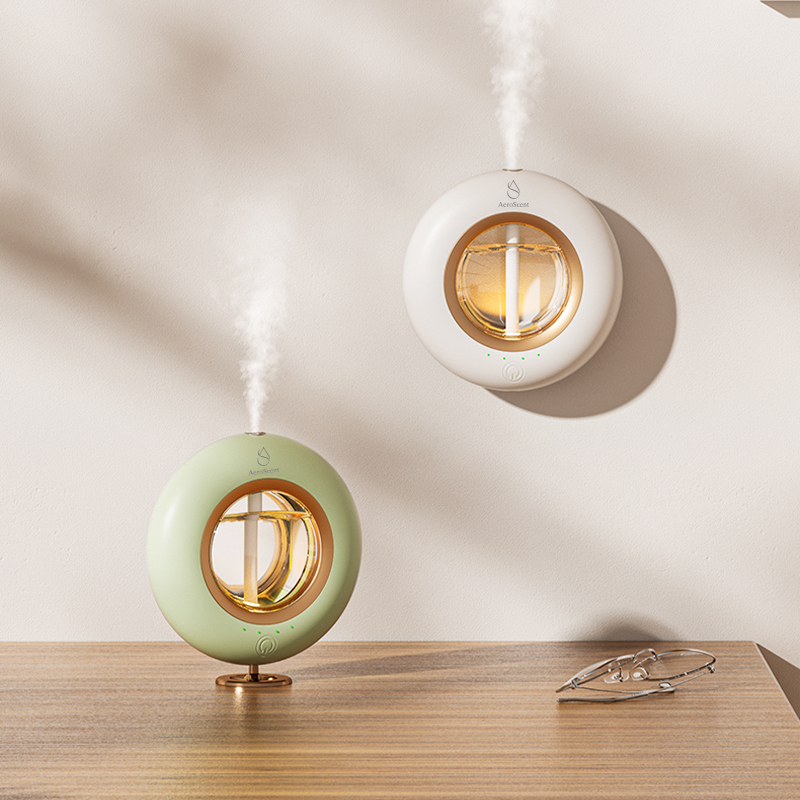
Water tank capacity dictates operational autonomy and dictates daily maintenance workflows. You must evaluate the relationship between reservoir size and run time. A compact 100ml tank typically runs for three to four hours before requiring a refill. A larger 500ml reservoir can operate continuously for up to fourteen hours. Small tanks offer aesthetically pleasing, minimalist designs. However, they introduce a high labor cost in professional settings. Staff must interrupt their duties to refill multiple units throughout the day. You must balance visual footprint against operational efficiency.
Daily operational friction heavily influences long-term satisfaction. Assess the user interface and physical design carefully. Spill-proof refilling mechanisms prevent water damage to wooden furniture or yoga studio floors. Intuitive button layouts allow staff to adjust settings quickly in dimly lit rooms. Accessible water tanks simplify the daily emptying process. Devices with complicated locking lids or narrow reservoir openings frustrate users and discourage regular use. Smooth operational workflows matter immensely when managing multiple units across a wellness center.
Material safety and chemical resistance are non-negotiable specifications. Essential oils contain powerful natural solvents. Citrus oils, in particular, contain high levels of limonene. Limonene aggressively breaks down standard plastics over time. The internal reservoir must utilize medical-grade, BPA-free plastics. Polypropylene (PP) serves as the industry standard for chemical resistance. If a manufacturer uses cheap polystyrene or ABS plastic, the oils will degrade the housing. This causes the plastic to crack and leak. More dangerously, it leaches toxic microplastics directly into the inhalable mist.
Automated controls and output modulation extend consumable life and improve the user experience. Continuous diffusion often leads to olfactory fatigue. The human nose quickly adapts to a constant scent, rendering it unnoticeable after twenty minutes. Intermittent diffusion settings solve this problem. A cycle of 30 seconds on followed by 30 seconds off keeps the olfactory receptors responsive. This setting also cuts essential oil consumption in half. Additionally, auto-shutoff safety mechanisms are mandatory. The device must power down instantly when water levels drop below the transducer to prevent overheating and component failure.
Aesthetic and architectural integration ensures the device complements the wellness environment. Exterior material choices range from ceramic and hand-blown glass to sustainably sourced wood. Plastic exteriors often look cheap and detract from a premium spa atmosphere. LED lighting options provide ambient mood lighting. However, you must ensure these features can be fully disabled. Flashing lights or bright blue LEDs cause severe visual distraction in darkened meditation rooms. Complete darkness is often required for deep relaxation protocols.
Managing water quality dictates the lifespan of the ultrasonic transducer. A constant debate exists between using tap water versus distilled water. Tap water contains dissolved minerals like calcium and magnesium. When tap water evaporates, it leaves these minerals behind. This creates hard white calcium scaling directly on the ceramic disc. Mineral buildup dampens the high-frequency vibrations, severely diminishing mist output. Distilled water prevents this scaling entirely. If you must use tap water, you must increase the frequency of your descaling maintenance to protect the device.
Long-term reliability requires strict adherence to cleaning protocols. You must conduct a realistic assessment of the maintenance required before deployment. Stagnant water breeds bacteria and mold rapidly. You must empty the reservoir completely at the end of every single day. Wipe the interior dry with a clean cloth. Perform a deep cleaning once a week. Use a solution of white vinegar and water, or rubbing alcohol on a cotton swab, to gently clean the ultrasonic disc. This removes oil residue and prevents cross-contamination between different essential oil blends.
Follow this standard descaling and cleaning protocol to maintain optimal output:
Air quality system synergy requires strategic spatial placement. Wellness spaces frequently utilize HEPA air purifiers to maintain clean breathing environments. You must understand the interaction between an aromatherapy diffuser and these filtration systems. Ultrasonic devices emit microscopic water droplets and oil particles. Laser particle sensors on nearby air purifiers often misinterpret these harmless droplets as hazardous PM2.5 pollutants. This causes the purifier's fan to ramp up to maximum speed, creating disruptive noise. Place the diffuser at least ten feet away from any air quality sensors to prevent this interference.
Environmental constraints dictate where these devices can operate safely. Ultrasonic technology may be contraindicated in spaces that already suffer from excessive humidity. Rooms lacking proper HVAC ventilation trap the added moisture. If indoor relative humidity consistently exceeds 60 percent, adding more water vapor encourages mold growth on walls and fabrics. Monitor your room's baseline humidity with a hygrometer. If the space is naturally damp, consider a waterless nebulizing system instead to protect the structural integrity of the room.
Consumable efficiency heavily favors ultrasonic technology for daily operation. Essential oils represent an ongoing operational expense. Nebulizing systems burn through raw oil rapidly, often consuming several milliliters per hour. Ultrasonic models dilute a small amount of oil into a large volume of water. You typically need only ten to fifteen drops of oil to scent a room for up to eight hours. This dilution makes ultrasonic devices significantly more cost-effective to operate daily. The savings on botanical extracts quickly offset the initial purchase price of the hardware.
Device longevity depends on the quality of the internal components. The ultrasonic transducer has a finite lifespan, typically rated for 3,000 to 5,000 hours of operation. Once the ceramic disc degrades, mist output stops entirely. Advise buyers to evaluate manufacturer warranties carefully. Look for brands that offer accessible replacement parts or straightforward warranty claims. When planning a budget, assess the financial impact over a standard two- to three-year deployment cycle. Factoring in the low cost of consumables, the overall financial efficiency remains highly favorable for commercial wellness applications.
The ultrasonic aromatherapy essential oil diffuser remains the most balanced, scalable, and non-disruptive choice for equipping a wellness area. It preserves the chemical integrity of botanical extracts through cold-mist dispersion. It operates at near-silent decibel levels, protecting the auditory calm of meditation and spa environments. By combining efficient consumable usage with targeted therapeutic delivery, it outperforms both heat-based and nebulizing alternatives.
When shortlisting models, verify the core technical features before purchase. Ensure the tank capacity aligns with your specific room size and operational workflow. Confirm the internal reservoir utilizes chemical-resistant PP-grade plastics. Prioritize devices offering intermittent timer settings to prevent olfactory fatigue. Finally, guarantee that all LED lighting can be completely disabled to maintain visual darkness.
Take the following steps to implement this technology effectively:
A: A regular humidifier outputs massive volumes of water vapor to raise ambient room humidity. It uses standard plastics that degrade when exposed to essential oils. An ultrasonic model outputs a much smaller volume of mist. It is specifically engineered with chemical-resistant PP plastics to safely handle corrosive essential oils without melting or leaching toxins.
A: No. Ultrasonic technology uses high-frequency vibration to create a cold mist. Because it does not use heat, it preserves the delicate molecular structure of the essential oils. This ensures you receive the maximum therapeutic benefit from the botanical extracts without any chemical degradation.
A: Coverage depends on the milliliter-per-hour output and tank size. A standard 300ml unit typically covers between 150 to 400 square feet effectively. Open-concept spaces, high ceilings, or strong HVAC airflow will reduce this effective range, often requiring multiple units for full saturation.
A: Yes. The olfactory bulb connects directly to the brain's limbic system, which controls emotions. Pairing the correct essential oils, like peppermint for focus or lavender for relaxation, with a consistent ultrasonic delivery system aids significantly in managing stress, moodiness, and cravings.
A: Yes, but only if the device is built with high-grade, BPA-free plastics like Polypropylene (PP). Citrus oils contain limonene, a natural solvent that rapidly corrodes cheap plastics. Always verify the reservoir material before using lemon, orange, or grapefruit oils.
A: Decreased mist output is almost always caused by mineral scale or thick oil residue building up on the ultrasonic disc. This buildup dampens the high-frequency vibrations. You must perform a deep cleaning using white vinegar or rubbing alcohol to restore normal function.
A: Yes, provided the device features an automatic shutoff mechanism. Because the diffusion process is heatless and water-based, there is no fire risk. The auto-shutoff sensor detects when the water level drops too low and instantly cuts power to prevent damage to the transducer.


