
Views: 0 Author: Site Editor Publish Time: 2026-08-14 Origin: Site


Traditional wall-tethered diffusers restrict aromatherapy to single rooms and stationary environments. You move constantly between vehicles, office desks, and hotel rooms, meaning your wellness routines must travel seamlessly with you. On-the-go aromatherapy helps maintain mental clarity during long commutes, reduces travel-induced stress, and improves sleep quality in unfamiliar environments. However, finding the right device presents a significant mechanical challenge. Consumers struggle to balance true portability with adequate scent throw. Reliable battery life and quiet operation are frequently compromised in smaller units, while spill-proof engineering remains rare in compact models. We need a strict technical evaluation framework to cut through marketing claims. This guide helps buyers assess diffusion technology, power management, and maintenance realities. You will learn how to identify the optimal device for your specific use cases without sacrificing performance or dealing with constant leaks.
What makes a device truly flexible? We must establish a strict baseline for performance. A true portable aroma diffuser requires an independent power source, typically a rechargeable lithium-ion battery. It needs a compact footprint for easy transport in carry-on luggage or daily commuter bags. Resilient build quality is absolutely non-negotiable, as travel subjects electronics to constant vibration and impact. Immediate setup must be effortless across different locations. You should not need complex assembly or a water source when moving from a car to an office desk.
Mobility introduces specific mechanical trade-offs. Compact devices house smaller internal motors and utilize smaller batteries to save weight. This physical limitation generally means reduced square footage coverage. You cannot expect stationary unit performance from a pocket-sized device. A wall-plugged unit might cover 500 square feet easily. A battery-operated unit typically covers 50 to 150 square feet. Understanding this output trade-off prevents buyer disappointment and helps you position the device correctly in your immediate breathing zone.
Environmental adaptability defines long-term success. The unit must fit securely inside standard vehicle cupholders, which typically measure around 3 inches (76mm) in diameter. It should operate effectively on small hotel nightstands without leaving moisture rings on the furniture. It must remain unobtrusive on crowded office desks. Furthermore, acoustic profiles matter immensely in these environments. Whisper-quiet operation falls under 30 decibels. This low noise baseline is required for shared office spaces and is equally important for uninterrupted sleep in quiet hotel rooms.
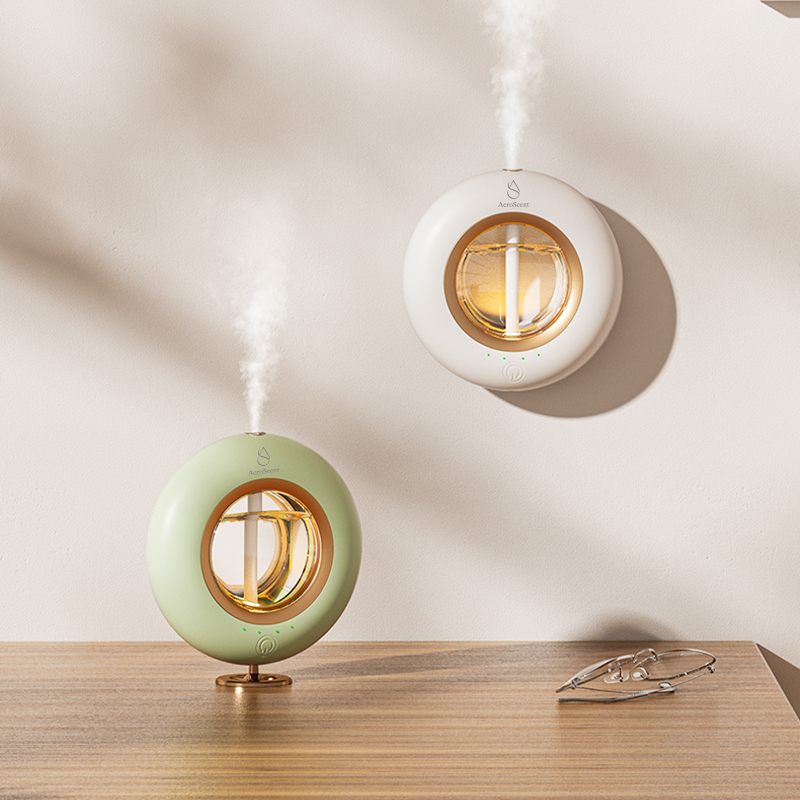
Different diffusion technologies offer distinct advantages and drawbacks. Understanding the underlying mechanics helps match the device to your specific travel environment and maintenance tolerance.
Ultrasonic diffusers operate using a small piezoelectric disk located at the bottom of a water reservoir. When powered, this disk vibrates at high ultrasonic frequencies, usually around 2.4 million times per second. These rapid vibrations create intense agitation in the water, breaking the essential oil and water mixture into microscopic particles. A small internal fan then blows this fine mist into the air. The primary benefit is overall affordability and the addition of slight humidity to the room. This added moisture helps combat dry, recycled air in hotel environments or airplane cabins. They produce a very subtle, gentle scent profile that rarely overpowers a small space.
However, the drawbacks for travel are significant. Water dependency is the biggest hurdle. You must have access to clean, distilled, or filtered water. Using standard hotel tap water causes rapid mineral buildup on the vibrating disk, which degrades performance and eventually breaks the unit. Furthermore, water reservoirs introduce major spill risks. If the device tips over in a car cupholder during a sharp turn, water easily breaches the internal electronics. Emptying the reservoir before packing it into a suitcase becomes a tedious, mandatory requirement.
Waterless or nebulizing diffusers utilize pressurized air and rely on Bernoulli's principle to function. An internal pump forces air through a small, restrictive tube. This high-speed airflow creates a vacuum effect at the top of a secondary tube submerged in the essential oil. The vacuum pulls pure essential oil directly from the bottle. The oil hits an internal baffle and shatters into microscopic droplets, dispersing directly into the room. This technology offers high potency and immediate scent dispersion without altering the chemical composition of the oil.
These units are inherently travel-ready. They use zero heat and zero water. You eliminate water dependency entirely, making them perfect for airport lounges, cars, and offices. You achieve a much stronger scent concentration, which is highly effective for neutralizing stale hotel room odors quickly. Most importantly, you remove the spill risk associated with water tanks. The device attaches directly to standard essential oil bottles, keeping the liquid contained and secure during transit.
Passive and fan-assisted evaporation provide low-tech alternatives. These include felt pads with internal battery-operated fans, heat-based diffusion plates, and traditional reed diffusers. They require the lowest maintenance overhead because they lack complex pumps or vibrating disks. They offer the longest battery life due to minimal moving parts and low power draw.
However, they produce the weakest scent throw. The scent relies entirely on natural evaporation rates, slightly accelerated by a small fan. Liquid reed diffusers pose high spill risks during transit and only work well for stationary cordless needs. Fan-assisted pads lose their scent quickly as the oil dries out. You must reapply drops constantly to maintain the aroma, which becomes inconvenient during a long drive.
| Diffusion Technology | Mechanism | Travel Suitability | Spill Risk | Maintenance Level |
|---|---|---|---|---|
| Ultrasonic | Vibrating disk creates water/oil mist | Moderate (requires clean water access) | High (water reservoir can leak) | High (frequent wiping and descaling) |
| Nebulizing (Waterless) | Pressurized air atomizes pure oil | Excellent (no water needed) | Low (direct bottle attachment) | Medium (requires alcohol flushes) |
| Passive / Fan | Airflow over oil-soaked felt pads | Good (lightweight, low power draw) | Zero (oil is absorbed into pads) | Low (pad replacement only) |
Finding the best portable essential oil diffuser requires analyzing specific hardware capabilities. You must look past marketing claims and evaluate the technical specifications to ensure the device meets the rigorous demands of travel.
Power infrastructure dictates true portability. You must evaluate battery capacity carefully. Manufacturers measure this capacity in milliampere-hours (mAh). A higher mAh rating generally equals longer runtime, but the diffusion method heavily impacts power draw. Nebulizing air pumps consume more power than ultrasonic piezoelectric disks. Compare the mAh rating against the claimed runtimes. Achieving a true 8-hour steady run time requires a robust battery. Look for lithium-ion batteries exceeding 2000 mAh for all-day use in a vehicle or office.
USB-C integration is another mandatory factor for modern travel. It provides universal charging compatibility. You can use your laptop, smartphone charger, or a portable power bank to recharge the unit. This reduces the number of cables you pack. Avoid devices with proprietary charging barrels or outdated micro-USB ports. Losing a proprietary cable renders the device useless during a trip, and micro-USB ports are prone to physical damage after repeated insertions.
Coverage area and scent throw efficiency vary widely based on the internal motor size. Set realistic expectations based on device dimensions. A compact unit handles 50 to 100 square feet effectively. Understand how HVAC airflow impacts perceived scent throw. Car vents or hotel air conditioners disperse scent rapidly. Placing the unit near an intake vent diminishes the aroma, as the HVAC system pulls the scent out of the room. Placing it near an output vent pushes the scent across the room effectively. Adjust placement based on the room's specific airflow dynamics to maximize the smaller output of a portable unit.
Acoustic profiles differ by technology. Evaluate operational noise differences before purchasing. Nebulizing pumps create a slight mechanical hum. This hum cycles on and off with the intermittent timer. Ultrasonic models produce faint water-trickling sounds alongside a very quiet fan noise. Some users find the water sound soothing for sleep. Others find the mechanical pump noise of a nebulizer distracting in quiet offices. Check the decibel (dB) rating on the specification sheet. Anything under 30dB is generally acceptable for sleeping environments and close-proximity desk work.
Form factor and footprint require strict scrutiny. Assess overall dimensions and weight. Sleek, ergonomic designs pack easily into carry-on luggage without adding bulk. Standardized sizing is required for vehicle use. The base must fit standard automotive cupholders. Measure your vehicle's cupholder diameter before selecting a model. A top-heavy design will rattle or tip during sharp turns, causing distractions while driving. Look for models with a rubberized base to absorb vehicle vibrations and prevent sliding on smooth hotel desks.
Control interfaces manage output settings and user experience. Intermittent controls help manage olfactory fatigue. Your nose stops registering a scent after continuous exposure. Pulsing the output (e.g., 30 seconds on, 60 seconds off) keeps the scent noticeable and prevents the room from becoming overwhelming. Constant output maximizes immediate intensity but drains the battery and consumes oil much faster. Simple tactile interfaces allow quick deployment in new environments. Complex digital menus or app-only controls frustrate users who just want immediate aromatherapy without pairing a Bluetooth device.
Evaluating a device requires looking beyond the initial purchase price. You must consider the ongoing operational expenses, material durability, and the availability of replacement parts to ensure the device lasts through years of travel.
Universal oil compatibility offers superior long-term value. Devices accepting standard 10ml or 15ml essential oil bottles (DIN18 standard neck size) provide maximum flexibility. You can purchase oils from any reputable supplier, blend your own custom scents, and control your ongoing expenses. Conversely, some devices require brand-locked pods or proprietary cartridges. These closed systems restrict your choices and force you to buy specific, often overpriced refills. This significantly increases long-term operational expenses. Always prioritize open systems for travel flexibility.
Build quality determines the lifespan of your device. Travel subjects electronics to constant vibration, temperature shifts, and physical impact. ABS plastics resist impact damage well. They are lightweight and durable for luggage transport. Anodized aluminum offers superior durability and a premium tactile feel. It withstands drops better than standard plastic and resists chemical degradation from spilled essential oils. Glass components look elegant on a stationary shelf, but glass breaks easily under travel stress. Avoid glass reservoirs or delicate glass nebulizing nozzles for true portable use.
Warranty coverage protects your investment against manufacturing defects. A reliable manufacturer warranty covers internal electronic failures, battery defects, and pump malfunctions for at least one year. Read the warranty terms regarding travel damage or water ingress. Component replacement availability extends device life significantly. Nebulizing nozzles can clog permanently if neglected. Felt pads lose their absorbency over time. Ensure the manufacturer sells these replacement parts directly. A device becomes disposable if you cannot replace a simple clogged nozzle or a lost USB-C cable.
Operating electronics around liquids introduces inherent risks. You must understand common failure points to protect your device, your vehicle interior, and your respiratory health.
Leaks cause irreversible internal water damage, short-circuiting the motherboard or destroying the battery. Ultrasonic models possess inherent structural vulnerabilities during transit. The water reservoir must remain perfectly upright. Secure locking lids and silicone O-rings mitigate these risks slightly. However, water can still escape through the mist output nozzle if the unit tilts. Emptying protocols before transport are mandatory. Never pack an ultrasonic unit with water inside. A reliable travel diffuser requires strict adherence to these emptying rules to survive multiple trips.
Confined spaces like car cabins require strict safety protocols. Auto-shutoff mechanisms prevent overheating when the battery runs low or the oil runs out. Heat-free operation protects the chemical integrity of the essential oils, preventing them from burning and releasing harmful compounds. Using concentrated oils in small cars requires caution. Continuous high output can cause headaches, nausea, or respiratory irritation. Always use intermittent settings in vehicles. Crack a window to ensure adequate fresh air circulation and prevent the scent from becoming overpowering.
Battery degradation occurs naturally over time, but you can protect lithium-ion battery health with proper habits. Avoid deep discharges whenever possible. Recharge the unit before it hits zero percent to maintain cell integrity. Manage temperature exposure carefully. Do not leave units in hot cars during summer months. Extreme heat permanently degrades lithium-ion cell capacity and can cause the battery to swell, creating a fire hazard. Store the device in a temperature-controlled environment when not in use, and keep it out of direct sunlight on your dashboard.
Standardize your cleaning protocol to ensure longevity. Specific cleaning requirements prevent oil clogs in nebulizers. Thick oils like vetiver, patchouli, or sandalwood clog microscopic tubes quickly.
Ultrasonic models face hard water challenges. Hard water leaves mineral deposits on the vibrating diaphragm, reducing mist output. Clean the reservoir with a mixture of water and a pinch of citric acid or white vinegar. Let it soak for 15 minutes, then wipe the disk gently with a cotton swab. Neglecting maintenance degrades performance rapidly. It also frequently voids manufacturer warranties for any cordless diffuser.
Selecting the right portable unit requires balancing technology with your specific environment. Waterless nebulizers offer the best spill-proof performance for frequent travelers and commuters. Ultrasonic models provide gentle humidity for dry hotel rooms but require careful water management and strict emptying protocols. Passive fan units offer extreme simplicity at the cost of scent throw and coverage area. Evaluate your daily routine to determine which trade-offs align with your practical needs.
Take these actionable steps before making a final purchase decision:
A: Battery life depends on the diffusion technology and battery capacity. Most models feature lithium-ion batteries ranging from 1000 to 4000 mAh. Ultrasonic units typically run for 4 to 8 hours continuously. Nebulizing units consume more power but utilize intermittent settings, extending functional runtime to 10 or 15 hours before requiring a recharge.
A: Yes, but you must exercise caution in confined spaces. Use intermittent settings to prevent olfactory fatigue and respiratory irritation. Ensure the device fits securely in a standard cupholder to prevent tipping. Avoid leaving the device in a hot car, as extreme heat degrades lithium-ion batteries and alters the oil chemistry.
A: Ultrasonic models use water and a vibrating disk to create a scented mist, adding slight humidity but posing spill risks. Waterless models, or nebulizers, use pressurized air to atomize pure essential oil directly from the bottle. They require no water, eliminate spill risks, and deliver a much stronger scent profile.
A: The devices themselves are generally TSA-approved for carry-on luggage. They contain lithium-ion batteries, which must remain in the cabin and cannot be checked. However, you must adhere to liquid restrictions for the essential oils. All oil bottles must be 3.4 ounces (100ml) or smaller and fit within a single quart-sized bag.
A: Most high-quality models operate under 30 decibels, making them whisper-quiet. Ultrasonic models produce a faint water-trickling sound. Nebulizing models generate a low mechanical hum from the internal air pump. If you are highly sensitive to noise, an ultrasonic model generally provides a softer acoustic profile for sleeping.
A: You should clean your device every one to two weeks with regular use. Nebulizers require running rubbing alcohol through the system to clear thick oil clogs. Ultrasonic models need their water reservoirs wiped down and the vibrating disk cleaned with citric acid to remove hard water mineral buildup.
A: No. Portable units utilize smaller motors and operate on battery power. They are engineered for personal spaces like vehicles, hotel rooms, or small offices. Expect effective coverage between 50 and 150 square feet. Plug-in models use stronger fans and higher voltage to cover larger living rooms up to 500 square feet.


